As China and the EU begin crunch trade talks, optimism is in short supply
As China and the European Union began a fresh round of trade talks in Beijing on Thursday, observers on both sides appeared to agree on one thing: a big breakthrough was unlikely. Chinese firms based in Europe said they hoped the talks could achieve some “limited progress” to help stabilise the trade relationship, while European analysts remained cautious about the potential outcome. “They’re…
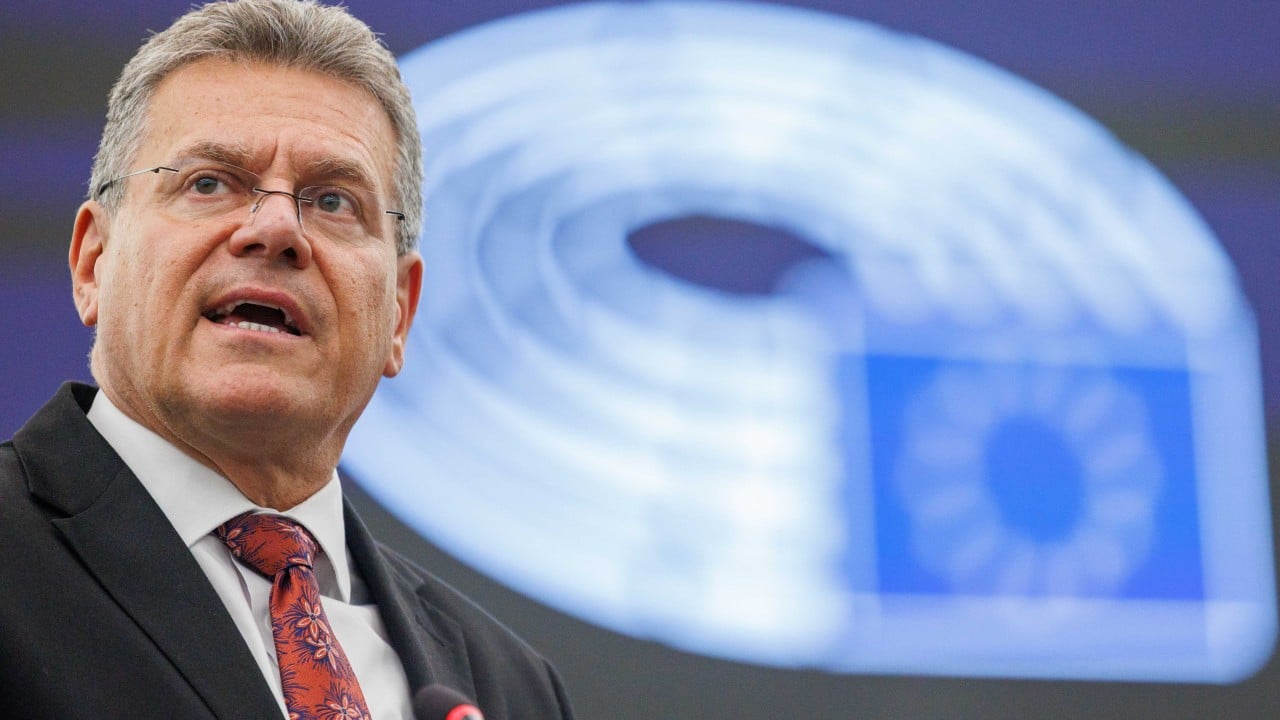
On Thursday, China and the European Union commenced a new series of trade negotiations in Beijing, with both parties expressing skepticism about the possibility of a major breakthrough. Chinese businesses operating in Europe expressed hope that the discussions could lead to some "limited progress" to stabilize the trade relationship, while European analysts remained cautious regarding the potential results.
A Chinese source familiar with the talks stated that EU Trade Commissioner Maros Sefcovic "will not go home empty-handed." The China Chamber of Commerce to the EU urged both sides to utilize the Trade and Investment Consultations (TIC) mechanism effectively to resolve differences, push for solutions, and signal clearer intentions to businesses.
According to a Chinese executive from the renewable energy sector in Europe, even modest advancements that enhance predictability and diminish the risk of further escalation would be beneficial for companies in both Europe and China. Chinese firms in sectors such as automotive, medical equipment, and chemicals anticipate facing heightened trade tensions in the coming months.
Chinese media outlet Yuyuan Tantian published an article the previous day advocating for both parties to maintain "strategic patience" and noted that current negotiations would allow China and the EU to "verify trade flows in sectors like plug-in hybrid vehicles and chemicals through a joint monitoring mechanism." European participants generally agreed that it was in everyone's best interest to prevent the talks from collapsing, but emphasized that Sefcovic would face pressure to deliver substantial outcomes to satisfy European policymakers.
France and Germany recently proposed a "rapid response" trade mechanism that would grant the European Commission the authority to swiftly impose restrictions on a third country deemed a threat, potentially including China. This proposal emerged amid growing frustration in Europe over a perceived lack of progress in the EU-China trade discussions.
French and German officials proposed the "rapid response" tool to bolster the EU's ability to safeguard businesses amid escalating trade frictions. Some Chinese officials have suggested that Beijing may concede minor concessions to appease certain European members and increase pressure on the Franco-German "rapid response" mechanism, but such moves would not resolve the broader trade disparities between the two nations, according to Marc Julienne, a French expert in Asian affairs.
Another French commentator cautioned that, for now, neither China nor the EU is inclined towards a trade war.
Written by urgent.news from South China Morning Post's reporting — not their text. Machine-written — may contain errors; check the original before relying on it.