AI ‘nudifiers’ expose gaps in protection for victims
Experts warn that South Africa’s laws may protect victims of AI-generated intimate images, but gaps in enforcement, prevention and platform accountability leave women and children vulnerable.
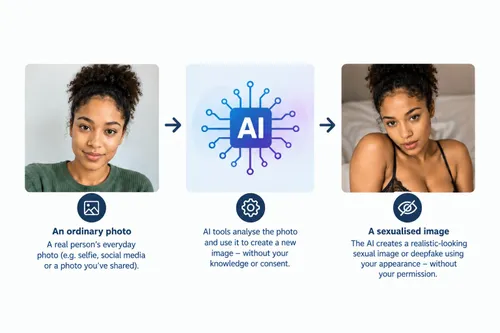
AI-powered nudifying apps are rapidly transforming ordinary photographs into non-consensual explicit images within seconds, prompting a critical examination of South Africa's legislative framework and the significant harm these apps inflict, especially on women and children. This pressing issue was discussed at a recent Film and Publication Board (FPB) webinar, shedding light on the perils of generative AI and the manipulation of digital content.
While generative AI offers innovation, it also presents systemic risks, including synthetic media and non-consensual imagery. The challenge lies in differentiating AI-generated content from authentic material, as current moderation measures struggle to keep pace with technological advancements. These AI-powered nudifier apps are increasingly targeting high-profile individuals, such as musician Taylor Swift, by using a genuine photograph and generating a sexualized image through the superimposition of a face onto an AI-generated body created from diffusion and inpainting models trained on a vast collection of sexualized images.
Experts are calling for a comprehensive governance model that incorporates regulation, safety mechanisms, digital literacy, and collaboration across sectors to bolster safeguards throughout the content lifecycle. Dr. Nomalanga Mashinini, a senior lecturer in Cyber Law at the University of the Witwatersrand, posed a crucial question: when photos can be converted into non-consensual sexual images in under a minute, how do constitutionally protected personality rights—such as privacy, identity, and human dignity—fare under South African and African law?
Dr. Mashinini emphasized that the real harm begins when someone's image is used without their consent, often by boys creating pornographic content using the image of someone they like.
Wendy Rosenberg, Head of Digital Media and Electronic Communications at Werksmans Attorneys, highlighted that these nudifying apps are not only affecting children but are also prevalent in schools. She underscored the severity of the harm caused by these apps, stating that South Africa has a degree of legal protection in place, though legislation often lags behind technological developments.
Rosenberg advocated for a multi-layered, collaborative approach, including digital literacy initiatives, information sharing, and enforcement, recognizing that addressing this issue requires a collective effort beyond the purview of the FPB alone.
Written by urgent.news from IOL's reporting — not their text. Machine-written — may contain errors; check the original before relying on it.
This story
This is one outlet's version. Read the fullest account.