AI Can Remember Your Chats. Remembering Your Life Is Much Harder.
Building useful AI memory takes more than chat history and RAG. Explore four key challenges in creating AI that understands and recalls real-world experiences.

While AI excels at answering complex questions about the world, it struggles to grasp the intricacies of a human's personal experiences. It lacks inherent knowledge about what transpired in a person's day, what moments were significant, or how an experience from the past connects to the present. To enhance AI's utility in our daily lives, it must understand our experiences - what happened, what mattered, and how individual moments relate to each other. The key to achieving this is memory.
Extracting facts from chat histories and retrieving them when needed is a common method to replicate human memory using AI. However, chat conversations alone do not paint a complete picture of someone's everyday life. People often speak in a selective manner, use hypotheticals, and have evolving opinions. Consequently, a system could wrongly assume someone is vegetarian after they mention considering a switch to a vegetarian diet.
Looki, an AI company, has identified four critical challenges in building memory systems that can help AI understand our everyday experiences:
Firstly, determining what to remember. Our memory does not retain every detail of our surroundings, but rather focuses on key events and observations. AI processing a continuous stream of images and audio requires significant computational resources and power, unlike processing text in chat conversations. Compression of memory at various levels of detail - such as main activity, events, and event details - allows AI to efficiently summarize and retrieve relevant information tailored to specific queries.
Secondly, identifying the right memory when a moment is recalled. People often recall fragments of experiences rather than exact timestamps. To function similarly to human memory, AI must piece together clues from conversations, locations, and time as the collection of memories expands. When evidence is missing, the AI should acknowledge the gap.
This involves interpreting the question, identifying clues, finding candidate moments, expanding the search, resolving the reference, checking evidence, and answering or clarifying the query.
Thirdly, connecting the dots over time can help users identify recurring concerns, revisit unfinished ideas, and understand how their interests have changed. This concept, known as episodic memory, deals with specific personal experiences. Semantic memory, on the other hand, stores general facts. The way AI surfaces these connections depends on the user's needs - a short answer, original clip, written reflection, or video recap.
Any insight should explain which experiences support it and differentiate between captured evidence, user statements, and AI interpretations.
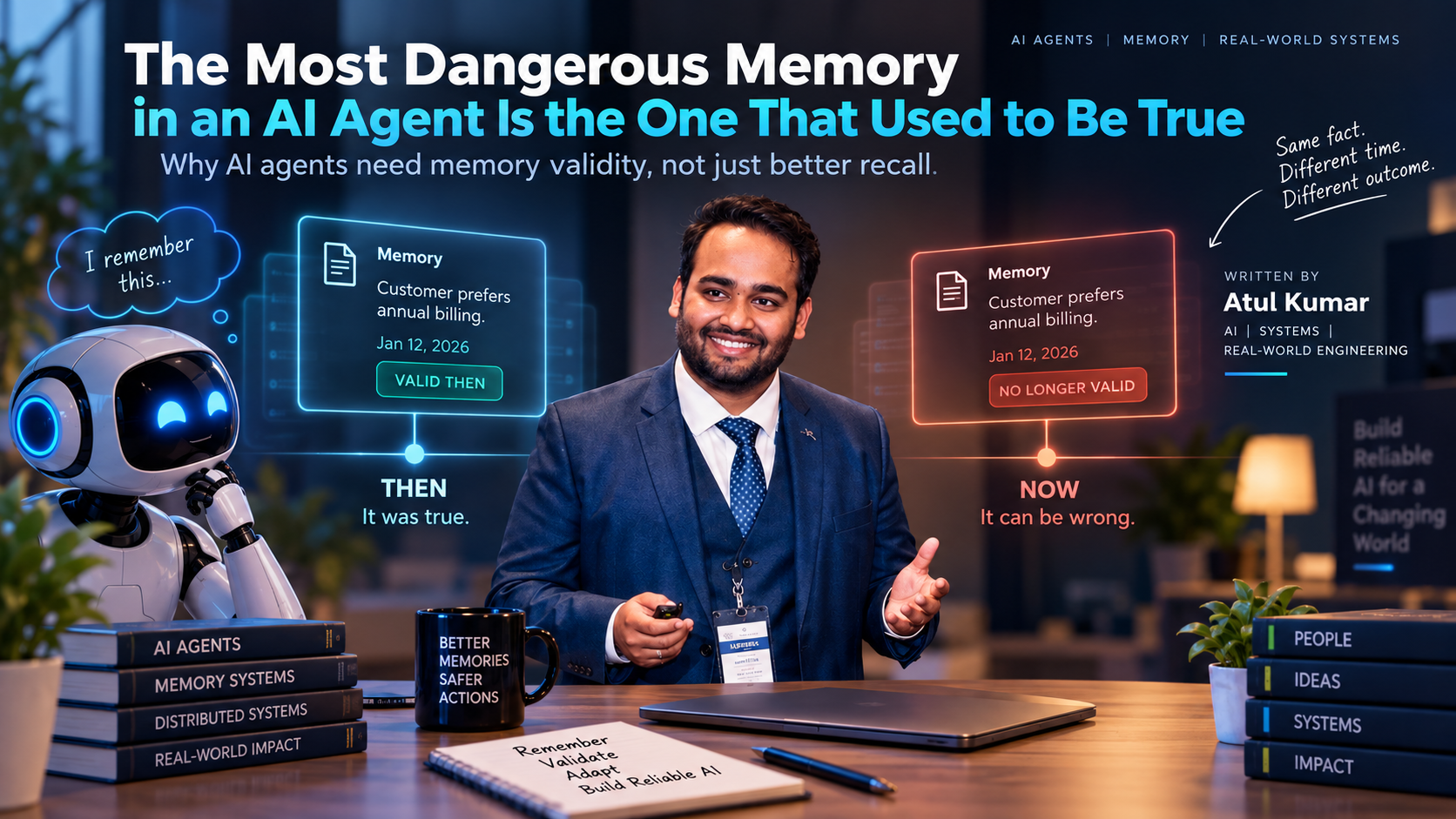
Lastly, memories can contain mistakes, and people change over time. A user may correct someone's name or clarify an outdated preference. For AI to be truly useful in everyday life, it must update its understanding accordingly while distinguishing between incorrect data and user statements or AI interpretations.
Rewritten by urgent.news; may contain errors — check the original.
Source: hackernoon.com