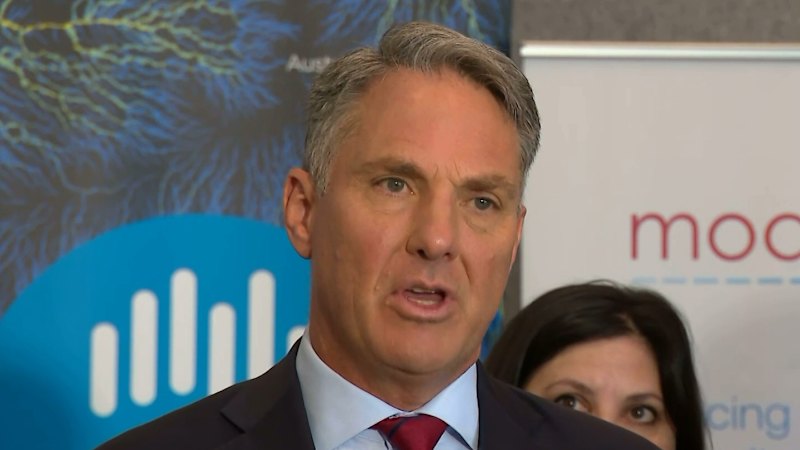
A tech crowd was polled on buying Anthropic shares at a $3 trillion valuation. Only 3 hands went up.
Everyone's waiting for Anthropic to go public. Buying the stock is another story.
Anthropic's IPO will gauge whether the hype surrounding artificial intelligence can endure the scrutiny of public markets. During SF Tech Week, a SF Tech Week audience was questioned about buying Anthropic shares at a $3 trillion valuation. Only three individuals raised their hands. This reaction mirrors the uncertainty present in the current IPO market.
The signs that SF Tech Week had arrived were unmistakable in San Francisco. Planes displayed banners advertising startups overhead, inflatable mascots welcomed commuters near transit stations, and hundreds of people lined up outside Anthropic's Claude Founder House for a chance to visit. However, in a separate location a few blocks away, the atmosphere was more subdued.
At a Tech Insider: Growth Mode event, sponsored by Fidelity, Business Insider's Ben Bergman inquired whether the audience would purchase shares at a $3 trillion valuation when Anthropic went public. Only three hands went up. Would they consider $1.5 trillion? A few more hands lifted. Despite being a prominent symbol of the AI boom, Anthropic's IPO is anticipated to be a crucial test of whether that AI hype can survive the public market's scrutiny.
Menlo Ventures partner Matt Murphy supported Anthropic from its $4.1 billion valuation to the company's pursuit of a $2 trillion IPO target. Business Insider reports that despite the IPO market being one of the largest on record in terms of dollars raised, propelled by SpaceX's successful debut, the market appears thinner than the headline figures suggest.
There have been relatively few offerings, and some of the most closely watched candidates have faced setbacks. Recently, smart-ring maker Oura canceled its planned IPO at the last minute, citing market conditions. Heidi Mayon, a partner at Simpson Thacher who worked on Oura's planned IPO, noted that the delay reflected a widespread wait-and-see attitude.
Mayon explained that companies have been hesitant to go public before Anthropic and OpenAI. Mayon suggested that the market may be hesitant to compete with the AI providers for investor attention. The greater challenge, she added, is that AI has caused valuations to soar in the private markets. Rather than attempting to maximize every possible dollar from an offering, some companies might be better off pricing their shares more conservatively, potentially allowing for a first-day surge and the momentum that comes with it.
Nasdaq's senior vice president and head of new listings, Jack Cassel, offered a contrasting perspective to the audience: there is still ample capital available to take companies public, but the standards have changed. Investors are now seeking growth with cash efficiencies and discipline, asking tougher questions about business models, product plans, and post-stock launch strategies.
Cassel stated that this increased scrutiny may keep consumer and software companies on the sidelines until one or both of the leading AI companies go public, potentially impacting the broader market. The IPO of Anthropic represents the ultimate test of whether the AI hype train possesses the financial strength to back it up.
Written by urgent.news from Business Insider's reporting — not their text. Machine-written — may contain errors; check the original before relying on it.