10 U.S. cities that rank lowest on America's fitness index
A look at the U.S. metro areas that consistently rank lowest on ACSM's American Fitness Index for health and activity
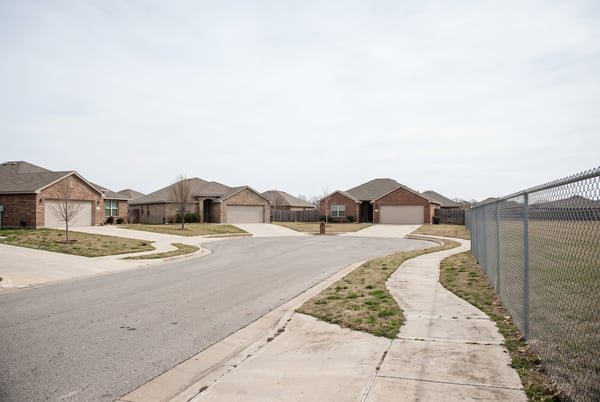
The scarcity and rising cost of starter homes pose a challenge for first-time buyers in America. According to a new report by Realtor.com, the price threshold for starter homes increased from $260,000 to $340,000 between 2019 and 2026. These homes, defined as those priced at or below 80% of the local median list price, accounted for 36.2% of the market in the 100 largest U.S. metro areas in 2026, down from 38.1% in 2019.
The shortage of starter homes is particularly pronounced in the Southeast and Sunbelt regions, with Columbia, South Carolina, and Winston-Salem, North Carolina experiencing the most significant decline.
In response to this shortage, condos and townhomes are emerging as viable alternatives for first-time buyers. They now make up 27% of the starter home market, up from 18% in 2019. Real estate economist Hannah Jones notes that while condos and townhomes do not eliminate the affordability challenge, they represent an increasingly important entry point to homeownership.
In some cities, like Boise, Portland, and Des Moines, the inventory of starter homes has increased by more than three percentage points since 2019. Similarly, cities like Toledo, St. Louis, and Detroit have seen above-average percentages of starter homes, with Toledo leading the way at 42.1%.
However, the market is not uniformly bleak. In the Midwest and Rust Belt cities, such as Toledo, St. Louis, and Detroit, first-time buyers still have access to a substantial number of starter homes. These cities have below-average price gains in recent years compared to other areas, making them more accessible for budget-conscious buyers.
In St. Louis and Kansas City, for example, nearly 40% of total home listings are starter homes, offering buyers a wider range of neighborhoods to choose from within the city. Jones emphasizes that while metro-wide averages can provide a starting point for buyers, they may not accurately reflect the distribution of starter-priced homes across different neighborhoods within a city.
Written by urgent.news from Fast Company's reporting — not their text. Machine-written — may contain errors; check the original before relying on it.
This story
This is one outlet's version. Read the fullest account.