Wildlife Awareness: Gorgeous African ‘unicorn’ slipping off the conservation radar
Way back in 1901, Western scientists celebrated the sensational ‘discovery’ of a very strange, unicorn-like creature in the dark and humid depths of an African rainforest. Now, more than 125 years later, that famous animal is in trouble, and seemingly slipping off the global conservation radar.
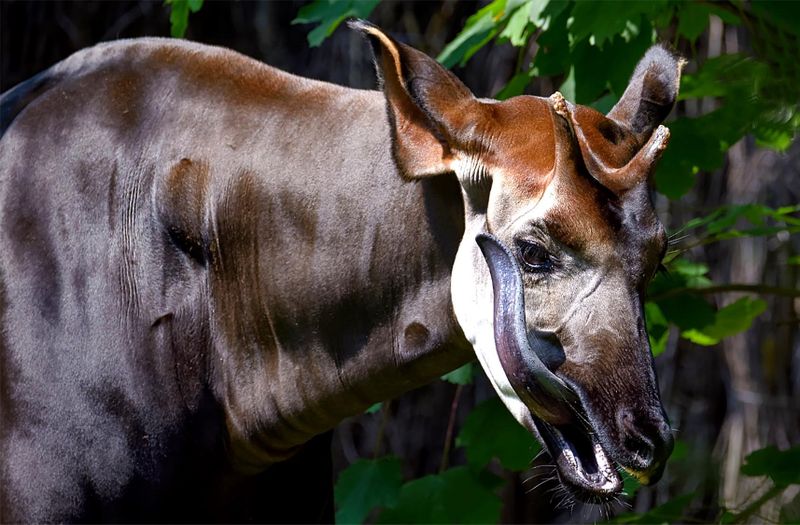
In 1901, Western scientists were thrilled with the "discovery" of a peculiar, unicorn-like creature deep in an African rainforest. However, more than 125 years later, this remarkable animal, known as the okapi, is now at risk and fading from global conservation awareness. Many people have likely never heard of an okapi, or seen one, despite their unique appearance and cultural significance.
The okapi is often described as part donkey, part giraffe, and even has black-and-white striped hindquarters like a zebra. It also boasts a long blue-black tongue, large ears, and the ability to communicate using infrasound. The okapi's striking beauty and unique coloration attracted the attention of those who encountered it, including Italian explorer and filmmaker Attilio Gatti, who named the first okapi he helped capture in 1934 as "Beautiful."
This first okapi was captured using a pit trap but managed to escape, head-butting and kicking his way to freedom. Gatti later remarked that the okapi he saw in the Bronx Zoo had lost its "magnificence" and could not compare to its natural habitat.
Dr. Simon Pooley, author of a new book titled "Discovering the Okapi," notes the okapi's beauty and his childhood fascination with an okapi photograph from an encyclopedia inspired him to write about these animals in 2020. Pooley, who grew up in the Ndumo Game Reserve in KwaZulu-Natal, was disappointed to find limited information about the history of okapis, particularly in English. He decided to "research and write the book he had always wanted to read about okapis."
However, Pooley acknowledges that the term "discovery" in his book's title is misleading, as Africans had known about and hunted okapis for thousands of years in the Ituri forest region of the Democratic Republic of Congo (DRC). Pygmies, who have deep knowledge of these animals, are also mentioned in his book.
Pooley admits that he has never seen a wild okapi or visited their forest home in the DRC. He sets out to bring the okapi back into focus, despite admitting that a more thorough history of okapi conservation in the DRC remains to be written. Despite stretching to over 300 pages, "Discovering the Okapi" is not an easy read, as zoos and museums worldwide clamored for okapi specimens after their initial discovery, leading to the potential death of hundreds of these rare creatures.
Written by urgent.news from Daily Maverick's reporting — not their text. Machine-written — may contain errors; check the original before relying on it.


