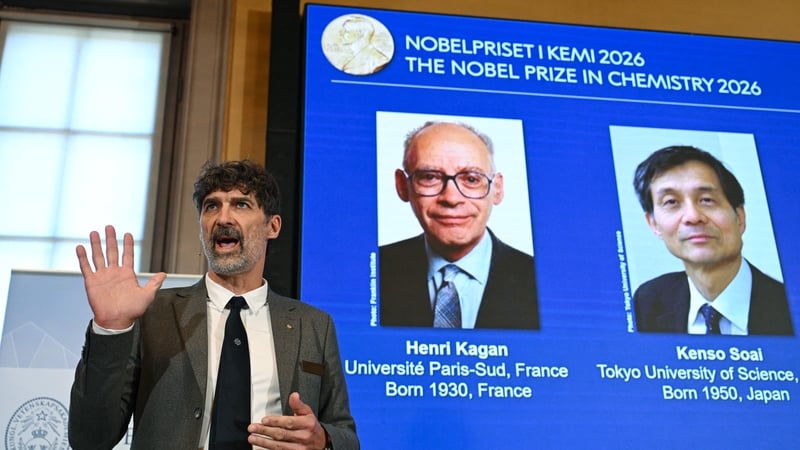
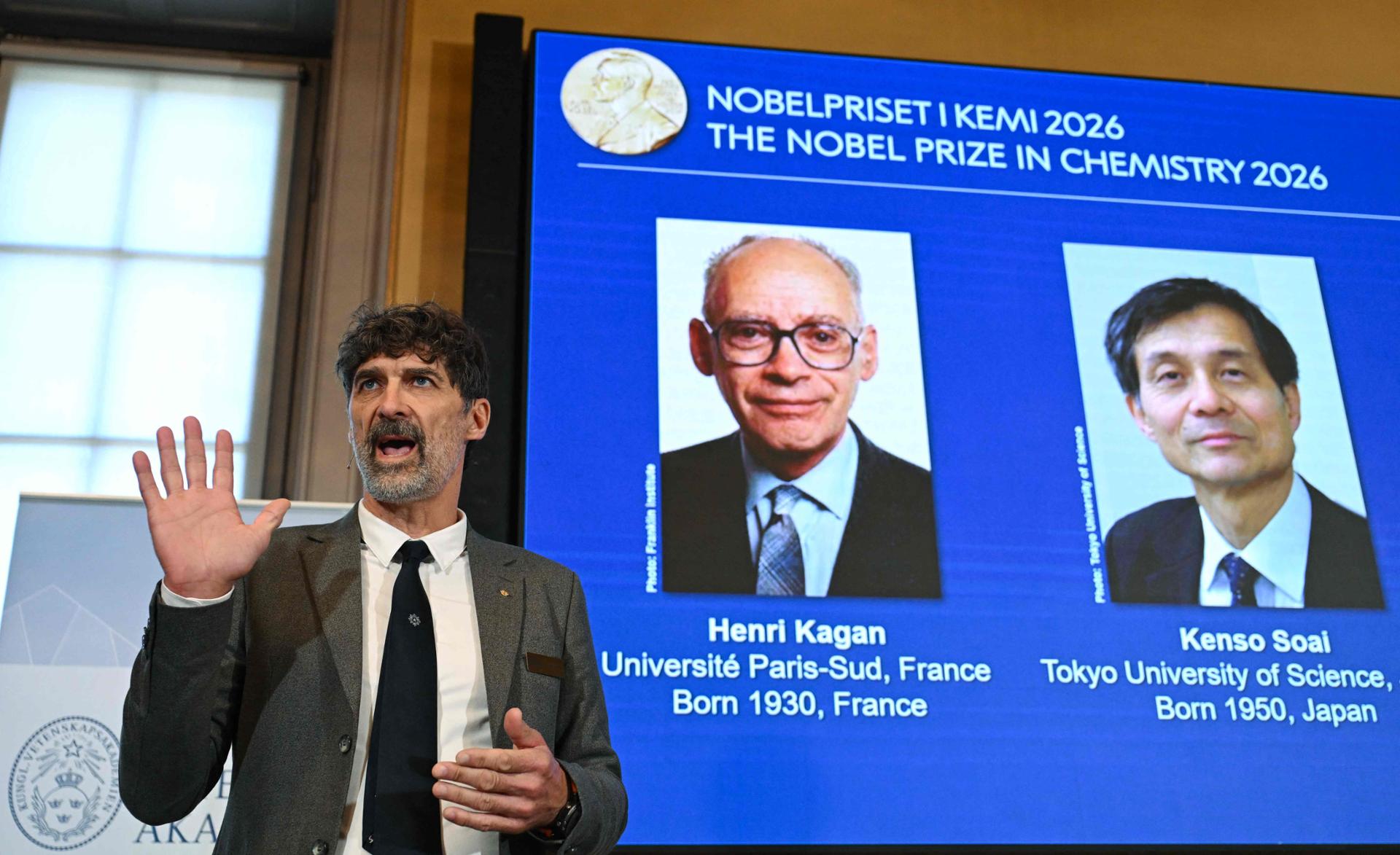
Who Are Henri Kagan And Kenso Soai? Meet The Scientists Who Won The 2026 Nobel Prize In Chemistry
Scientists Henri B Kagan and Kenso Soai have won the 2026 Nobel Prize in Chemistry for helping solve a mystery that has puzzled chemists for more than a century: why molecules that are mirror images of each other can behave differently and how one specific version can be produced selectively. Their work on asymmetric reactions has provided chemists with powerful ways to create the desired…
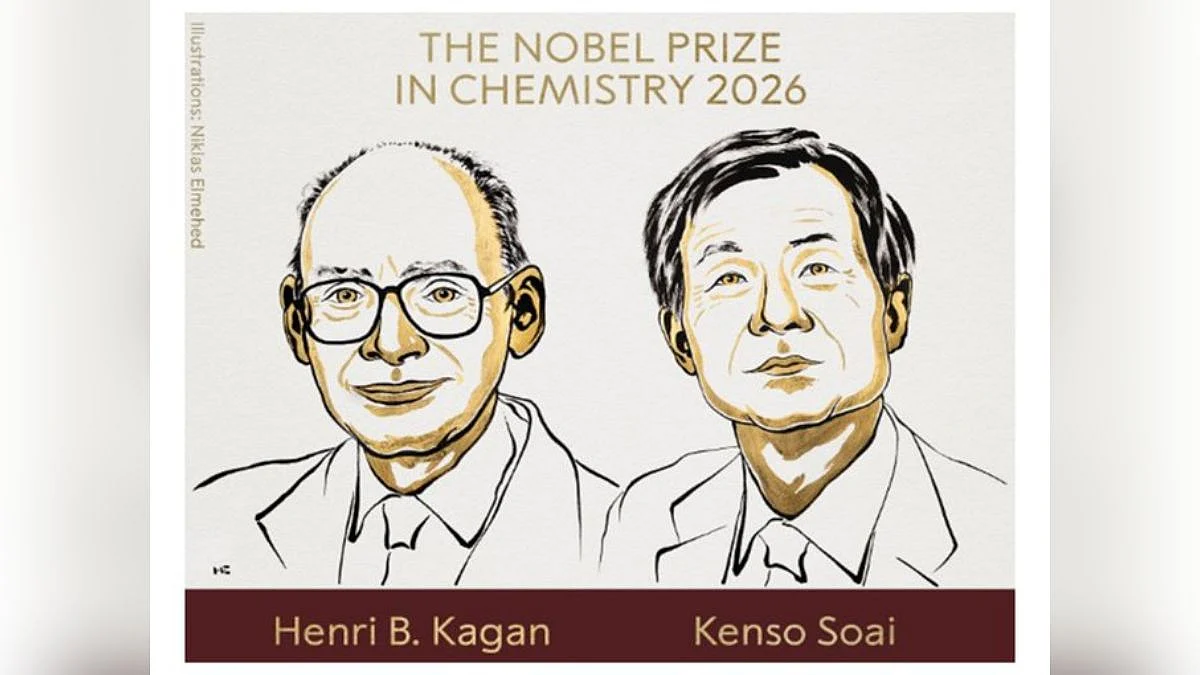
Henri Kagan and Kenso Soai have been awarded the 2026 Nobel Prize in Chemistry for their groundbreaking work in asymmetric reactions. Their research has helped solve a century-old mystery in chemistry: why molecules that are mirror images of each other can behave differently and how to selectively produce one specific version. This advance has far-reaching implications for pharmaceutical manufacturing.
Kagan, a 95-year-old French scientist affiliated with Université Paris-Sud in Orsay, France, made significant contributions to overcoming the fundamental problem of producing an excess of one molecular form when two mirror-image versions are possible. His work built upon the discoveries made by 19th-century French chemist Louis Pasteur. Pasteur observed that bacteria fermented only one of the two mirror-image forms of tartaric acid, which is important in wine production, leading to the concept of homochirality.
Soai, a 76-year-old Japanese scientist from the Tokyo University of Science, also played a crucial role in Kagan and Soai's research. He focused on the chemistry of asymmetric molecules and helped explain how reactions could favor one molecular mirror image over another. Soai received the news of the Nobel award while shopping near his home, expressing his excitement and gratitude for sharing the prize with Kagan.
The significance of their work cannot be overstated. Many molecules essential to life exist in two mirror-image forms, much like left and right hands. Living organisms predominantly use only one version, a phenomenon known as homochirality. Kagan and Soai's discoveries provided chemists with powerful tools to design reactions that could produce the desired "left-handed" or "right-handed" form of a molecule.
This is crucial in pharmaceutical manufacturing, as different mirror-image forms of a drug can have drastically different effects.
The Nobel Committee emphasized the importance of Kagan and Soai's findings in providing methods for selectively preparing chiral substances. Their research has had a profound impact on the field of chemistry, enabling the development of essential pharmaceuticals. Kagan and Soai will be presented with their Nobel medals by Sweden's King Carl XVI Gustaf at a ceremony in Stockholm on December 10, followed by a banquet at Stockholm City Hall.
Written by urgent.news from Free Press Journal's reporting — not their text. Machine-written — may contain errors; check the original before relying on it.