UPSC Mains Answer Practice — GS 2: Community participation in water governance and Legislative privileges (Week 175)
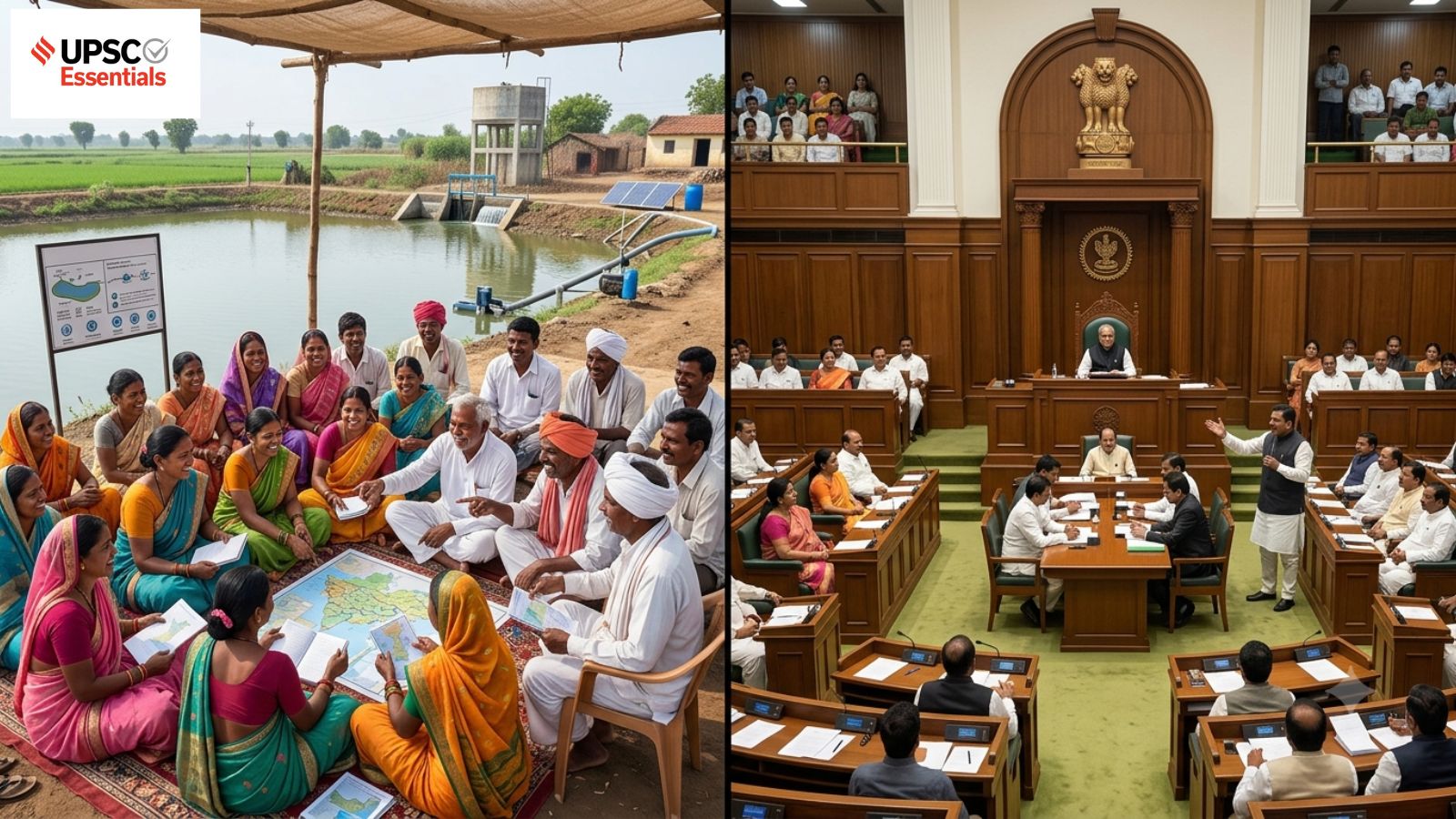
Decentralisation and community participation can greatly enhance the effectiveness and sustainability of water governance in India. By involving local communities in decision-making and management processes, water-related issues can be addressed with a deep understanding of regional hydrological and socioeconomic dynamics. This approach aligns with the concept of subsidiarity, which suggests that decision-making should occur at the lowest appropriate level.
The Gujarat example, particularly the Water Supply and Management Organization (WASMO), showcases how this strategy can lead to improved water conservation, harvesting, and recharge. Local water governance institutions, such as Pani Samitis, can empower communities to actively participate in water system management, ensuring that taps are accompanied by measures to protect the underlying water sources.
Moreover, community participation can help bridge the gap between administrative claims of infrastructure coverage and actual service delivery on the ground. By tailoring responses to local conditions, decentralised water governance can make the provision of water services more sustainable.
Written by urgent.news from The Indian Express's reporting — not their text. Machine-written — may contain errors; check the original before relying on it.