Ukraine adds Kyiv trains, prepares pontoon crossings after Russian bridge attacks
Emergency pontoon crossings could take up to three months to build, Ukraine's Minister for Restoration, Infrastructure and Transport says.
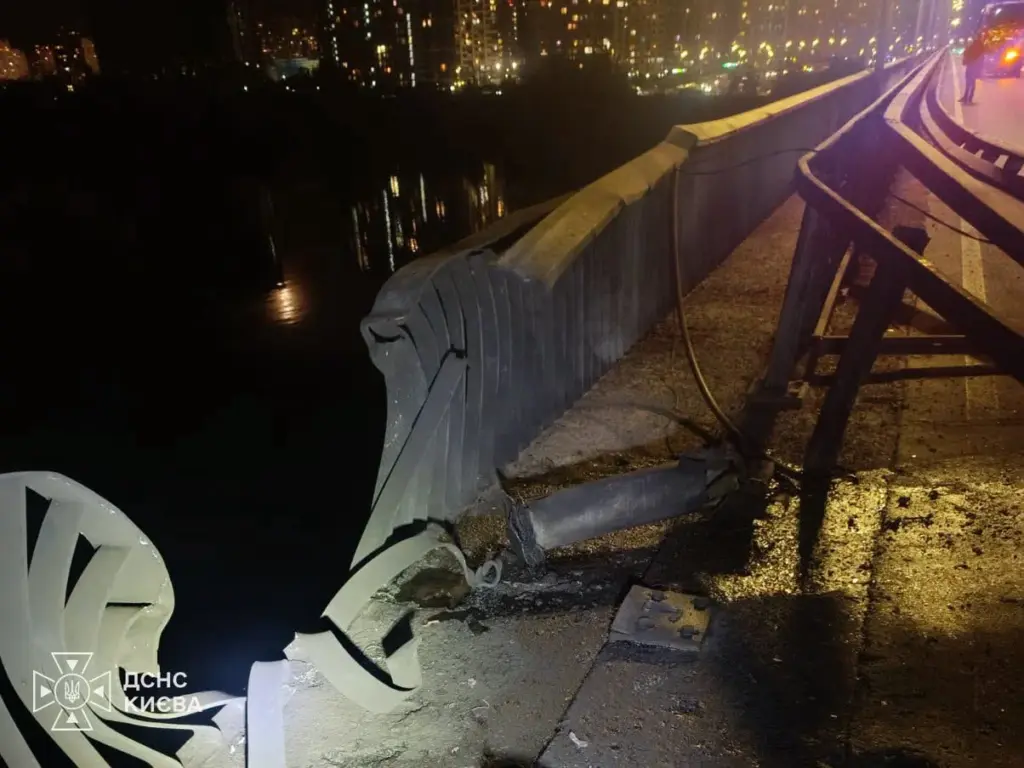
Ukrainian state railway Ukrzaliznytsia has added 18 shuttle runs between Vydubychi and Darnytsia for the Kyiv City Express during October 5-9, while the government initiates preparations for temporary pontoon crossings over the Dnipro River following Russian attacks on the bridge infrastructure. Mykola Kalashnyk, Minister for Restoration, Infrastructure and Transport, explained the contingency measures in an interview with Suspilne on October 3.
Approximately 600,000 vehicles traverse the Dnipro every day in Kyiv, rendering the river crossings crucial for capital movement. Russia's assaults on the Southern and Northern bridges have obstructed traffic, with the Southern Bridge entirely closed to cars and metro on October 2, and additional restrictions imposed on other crossings.
Russian jets have intensified assaults on Kyiv's Northern and Southern bridges in recent days, and a sophisticated Russian jet-powered Geran-4 warhead has been introduced to penetrate bridge structures and power-line supports, according to presidential adviser Serhii Beskrestnov. Heavy traffic congestion emerged on October 6 between Kyiv's left and right banks, particularly around the Southern Bridge, Obozrevatel reported.
The congestion resulted from Russian strikes that breached the Northern Bridge. Green-line metro services resumed carrying passengers between the banks following the yellow threat level on October 4. During the current restrictions, traffic on the Southern and Podilskyi bridges is halted in certain directions for up to the first 15 minutes after an air alert commences.
Ukrzaliznytsia announced the introduction of five additional Kyiv City Express shuttles during peak hours, from 06:00-09:00 and 16:00-21:00, increasing the number of peak-hour runs between the banks to up to six. The government aims to construct several backup river crossings over the Dnipro, employing earth embankments and pontoon crossings, with completion projected within three months.
These backup crossings are expected to supply at least 50% of the bridges' existing capacity. Deputy head of the parliamentary committee on transport and infrastructure, Volodymyr Kreidenko, proposed reversible traffic across the bridges, with morning traffic from the left to the right bank and evening traffic from the right to the left.
He recommended bicycle or e-scooter hubs near the bridges and passenger ferry crossings. Associate professor Andrii Koretskyi from the National Transport University cautioned that temporary crossings cannot replace a permanent bridge, emphasizing that the only alternative to a bridge is, well, a bridge as a permanent structure. He also pointed out that constructing a tunnel under the Dnipro is technically feasible but not a swift solution, given the Dnipro's width in Kyiv, ranging from 400 to 1,500 meters.
Written by urgent.news from Euromaidan Press's reporting — not their text. Machine-written — may contain errors; check the original before relying on it.