Top 8 questions about the “plague” situation
Well, “the plague” is trending on almost all social media channels now.
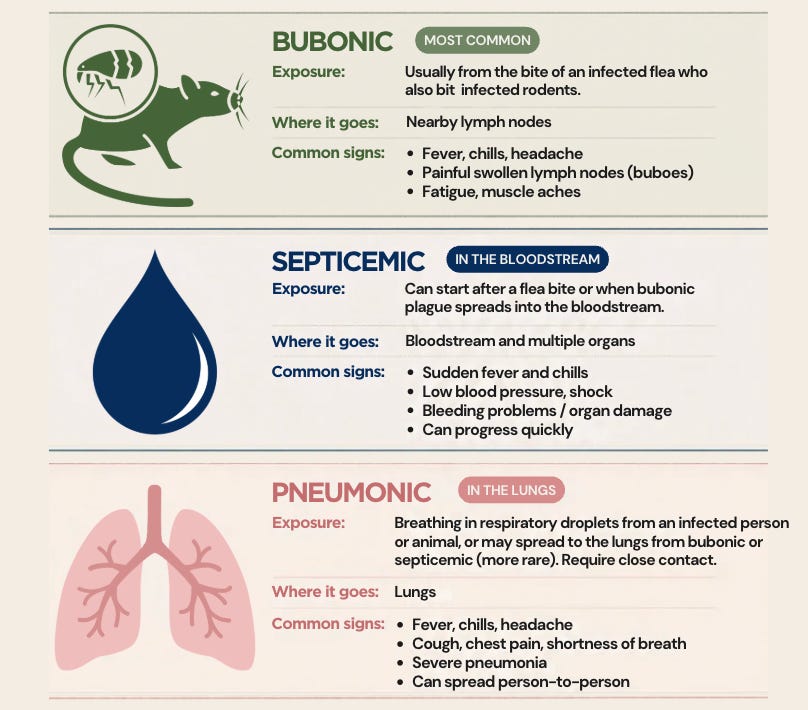
The phrase "the plague" has become a trending topic across most social media platforms recently. Given the current circumstances, it's challenging to determine the appropriate level of coverage. The risk of the plague reaching the United States from Russia is very low, but there is significant concern among many people due to the lack of official information coming from Russia.
To help navigate the online chatter, we have compiled the most frequently asked questions and provided answers based on the insights of Dr. Marisa Donnelly, an epidemiologist, and Dr. Liz Marnik, an immunologist.
It's important to note that a scientist who worked in an anti-plague laboratory has died from pneumonia of unknown cause, and a plague diagnosis has not been confirmed. A scientist working in an anti-plague laboratory died from pneumonia of unknown cause, leading to concerns about a potential outbreak.
Firstly, the level of worry one should have is relatively low. Epidemiologists and biosecurity experts are primarily worried due to the lack of transparency. However, this concern should not be transferred to the general public, as there is currently no risk for individuals, and the likelihood of the situation escalating is minimal (a worry rating of 1 out of 10).
Secondly, the term "plague" generally evokes memories of the devastating 14th-century European pandemic, which resulted in the death of approximately 25 million people, or one-third of Europe's population. The associated imagery of beaked masks and plague doctors is a historical artifact, as they were introduced centuries later.
Plague is still present today, primarily endemic in regions such as Madagascar and sporadic in other areas, including the United States. Globally, an estimated 1,000 to 2,000 people are infected each year, with three forms of plague caused by the same bacterium, Yersinia pestis. The type of plague depends on the mode of exposure, with the pneumonic form being the most concerning due to its contagious nature.
Thirdly, pneumonic plague is contagious, but it requires close or direct contact for transmission. Casual contact is not sufficient for its spread. On average, one person with pneumonic plague can infect one to three additional individuals. Public health responses to a pneumonic plague case involve treating and isolating the patient, identifying potential contacts, and initiating monitoring. In some cases, post-exposure prophylaxis antibiotics may be administered to exposed contacts to prevent the spread of the disease.
Fourthly, plague can be treated with antibiotics, and recovery rates are generally high. However, early treatment is crucial, as plague can progress rapidly. Once a clinician suspects a possible plague infection, antibiotics are typically prescribed promptly.
Fifthly, there is no plague vaccine available in the United States. In the past, a vaccine was offered to military personnel and high-risk individuals, but its production was discontinued in 1999 due to serious side effects and low efficacy. Sixthly, while the concept of using plague as a bioweapon has gained attention, particularly through a fictionalized account in a book, there is no evidence to suggest that the recent death in Russia was caused by a bioweapon or genetically modified form of plague.
The CDC has developed guidelines for responding to a potential plague bioterror event, considering the bacterium Yersinia pestis as a potential threat.
Seventhly, national stockpile antibiotic supplies in the United States are adequate for handling small outbreaks, although the system could benefit from additional support. Multiple antibiotic options are available for treating plague, which would help prevent supply chain bottlenecks.
Lastly, the most critical action individuals can take is to demand transparency and accountability from Russia. Additionally, when friends and family discuss the plague, it is essential to encourage critical thinking and fact-checking to separate misinformation from factual information.
Written by urgent.news from Your Local Epidemiologist's reporting — not their text. Machine-written — may contain errors; check the original before relying on it.