Three Years After October 7, I Moved Back to Nahal Oz
But if Israel’s election doesn’t bring change, I don’t see a future for my family here.
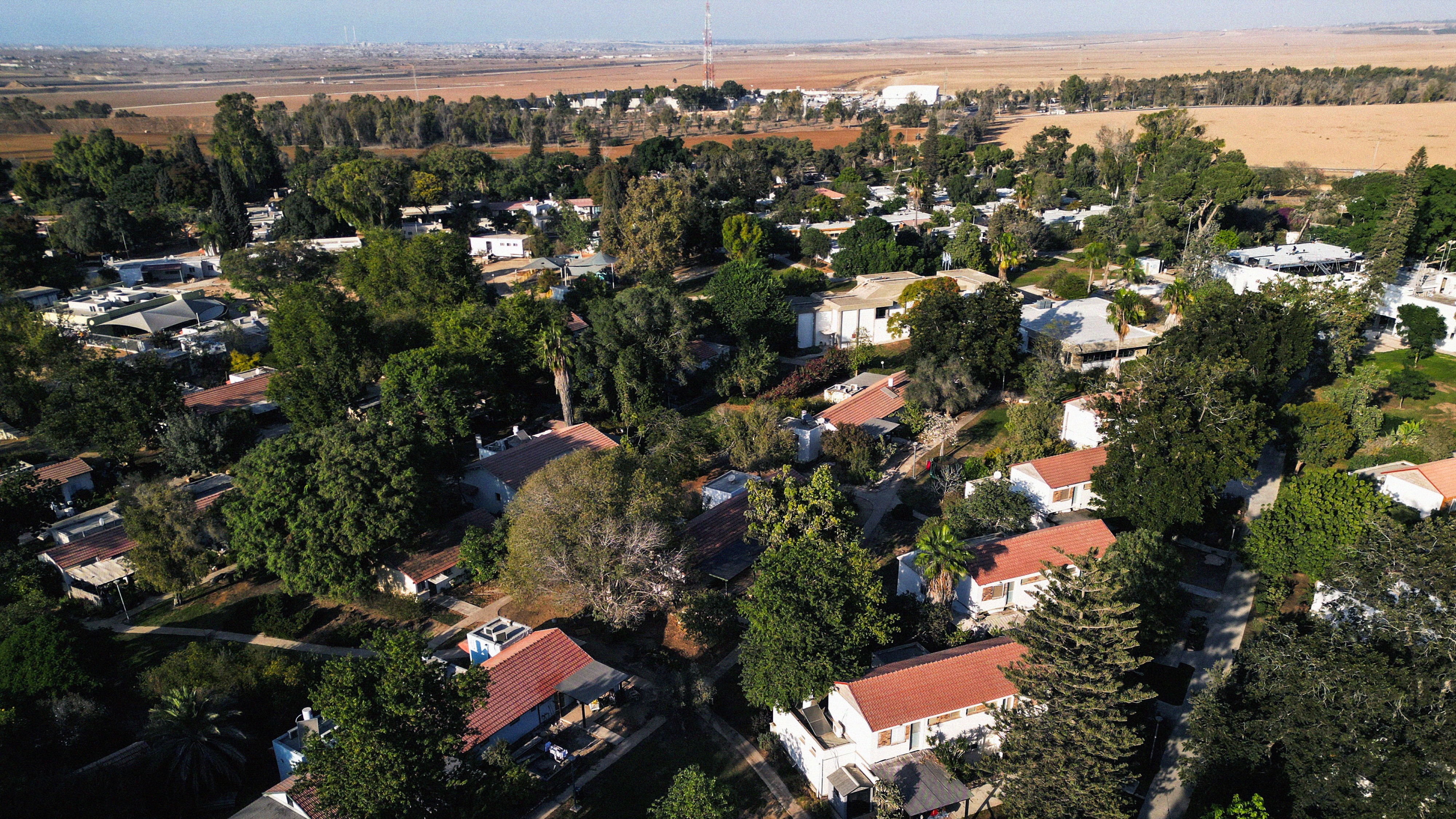
On the morning of August 18, a moving truck pulled up to the home of the reporter and his wife in Kibbutz Nahal Oz, their closest Israeli community to the Gaza border. The driver and two assistants unloaded dozens of boxes filled with their belongings – books, clothing, electronics, kitchen appliances. After 50 minutes, everything had been removed from the truck and piled in the center of their living room.
The reporter offered the movers some cold water to combat the scorching heat and they departed. Upon seeing the boxes, both the reporter and his wife took a deep breath – almost three years had passed since they survived the October 7 attack and now they were back home. Nahal Oz is a small community located less than a mile from the Israel-Gaza border.
It is a kibbutz, a collective village where daily life is still managed by the community today. The kibbutz features a successful dairy farm, eight chicken coops, and fields stretching several miles in all directions, where various crops are grown throughout the year. The western side of the kibbutz borders Gaza, with large mounds of rubble standing where the destroyed Shuja'iyah neighborhood of Gaza City once stood.
The area is now part of the approximately 60 percent of the Gaza Strip held by the Israeli military and is uninhabited. Nahal Oz has historically been a stronghold of the Israeli left, with the Labor party and its allies winning over 90 percent of the local votes in past elections. Since October 7, the party opposing Benjamin Netanyahu received 85 percent of the votes in the kibbutz's polling station during the 2022 elections.
Prior to the attack, Nahal Oz was home to 450 residents. Fifteen friends and neighbors were murdered, while eight were kidnapped. The remaining residents were evacuated from the kibbutz under fire. Almost every home suffered damage, with bullet marks found inside and outside the reporter's house after his first visit in November 2023.
Miri, the reporter's wife, identified the impact of a grenade near their kitchen window. The reporter's family shared their harrowing experience in their book, "The Gates of Gaza," published a year after the attack. The memories of the ordeal continue to impact their lives, making the decision to return to Nahal Oz a deeply personal and complex one.
In the early years of the war, the question of whether to return was purely theoretical, as Nahal Oz was located in a closed military zone. The family lived in a kibbutz near Haifa, where they waited for the war to end. The decision became urgent in 2026 when the reporter had to enroll his older daughter, Galia, in first grade. He wanted her to start her academic journey with her friends back home, but wanted to know if they could return safely to the community after such a traumatic experience and deal with the devastation of Gaza.
To make that determination, the family began visiting the kibbutz on weekends, spending nights in their renovated home. Initially, the cease-fire allowed for nighttime visits, but Israeli bombardments still shook their walls. Eventually, after months of deliberation, the reporter and his wife decided to return and rebuild their lives in the same place where their community was attacked.
They chose to unpack only essential items, leaving the remaining boxes sealed until October 27, when Israel will hold the most consequential election in its history. If Israel's liberal camp loses, the reporter fears that returning to Nahal Oz might become even more challenging.
Written by urgent.news from The Atlantic's reporting — not their text. Machine-written — may contain errors; check the original before relying on it.