The EU–MERCOSUR Deal Changes the Game for Ukrainian Agri-Food Exports
The EU–MERCOSUR trade agreement is creating new competitive pressure for Ukrainian agricultural exporters just as Kyiv is seeking deeper integration with the European market. The agreement, signed in January and provisionally applied since May 1, 2026, gives Argentina, Brazil, Paraguay and Uruguay preferential access to the EU market. Its agricultural quotas include 99,000 tons of beef, 180,000…
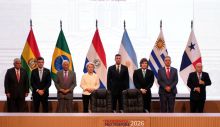
The recent EU–MERCOSUR trade agreement is reshaping the landscape for Ukrainian agricultural exports, especially as Kyiv seeks greater integration with the European market. Signed in January and effective since May 1, 2026, the accord grants Argentina, Brazil, Paraguay, and Uruguay preferential access to the EU market. Key agricultural quotas include 99,000 tons of beef, 180,000 tons of poultry, 180,000 tons of sugar, 45,000 tons of honey, and 60,000 tons of rice, with phased implementation over five years.
Many of these products overlap with Ukraine's sensitive export categories. Within the upgraded EU-Ukraine trade framework, Ukraine retains quotas for poultry, sugar, and honey, some of which were already heavily utilized in 2026. However, MERCOSUR imports do not directly diminish Ukraine’s quotas but heighten price competition within the EU.
Brazilian poultry, for instance, enters duty-free under its preferential quota, whereas Ukrainian exporters face higher tariffs after exhausting their own quotas. This has prompted some Ukrainian producers to explore alternative markets such as the United Kingdom. Politically, the situation is intensifying, with European farmers perceiving Ukrainian and MERCOSUR agricultural imports as part of the same competitive pressure.
EU countries have even staged protests, calling for restrictions on both. For Ukraine, this political climate could deter European governments from expanding agricultural trade concessions. The EU’s new safeguard mechanism could play a crucial role, particularly for sensitive products. A significant price disparity coupled with heightened preferential imports may trigger an investigation and potentially result in the suspension of trade preferences.
Similar safeguards could eventually be sought for Ukrainian agricultural imports. Therefore, Ukraine must adapt beyond merely expanding its access to the European market. Diving deeper into processing is a priority, as finished food products, confectionery, and processed poultry can yield higher margins and face distinct competitive dynamics compared to raw agricultural commodities.
Diversifying markets to the Middle East, North Africa, and Asia could also lessen Ukraine's reliance on the EU market and its politically sensitive quotas. Additionally, Ukraine's logistical advantage—deliveries to European markets are swift, taking days compared to weeks for shipments from South America—provides an edge, especially for chilled products, facilitating closer integration into European supply chains.
Thus, while the EU–MERCOSUR agreement does not close the European market to Ukraine, it complicates competition. Ukraine's strongest strategy lies in combining deeper processing, diversifying markets, leveraging logistical proximity, and staying aligned with EU standards. The ultimate goal should be to position Ukraine not merely as another agricultural exporter vying for access, but as an integral component of Europe's food security system.
Written by urgent.news from UATV English's reporting — not their text. Machine-written — may contain errors; check the original before relying on it.
This story
This is one outlet's version. Read the fullest account.