Supreme Court’s Indecision Has A Big Role In Today’s Constitutional Crisis
By K Raveendran India’s escalating confrontation over the Election Commission is no longer merely a dispute about electoral rolls or the conduct of Chief Election Commissioner Gyanesh Kumar. It has become an institutional crisis touching the credibility of elections themselves. As opposition parties, activists and youth groups demand Kumar’s resignation over allegations of voter-list…
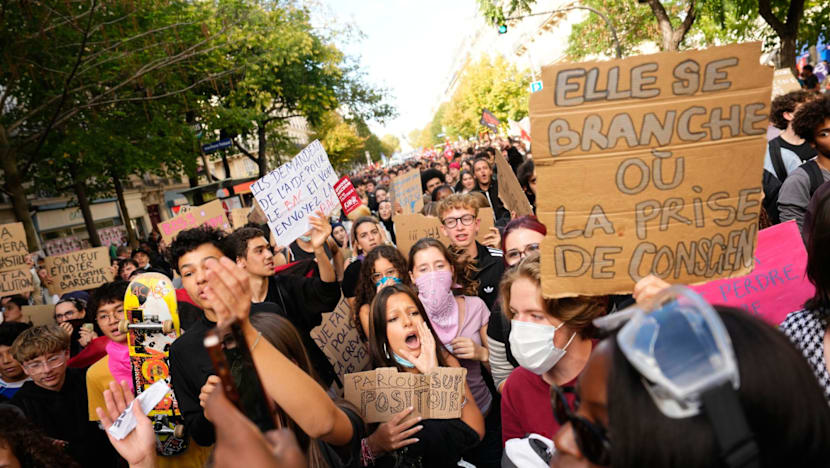
India's ongoing conflict over the Election Commission has transformed from a dispute about electoral rolls into an institutional crisis that questions the legitimacy of elections themselves. Opposition parties, activists, and youth groups are demanding the resignation of Chief Election Commissioner Gyanesh Kumar, alleging voter-list manipulation.
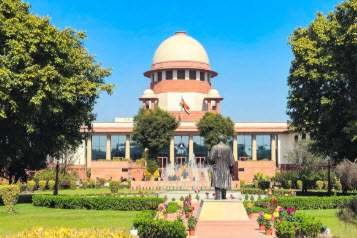
The Supreme Court must now confront the uncomfortable question of whether its failure to promptly decide a constitutional challenge to the law under which Kumar and other Election Commissioners were appointed could have avoided much of the current uncertainty. This question cannot be easily dismissed, as petitions challenging the Chief Election Commissioner and Other Election Commissioners Act, 2023, have been pending since January 2024.
The Supreme Court's decision to refuse a stay on the legislation before the 2024 general election allowed the selection process to continue, resulting in Kumar's appointment as Election Commissioner in March 2024 and Chief Election Commissioner in February 2025. The Court's decision leaves the foundational constitutional issue unresolved, raising concerns about the independence of the Election Commission.
As the Commission carries out a Special Intensive Revision of electoral rolls, allegations have emerged of large-scale wrongful deletions, excessive documentation requirements, and opaque decision-making. Opposition parties claim that eligible citizens have been disenfranchised, while the Commission asserts that the process aims to remove duplicates, deceased entries, and ineligible individuals.
These competing claims must be examined on evidence rather than political rhetoric. The crisis has deepened with allegations that Kumar took important decisions related to the Special Intensive Revision without the concurrence of the other two Election Commissioners, invoking the statutory requirement for unanimous decisions or majority determinations.
The Supreme Court has appropriately refrained from suspending Kumar based solely on allegations and newspaper reports. However, the earlier delay in resolving the constitutional challenge has significantly impacted the court's ability to address the ongoing allegations effectively. The irony is that the Supreme Court is now being asked to evaluate the actions of a Chief Election Commissioner appointed through a process whose constitutional validity it has left undecided since 2024, effectively colliding with allegations against Kumar himself.
While the Court cannot prevent political controversy or decide cases according to street pressure, its responsibility lies in providing temporal clarity. The unresolved institutional question over the independence of the Election Commission's appointment mechanism has now become crucial, as election independence was never an abstract constitutional question.
The Court's delay has left India without certainty regarding the method used to choose officials overseeing elections, ultimately weakening public confidence in the institution.
Rewritten by urgent.news; may contain errors — check the original.