Secrets of Oldest Land Animal’s 194-Year Lifespan Revealed with Epigenetics
Researchers studying a giant tortoise named Jonathan—who is the oldest known living land animal in the world today—say it’s not just good genes, but a lack of genetic wear and tear that may have kept him going for an estimated 194 years. The post Secrets of Oldest Land Animal’s 194-Year Lifespan Revealed with Epigenetics appeared first on GEN - Genetic Engineering and Biotechnology News .
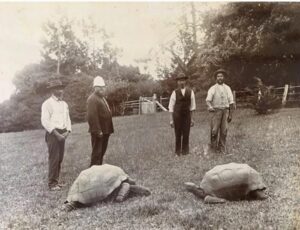
A 194-year-old giant tortoise named Jonathan, the world's oldest known living land animal, has revealed secrets behind his extraordinary lifespan through epigenetics research. Led by Stephen Clark, founder of the Kallel Foundation, a team sequenced Jonathan's genome and identified 287 unique gene variants responsible for reducing the effects of aging.
By comparing his epigenome with younger Aldabra giant tortoises, researchers found that the gene regulators controlling DNA repair and metabolism remained remarkably stable in Jonathan over nearly two centuries. This stability, coupled with efficient mitochondrial energy production, RNA processing, and genomic repair, contributes to his exceptional longevity.
The study, published in Science Advances, marks the first investigation of the epigenome in a giant tortoise and provides unprecedented insights into extreme lifespan. Jonathan, hatched in 1832, has lived most of his life on St. Helena, where he arrived as a gift to Sir William Grey-Wilson in 1882. The researchers hope to translate these evolutionary findings into practical, affordable treatments for aging, aiming to democratize access to longevity medicine.
Written by urgent.news from GEN Biotechnology's reporting — not their text. Machine-written — may contain errors; check the original before relying on it.