Rooted like a tree, responsive like a river: Dr Amin Adam calls for new model of Imamship to meet modern realities
Former Finance Minister Dr Mohammed Amin Adam has called for a new model of Islamic leadership to meet Ghana's fast-changing social realities, arguing that Imams must remain spiritually grounded while adapting their tools and institutions. Speaking at the 5th National Conference of Regional Imams in Accra, Dr Amin Adam said the central question facing the Muslim community today was how the Imam…
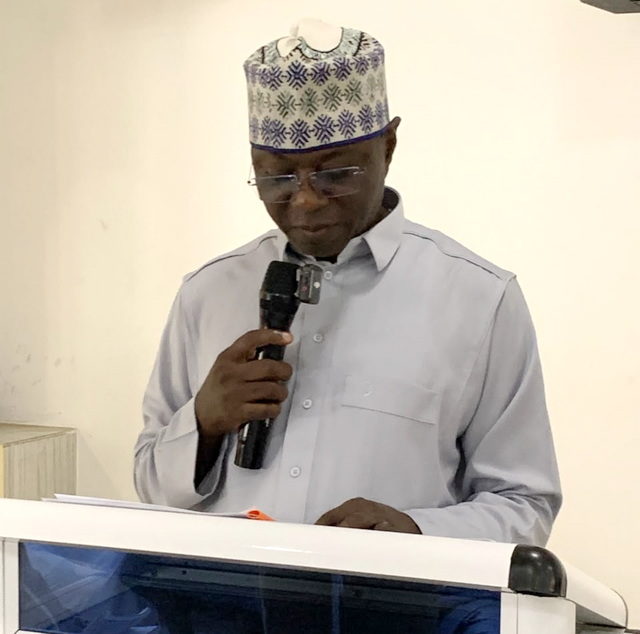
Former Finance Minister Dr Mohammed Amin Adam urged for a new model of Islamic leadership in Ghana to address the rapidly changing social landscape. Addressing the 5th National Conference of Regional Imams in Accra, he presented the challenge facing the Muslim community: to maintain leadership without losing spiritual authority amid rapidly changing needs, desires, and expectations.
"How does the Imam in modern times continue to lead a community whose needs, pleasures and expectations are changing faster than at any time in our history without losing the spiritual authority and the traditions that have made him trusted for generations?" Dr Amin Adam asked.
Adam urged the Imams to embody a balance between firm doctrinal foundations and adaptable responsiveness. He compared this to the way a tree remains rooted while responding to its environment, saying that "imams must be rooted like a tree and responsive like a river." This means grounding the Imam in the Quran and the Sunnah, while simultaneously adapting their methods, institutions, and tools.
"What it means in our context is that the Imam must be rooted in the Quran and the Sunnah but responsive in the methods, institutions and the tools that he uses to serve," he emphasized.
Dr Amin Adam provided historical context for the role of Imams in Ghana's society. He noted that from traditional scholarly centers like Wa, Dagbon, and Salaga to the Zongos in Accra, Kumasi, Takoradi, and Koforidua, Imams have been more than just prayer leaders. He highlighted the varied responsibilities of Ghanaian Imams, which include teaching, adjudicating family disputes, officiating marriages, counseling, mediating, advising chiefs, and representing the community before authorities.
The challenges confronting Imams in contemporary Ghana are only amplified by the nation's significant Muslim population. With roughly one in every five Ghanaians identifying as Muslim, representing about twenty percent of the population according to the 2021 Population and Housing Census, the quality of spiritual life, family stability, social welfare, and economic prospects of millions of Ghanaians relies heavily on the performance of local Imams.
The conference, attended by Regional Chief Imams from all 16 regions and other Islamic leaders, will address the training, welfare, and standardization of Imamship in Ghana.
Written by urgent.news from MyJoyOnline Ghana's reporting — not their text. Machine-written — may contain errors; check the original before relying on it.