Richtig Druck machen: Wie oft den Luftdruck und Zustand der Autoreifen checken?
Wer regelmäßig selbst den Luftdruck in den Autoreifen prüft, spart Sprit und schont die Reifen. Warum auch ein Reifendruck-Kontrollsystem allein nicht ausreicht und wie oft Experten zur Messung raten.
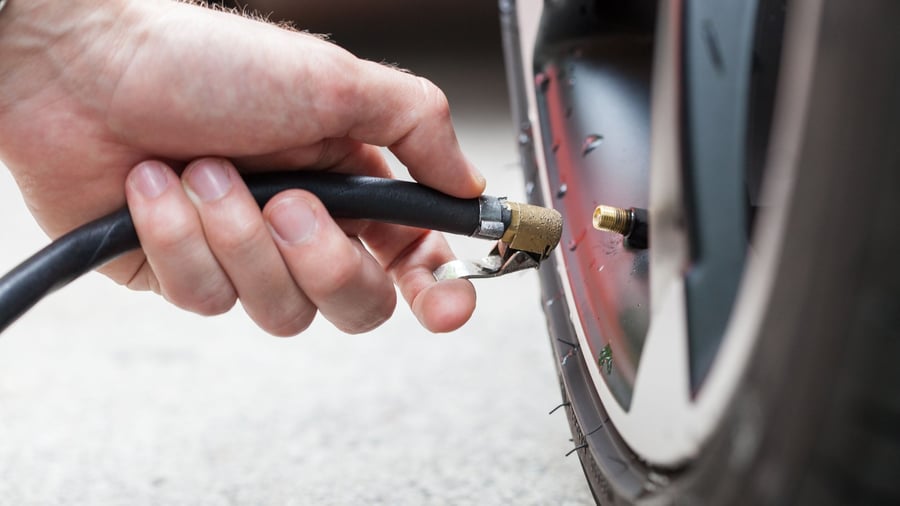
To ensure accurate tire pressure, drivers should periodically manually check the pressure even with a Recreational Driving Pressure Control System (RDKS) in place. While the system alerts of pressure loss, it does not always replace the balance with the manufacturer's prescribed pressure. The accuracy varies depending on the system's technology, with indirect measurement systems being less precise than direct ones.
However, manual checks remain useful even with direct RDKS systems. "An occasional manual control measurement, despite the direct-measuring RDKS, is still valuable and can serve to verify the plausibility of the displayed values," the ADAC states. Additionally, tire pressure should be checked and adjusted at cold tires as the displayed values during a drive may not accurately reflect the cold tire pressure.
The ADAC emphasizes that the RDKS should be understood as an additional control and warning system, and proper tire pressure helps save both material and fuel. Even a 0.4 bar below the specified pressure increases tire wear and raises rolling resistance, resulting in up to 0.3 liters of fuel consumption per 100 km. Regularly measuring tire tread profiles is also recommended, with experts advising checking tire pressure every two to three tank stops or at least once every 14 days.
Considering the driving profile, one might need to do this more frequently. Checking the tread depth every few months is also advised, with legal requirements mandating a minimum tread depth of 1.6 millimeters. However, experts like the ADAC recommend at least 4 millimeters for winter or all-season tires. Summer tires typically have a tread depth of 3 millimeters.
New tires often have tread depths of 7 to 9 millimeters, while winter tires may have up to 10 millimeters. Regularly inspecting the tire profiles helps detect not only wear but also potential damage early on, such as cuts, bulges, foreign objects, damaged valves, or uneven wear, as these cannot be identified solely by the tire pressure indication.
Ensuring the correct tire pressure also contributes to safety, with a high wet grip being the most crucial factor, ideally rated 'A'. Although the EU label does not include a dry grip rating, tests from automotive magazines like "Auto Bild," "Auto Zeitung," or "Auto, Motor und Sport," as well as from institutions such as ACE, ADAC, and GTÜ, provide insights into the tire's performance on dry surfaces.
Written by urgent.news from Handelsblatt's reporting — not their text. Machine-written — may contain errors; check the original before relying on it.