(LEAD) Nuri rocket set for 5th launch to place 15 satellites into orbit
GOHEUNG, South Korea, Oct. 7 (Yonhap) -- South Korea's homegrown Nuri rocket is ...
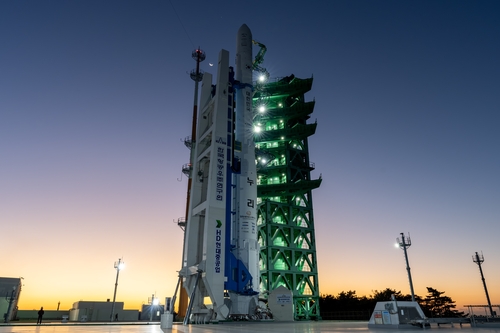
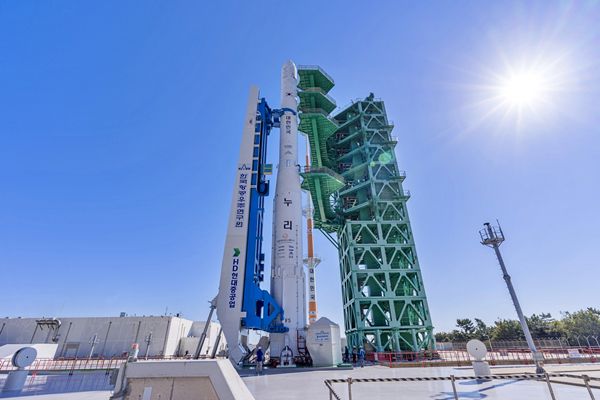
South Korea's indigenous Nuri rocket is scheduled for its fifth launch on Wednesday, carrying a payload of 15 satellites. Chief among them are five New-space Earth Observation Satellite Constellation for National Safety (NEONSAT) microsatellites, aimed at monitoring the Korean Peninsula and surrounding regions for national security and disaster response.
These satellites will be deployed sequentially from the Nuri rocket, with each microsatellite weighing less than 100 kilograms and equipped with an electro-optical camera. The three-stage rocket is poised for launch from the Naro Space Center in Goheung, approximately 400 kilometers south of Seoul, at 12:25 p.m. Oh Tae-seok, administrator of the Korea Aerospace Research Institute (KASA), confirmed the rocket's readiness for launch, citing favorable weather and space conditions and no risk of potential collisions with space objects.
The first and second stages of Nuri will separate within minutes of liftoff, with satellite deployment commencing between 810 and 960 seconds at an altitude of around 575 kilometers. The NEONSAT microsatellites will be released at intervals of 35 to 40 seconds, while the 10 CubeSats will follow two at a time, spaced 10 seconds apart.
After releasing all 15 satellites, Nuri will execute a collision-avoidance maneuver and vent its residual fuel, concluding its mission roughly 20 minutes after liftoff. The rocket is expected to remain in orbit before eventually reentering Earth's atmosphere and disintegrating. The NEONSAT constellation will eventually comprise 10 satellites, with the remaining five scheduled for deployment during Nuri's sixth flight planned for the following year.
Once fully operational, the constellation will have the capability to image the Korean Peninsula multiple times daily and revisit specific locations within a 24-hour timeframe.
Written by urgent.news from Yonhap News's reporting — not their text. Machine-written — may contain errors; check the original before relying on it.