India's IPO boom defies its battered stock market
Dubai: The Indian stock market is having a difficult year, however its IPO market is telling a completely different story. According to a recent Reuters report, the Nifty 50 posted its eighth consecutive weekly decline in the 1st week of October, extending its longest losing streak in 25 years. But on the other hand we saw companies continuing to tap investors for fresh capital via the stock…
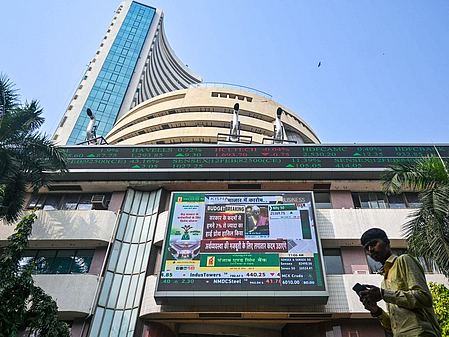
In the midst of a struggling Indian stock market, the nation's Initial Public Offering (IPO) market is demonstrating remarkable activity. According to Reuters, the Nifty 50 index, a key benchmark, has experienced its eighth consecutive weekly decline, marking the longest losing streak in 25 years. Despite this negative performance, numerous companies have continued to raise capital through the IPO route.
This week, 29 companies are set to debut on the stock market, with 8 listings on the primary board and 21 on the SME platforms. The primary question is why so many companies are opting for IPOs amid a weak market. The answer may lie in the record-breaking $4.2 billion raised through public offerings in September. The volume of activity highlights a growing divergence between India's primary and secondary equity markets.
In the first half of fiscal 2027, companies raised a record $25 billion through public equity markets, which is a 75% increase from the previous year. Meanwhile, the Nifty 50 index gained only 1.3% during the April-September period. The 29 listings this week should not be interpreted as a rush to go public amidst weak secondary-market performance, but rather as a reflection of the exceptionally busy IPO pipeline in recent months.
This surge in listings follows a strong September for India's primary market, with 34 companies raising about Rs39,340 crore ($4.1 billion) through IPOs in that month. The activity is driven by a combination of companies seeking capital, a backlog of delayed offerings, and strong domestic demand. The extended IPO approval period by SEBI, which ended on September 30th, prompted many firms to launch before the deadline.
The primary markets focus on company-specific fundamentals and long-term prospects, while the secondary markets are influenced by macroeconomic pressures, foreign outflows, and volatility. Ross Maxwell, chief strategy officer at VT Markets, suggests that the current wave is predominantly a supply-side clearance of a swollen pipeline, with the expiry of regulatory extensions leading to accelerated IPO plans.
Despite the strong domestic demand, the dense listing calendar, culminating in weeks with dozens of debuts, appears to be more about executing pending plans than a renewed interest in Indian equities. The large number of listings does not necessarily indicate a sudden surge in investor enthusiasm. Mixed post-listing performance across several large offerings has tempered excitement, leading to subdued retail bids for some IPOs, even as institutional demand remains robust.
Domestic investors have played a crucial role in helping companies raise money, with systematic investment plans, mutual funds, and domestic institutional investors contributing to a deep pool of local capital. This has reduced companies' reliance on foreign investors when accessing the equity market, with domestic institutions now accounting for about 33% of IPO money raised, compared to 24% in 2021.
Written by urgent.news from Gulf News's reporting — not their text. Machine-written — may contain errors; check the original before relying on it.