I Put on Meta and Xreal’s XR Glasses. Face Computers Are Finally Getting Good
Xreal’s long-hyped Aura glasses arrive soon for $1,279. Here’s how they fare against Meta’s recently announced VR Glasses.
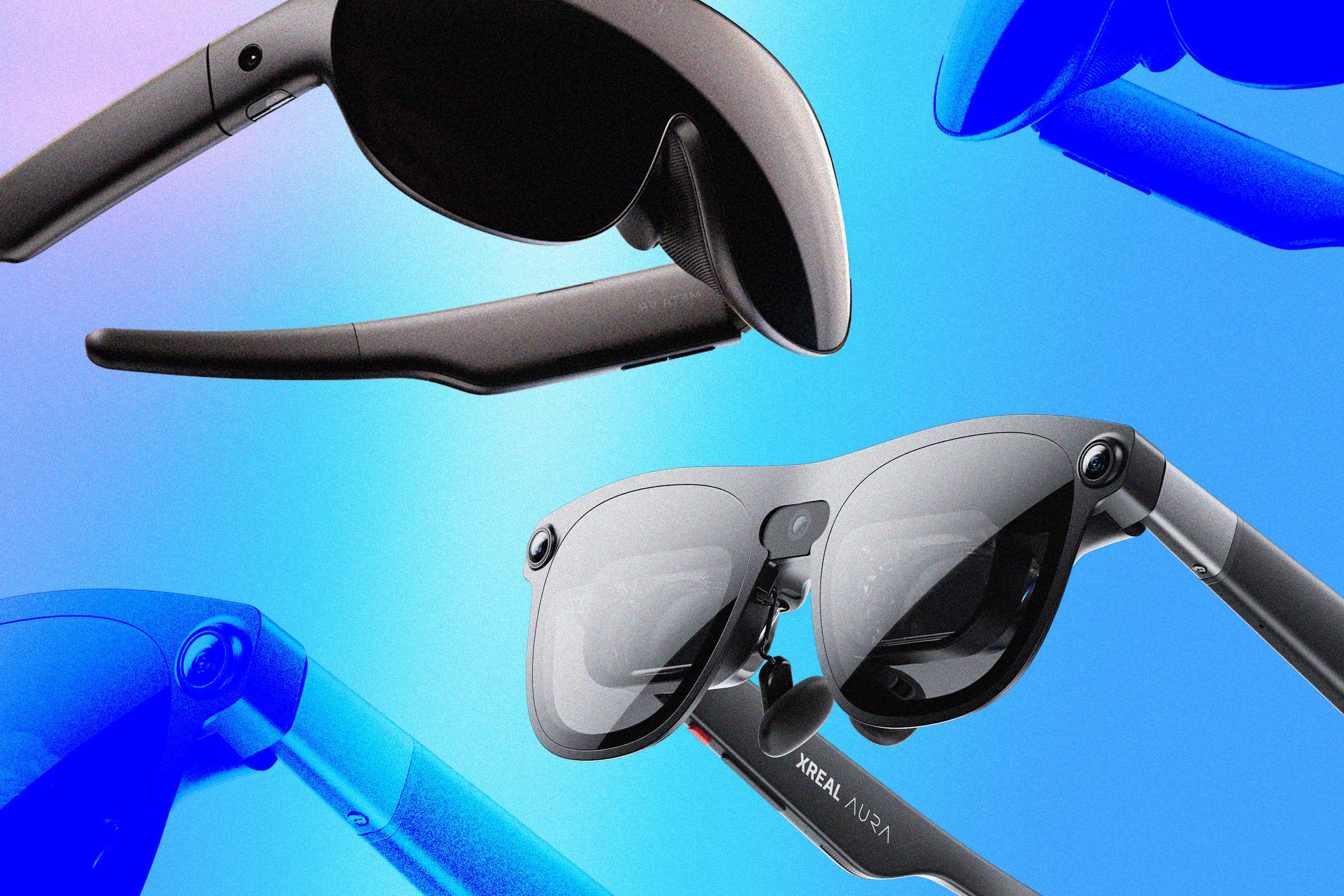
Despite Meta and Xreal's XR glasses receiving criticism over privacy concerns, these face computers are finally improving in terms of video quality and wearability. At Meta's Connect event, I was amazed by the devices' performance, but I'm not alone in this enthusiasm. Xreal, known for its virtual-display glasses, has teamed up with Google to create mixed-reality smart glasses called Xreal Aura.
These glasses will start at $1,279, which is $20 cheaper than Meta's VR glasses. Unlike Meta's option, the Aura glasses are set to launch this year, with availability in the US, Canada, Japan, and South Korea. I tried both Meta's VR Glasses and Xreal's Aura glasses during a demo, held a day after Meta's announcement. Both glasses offer similar experiences, with some experiences working better on one device or the other.
The Aura glasses are more glasses-forward and have a real-world passthrough, making it easier to see what's in front of you while walking around. However, Meta's VR Glasses feel smoother and more fluid in terms of interactive experiences, thanks to their 5K micro-OLED screen and hand tracking features.
Written by urgent.news from Wired's reporting — not their text. Machine-written — may contain errors; check the original before relying on it.