Honda wants to turn highways into giant wireless chargers for electric trucks while they drive
Honda's research subsidiary is working with construction company Taisei and road builder Taisei Rotec on the charging system. The partners plan to join the Tateyama Project on Japan's Tateyama Expressway in Chiba from fiscal 2027 onward, which begins April 1, 2027. Read Entire Article
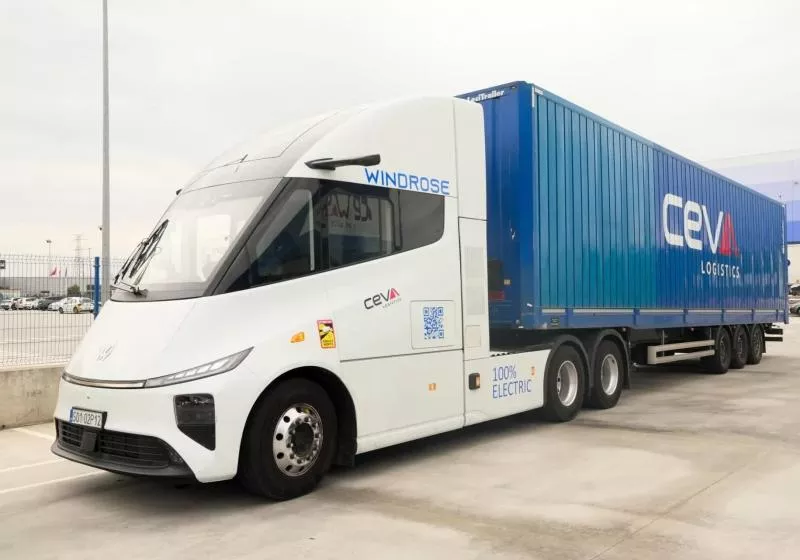
Electric truck owners often face the inconvenience of needing to stop and recharge their vehicles. Honda aims to eliminate this issue by installing charging equipment beneath highways, enabling suitable trucks to charge while in motion. A research subsidiary of Honda, in collaboration with construction firm Taisei and road builder Taisei Rotec, is developing the system. The partners intend to pilot the technology on Japan's Tateyama Expressway in Chiba, beginning on April 1, 2027, under the Tateyama Project.
The technology employs magnetic coupling to transfer energy between transmitters embedded in the road and a receiver attached to the vehicle. Coils placed beneath the road generate a magnetic field, which the receiving coil utilizes to charge the truck's battery. Honda's design integrates these buried transmitters using a DC distribution system. Each road unit contains an inverter and coil, a design that Honda claims simplifies wiring and cuts down on installation work.
The units are compact enough to fit into cuts made in existing road surfaces, making installation feasible without constructing a new road. To ensure the charging units can endure the heavy loads of trucks weighing approximately 20 tons, the partners have developed robust road structures and charging units. A follow-up test roadway, scheduled to commence in late 2026, will undergo durability testing equivalent to one million wheel loads at 49 kN per wheel, alongside assessments of charging performance and electromagnetic field leakage. Subsequent verification will measure power delivery up to 150 kW and reliability at high speeds.
While similar projects exist in the US, such as Florida's plan for a charging section on State Road 516 capable of delivering up to 200 kW and Electreon's Detroit proposal utilizing buried coils and vehicle-mounted receivers, Honda has not yet compared the cost of its system to conventional fast-charging networks. The economic viability of the technology remains to be determined.
Although the prospect of electric vehicles automatically charging while driving is appealing, it is essential to acknowledge that ordinary EVs would require additional hardware to utilize this vision effectively.
Written by urgent.news from TechSpot's reporting — not their text. Machine-written — may contain errors; check the original before relying on it.