Here’s What to Do About Trump’s War Crimes
Despite the obstacles, foreign governments and U.S. lawmakers can begin the process of holding the president accountable.
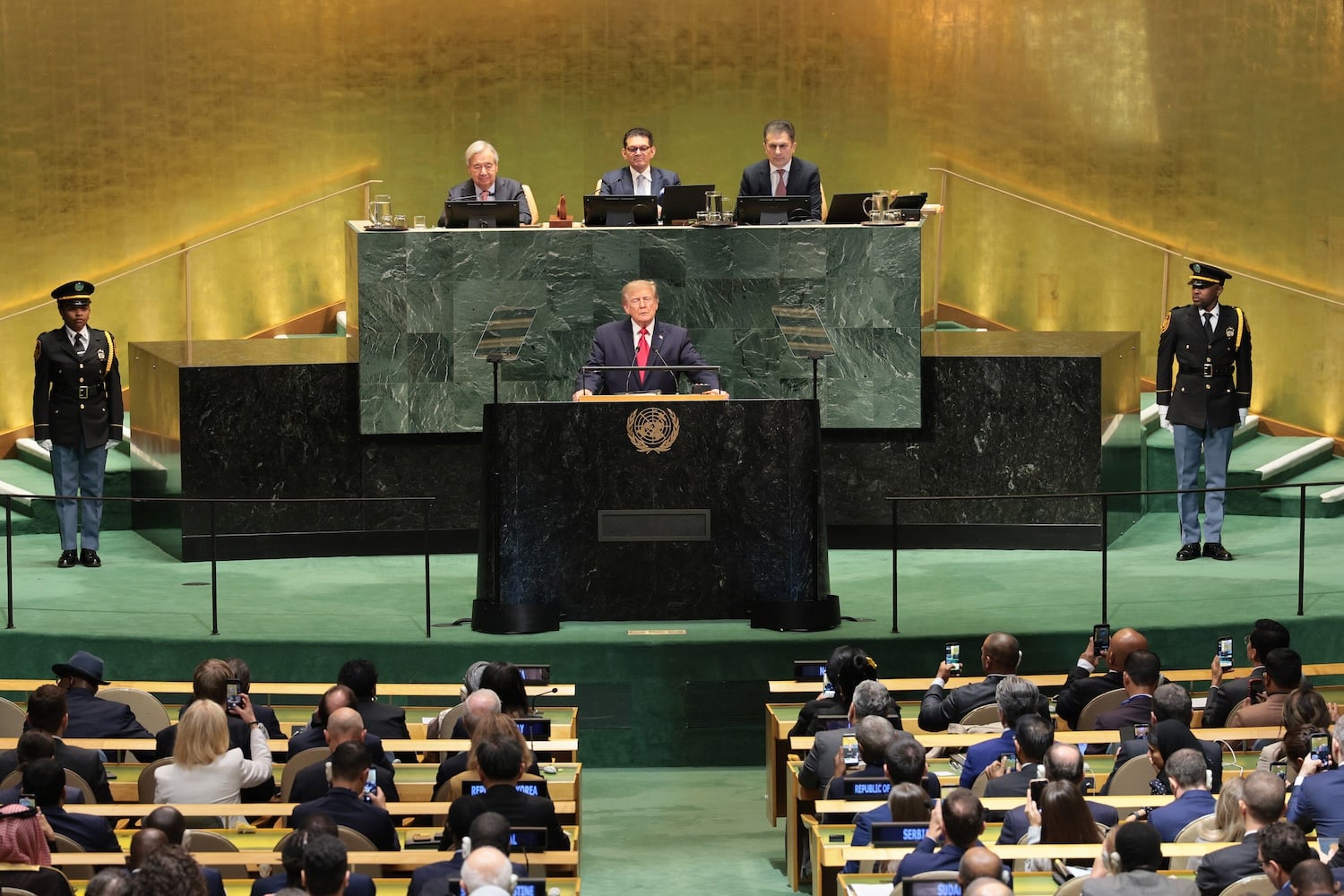
On September 22, President Donald Trump addressed the United Nations General Assembly, making explicit threats of military force in Latin America and threatening annihilation of the Iranian government and people. These actions violated international law, including the U.N. Charter and the laws of war, which prohibit threats of aggression and indiscriminate attacks against civilians. The U.N. Charter itself prohibits threats of aggression, while the laws of war, part of U.S. law, forbid such indiscriminate threats.
Trump's rhetoric, aimed at asserting the primacy of force over law, was delivered before a body dedicated to preventing war and protecting humanity. His administration is actively working to dismantle the U.N. and the International Criminal Court (ICC), as noted by U.S. Secretary of State Marco Rubio. This hostility to international legal accountability aligns with the administration's numerous transgressions, including enforced disappearances by ICE, neglect deaths in ICE custody, rendition to hostile third countries, bombing of civilian targets in Iran, ongoing high seas murder campaign, and the dismantling of the U.S. Agency for International Development, which has already caused the deaths of 600,000 people, predominantly children, and is projected to result in over 14 million additional deaths by 2030.
Despite the challenges posed by the U.S. president's domestic power and the international balance of power, there are still meaningful steps that can be taken to hold Trump and his advisors accountable. In the U.S., supporting the International Criminal Court (ICC) when the Democratic Party assumes office and vocally opposing its destruction by the Trump administration are crucial steps.
Joining the ICC allows states facing violent periods to commit to prosecuting human rights violators, building trust with foreign governments and domestic publics. While some argue that the U.S. can impose accountability domestically, the U.S. Supreme Court has established presidential immunity, making joining the ICC a viable option to ensure accountability.
Written by urgent.news from Foreign Policy's reporting — not their text. Machine-written — may contain errors; check the original before relying on it.