Grossi moves into second place in UN secretary-general race
Argentine diplomat finished second for the first time in a straw poll; Costa Rica’s Rebeca Grynspan retains her lead despite weaker showing. Leer más
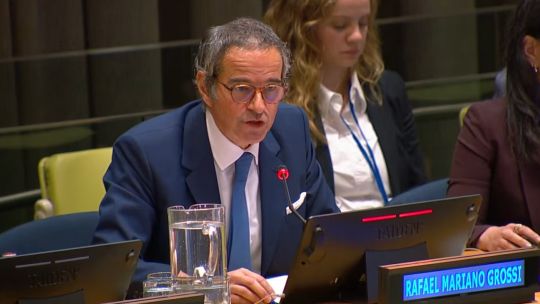
Rafael Grossi, an Argentine diplomat leading the International Atomic Energy Agency (IAEA), has surged into second place in the highly contested race to become the next United Nations secretary-general, according to recent Security Council polls. During the latest round of anonymous voting, Grossi garnered six "encourage" votes, seven "discourage" votes, and two "no opinion" responses.
Meanwhile, Carolyn Rodrigues-Birkett, Guyana's former foreign minister, continued to trail behind in third place, receiving five "encourage" votes, ten "discourage" votes, and zero "no opinion" responses in the same poll.
Grossi's ascent to second place comes after being initially nominated by Argentina and declaring his intention to seek the UN's top job. His performance in the informal polling process has been inconsistent, mirroring the fluid nature of the overall competition. In the previous poll on September 29, he received eight "encourage" votes and seven "discourage" votes, with no members expressing "no opinion."
Current frontrunner Rebeca Grynspan, Costa Rica's former vice president and senior UN official, maintains her lead with nine "encourage" votes. However, her support has waned slightly since the previous round, with six members now marking her "discourage" votes, up from three in the prior poll. The number of "no opinion" responses for Grynspan has diminished from two to zero.
The race to succeed UN Secretary-General António Guterres, whose second term ends on December 31, 2026, encompasses seven candidates, four of whom are women and three are men. All candidates must secure at least nine votes from the 15-member Security Council and avoid a veto from any of the five permanent members (China, France, Russia, the United Kingdom, and the United States) to be nominated. Despite strong performances in the informal polls, candidates still face the possibility of being blocked by the major powers.
As the selection process unfolds, the major powers retain the ability to block a candidate, even with a strong showing in the informal polls. Once a candidate successfully clears the Security Council, their nomination moves on to the UN General Assembly for confirmation. Traditionally, the next secretary-general rotates between regions, with the next position expected to come from Latin America, putting candidates from the region in the spotlight. There is also growing pressure for a female candidate to hold the top UN post.
Rewritten by urgent.news; may contain errors — check the original.