Greenpeace Africa calls for ban on textile ‘dead waste’ imports
Greenpeace Africa is calling on the Ghanaian government to ban the importation of textile “dead waste” as concerns grow over the volume of discarded clothing ending up in the country’s coastal areas. The organisation says the call is not aimed at Ghana’s second-hand clothing trade, which supports the livelihoods of many people, but at the […]
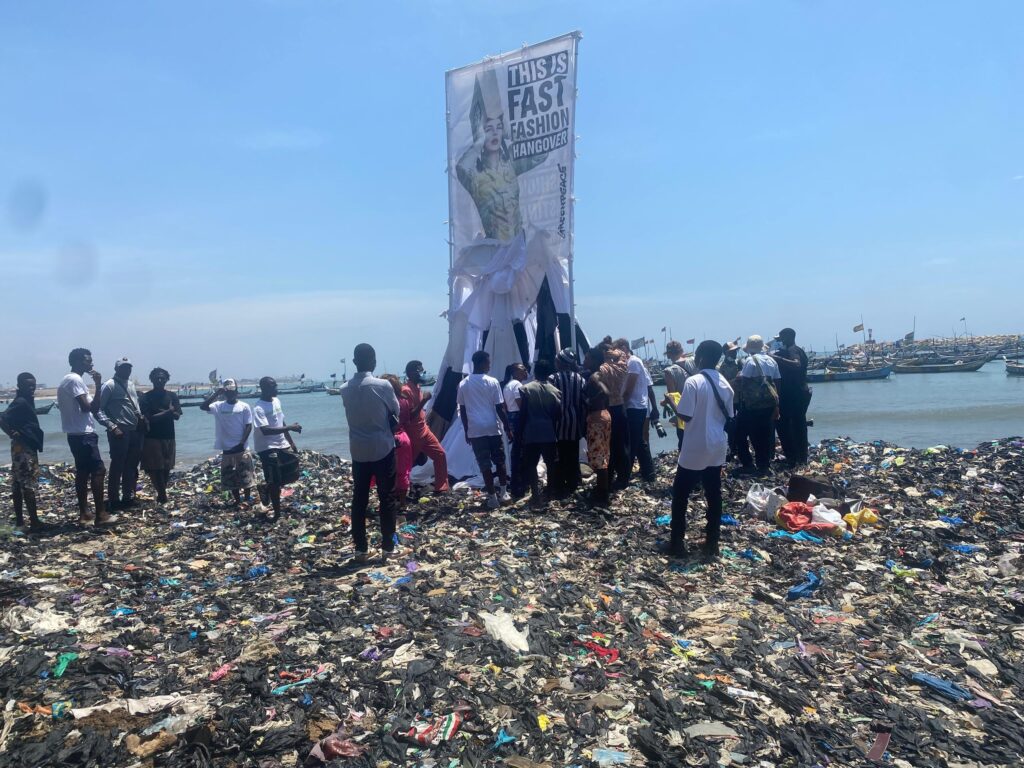
Greenpeace Africa is urging Ghana to prohibit the importation of textile “dead waste,” as the organization grows increasingly concerned about the amount of discarded clothing ending up in the country’s coastal regions. The group emphasizes that this call is not directed at Ghana’s second-hand clothing market, which provides livelihoods for many, but rather at the practice of exporting unwanted, low-quality, and surplus garments to African markets where they eventually become waste.
Hellen Kahaso Dana, Project Lead for the Plastics Project at Greenpeace Africa, stresses that fashion brands must assume greater responsibility for the environmental consequences of overproduction. She explains that when brands produce excess clothing or manufacture low-quality garments, a significant proportion may have little resale value and ultimately end up in landfills, waterways, and along the coastline.
Greenpeace Africa’s concerns arise following a tour of Ghana’s coastal areas, including Shatta Beach and Kantamanto, a major second-hand clothing market in Accra. Dana notes that the condition of these areas underscores the scale of the problem and reinforces the organization’s call for stricter controls on textile waste entering the country.
She emphasizes that tackling the issue requires fashion companies to reduce unnecessary production, improve garment quality and durability, and that exporters should also bear responsibility for the waste associated with the products they send to African markets. Additionally, Greenpeace Africa has raised concerns about Ghana’s broader waste management challenges, particularly the significant volume of electronic waste generated annually, estimated at about 150,000 tonnes through both legal and illegal channels.
About 70,000 tonnes of this waste is generated locally. The organization also highlights that households in Accra and Kumasi contribute to roughly 50,000 tonnes of waste, with between 30,000 and 40,000 people employed in e-waste recycling in Accra’s Agbogbloshie area. Dana asserts that e-waste exporters must take responsibility for the waste generated by the products they introduce into the country.
Greenpeace Africa advocates for accurate product labeling, efficient buyback systems, stronger enforcement, and enhanced tracking mechanisms to alleviate the pressure on informal waste workers and the environment. The organization believes that greater international cooperation is essential to prevent waste generated in one country from being transferred to countries with already strained waste management systems.
Written by urgent.news from Adom Online's reporting — not their text. Machine-written — may contain errors; check the original before relying on it.