France’s Protest Culture Is Out of Control
The violence sweeping the country isn’t about schools anymore.
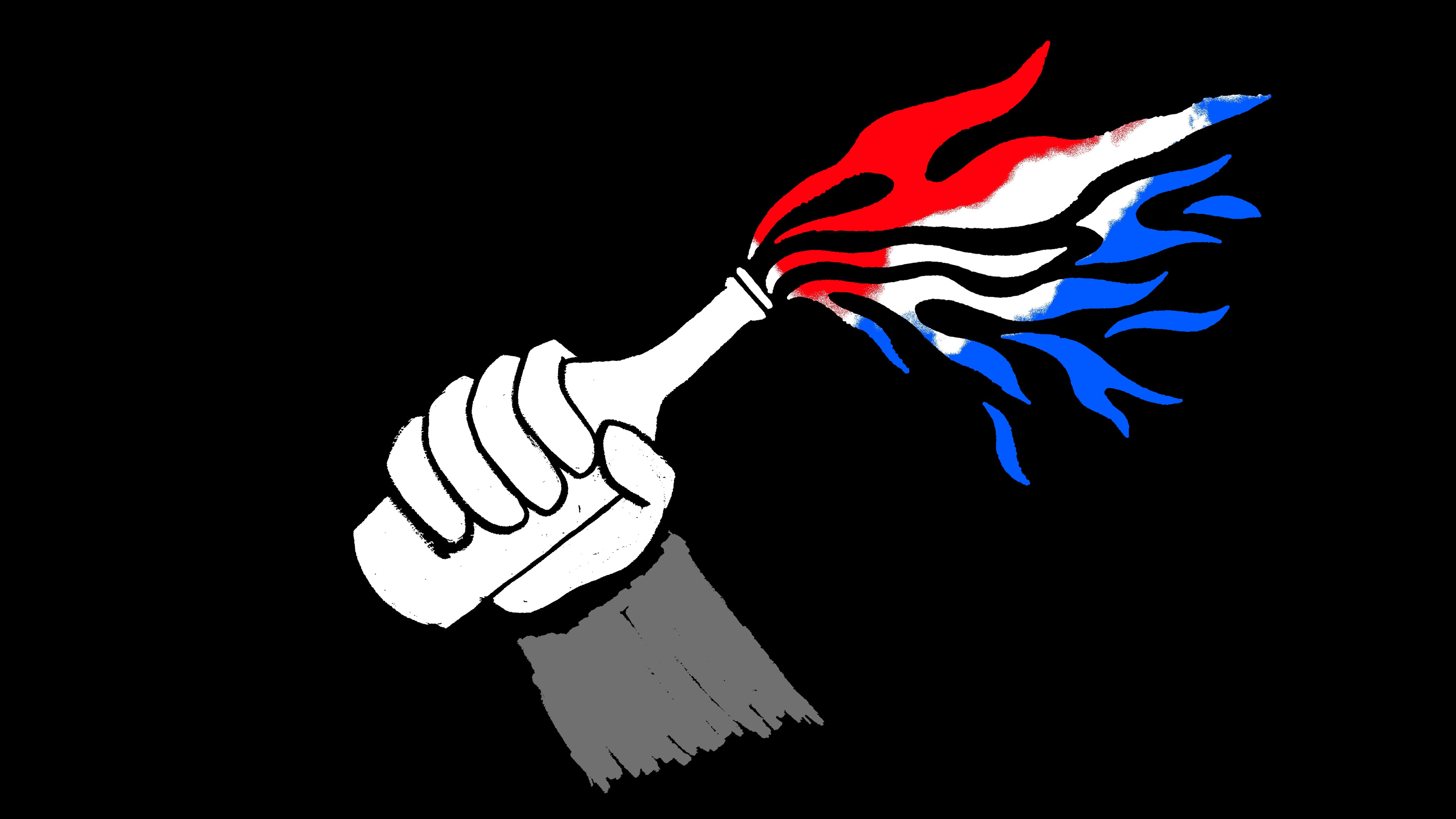
France finds itself engulfed by a protest culture that seems to be spiraling out of control. Over the past two decades, the nation has experienced numerous instances of rage, violence, rioting, arson, and looting, resulting in significant financial burdens on society. The infamous 2005 banlieue riots, sparked by the deaths of two boys evading police, led to three weeks of severe property destruction and violence.
Since then, pandemonium has erupted over various issues, including veil bans, the commemoration of NATO's anniversary, the legalization of same-sex marriage, and even the arrival of ride-sharing apps.
Recently, student protests have paralyzed the country's school system. These demonstrations, which began on September 17 at a high school in Créteil, quickly gained momentum, with students across the nation joining in solidarity to voice their concerns over inadequate funding, unfilled teaching positions, and deteriorating school facilities.
Social media played a crucial role in amplifying the protests, with demonstrators filming themselves constantly, creating a spectacle of revolt that spreads online and through text chats used for mobilization.
The protests demand more teachers and support staff, smaller class sizes, improved facilities, and greater parity between wealthy and underprivileged schools. Additionally, they call for the abolition of the Parcoursup, an online university admissions platform that critics claim exacerbates social inequality and places undue stress on students.
While some of these demands may be valid, the violence spreading across France appears to be rooted in a deeper existential crisis at the heart of French life. The sense that the future will never match the past, and that the state cannot fulfill citizens' expectations, has created a feeling of zero-sum game, leading many groups, from retirees to high school students, to refuse to compromise. This anger accumulates and eventually boils over, with the government either unwilling or unable to contain it.
The protest videos reveal a nihilistic resentment, with one particularly disturbing case depicting a 15-year-old wearing a black hoodie, sweatpants, and a mask calmly approaching a woman in Marseille and spraying her face with a makeshift flamethrower, leaving her with first-degree burns. In Nantes, an inferno engulfed the Nelson Mandela High School, a building that cost 75 million euros to construct in 2014.
In Paris, a keffiyeh-clad blond-haired teen smiled as he explained to a reporter that the ends justify the means, while another masked teen stood atop a car addressing a crowd of euphoric classmates, boasting about their ability to kill police officers if given the chance.
The violence is not exclusively one-sided, with police officers also resorting to tear-gas grenades and stun grenades, causing injuries such as knocked-out teeth and lost hands. Furthermore, racists and propagandists have quickly blamed the savagery on Islam, accusing immigrant populations of undermining French society and Western values.
Donald Trump echoed these sentiments, claiming that what's happening in France is out of control mass migration, not about schools, but about Islam wanting to take over a once-great country.
However, the reality is that the protesters represent an extremely diverse coalition. Inside a Catholic church, young white girls filmed themselves singing "M*R*H," further illustrating the diversity of those involved in these protests. These acts of rebellion may be seen as evidence that immigrant groups have assimilated well into French society, given its history of revolt dating back to the May '68 movement and the French Revolution.
Nonetheless, France's protest culture, indulged and glorified to the point of insanity, has become a particular problem during Emmanuel Macron's tenure, weakening his administration and eroding the political viability of centrism in France.
Written by urgent.news from The Atlantic's reporting — not their text. Machine-written — may contain errors; check the original before relying on it.