Fort Breendonk in Willebroek, Belgium
Fort van Breendonk is a transit camp and WWII Nazi Prison in Willebroek, Belgium. It was originally built between 1906 and 1913 and has been used in both World War I and World War II. It was used as a prison camp for the detention of political prisoners, resistance members, and Jews. It became known for the poor living conditions rather than the many deaths. The camp had more SS guards than…
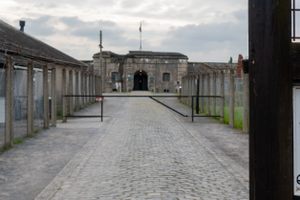
Fort Breendonk, a former transit camp and Nazi prison located in Willebroek, Belgium, was constructed between 1906 and 1913. This site has witnessed service during both World War I and World War II, primarily as a holding facility for political prisoners, resistance fighters, and Jews. Its notorious reputation stems from the deplorable living conditions rather than the numerous fatalities that took place within its walls.
The camp was staffed with a larger number of SS guards compared to the prisoner population, ensuring constant surveillance. Following the wartime ordeal, many prisoners were dispatched to more extensive concentration camps scattered across Europe. During its operation, the fort held a total of 3,590 prisoners, among which 303 perished within the confines of Fort Breendonk. An additional 1,741 fell victim to the harsh treatment they endured in other camps before the war's end.
Ultimately, the fort was cleared of detainees by September 1944, as Allied forces intervened during the final stages of World War II. Prisoners endured severe torture beyond standard beatings; they were subjected to submersion in the surrounding water, buried up to their heads in the earth, and subjected to mud being thrown into their faces and mouths when they cried out.
The doors of the torture chamber remained open throughout the night, ensuring that prisoners could hear every agonizing detail of the horrors unfolding inside.
Regrettably, death certificates often listed causes of demise as heart failure or age-related factors, despite the myriad brutal methods employed by the guards to execute their captives. One particularly infamous example involves the camp commander, Philipp Schmitt, who allowed his German Shepherd dog, Lump, to roam freely among the inmates.
Instances of inmates being bitten repeatedly by Lump have resulted in their eventual demise from blood loss, with one victim succumbing after being attacked a staggering fourteen times. Visitors to the site can explore the labyrinth of corridors and chambers, viewing various locations such as the torture chamber, communal showers, and numerous barracks.
Comprehensive information and an audio-tour are available, offering insights into the daily lives of those who endured this grim chapter in history.
Written by urgent.news from Atlas Obscura's reporting — not their text. Machine-written — may contain errors; check the original before relying on it.