Environment minister: ‘The conditions for proceeding with fracking do not exist’
Minister Bárcena spoke before Mexico's Chamber of Deputies on Tuesday evening about the government's ongoing feasibility study of fracking, which could potentially be carried out in the Sabinas-Burro-Picachos basin. However, the country's current environmental regulations hinder further development. The post Environment minister: ‘The conditions for proceeding with fracking do not exist’ appeared…
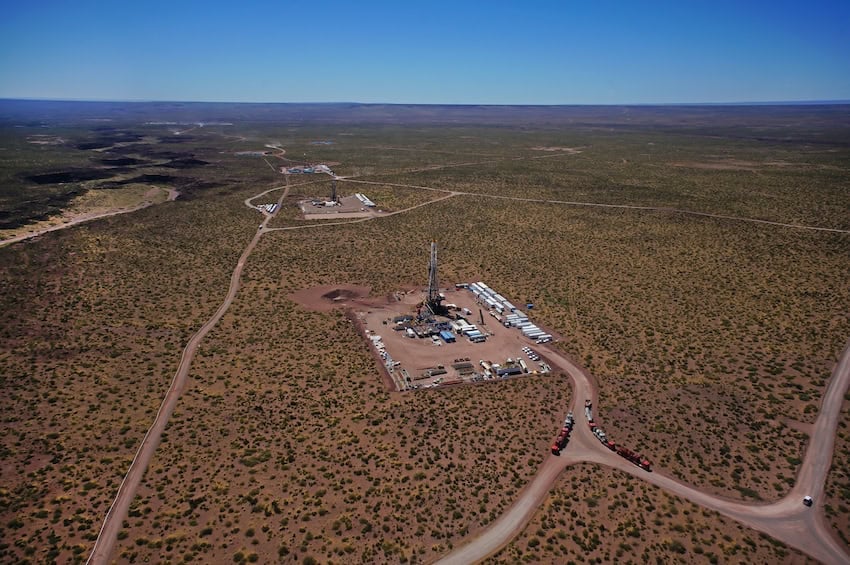
Environment and Natural Resources Minister Alicia Bárcena stated on Tuesday that Mexico does not presently possess the necessary conditions for conducting hydraulic fracturing, debunking assertions by local media that President Claudia Sheinbaum had sanctioned pilot tests. Bárcena clarified that only the testing of deep, saline water availability was authorized, not the actual fracking operations.
The current government stance is that the prerequisites for proceeding with hydraulic fracturing are not in place, and there is no presidential authorization, she reiterated. It is worth noting that Mexico currently generates a modest amount of oil and gas via fracking, a technique that was largely suspended under the previous administration of Andrés Manuel López Obrador.
Bárcena highlighted several challenges that impede Mexico's ability to advance with this method, such as concerns over water availability, ecosystem conservation, and the regulation of this form of natural gas extraction. Hydraulic fracturing is a hydrocarbon extraction process that involves drilling deep into the earth and injecting water, sand, and chemicals under pressure to break the rock apart and release gas or oil.
According to Bárcena, a federal government scientific team identified the Sabinas-Burro-Picachos basin, situated between the northern states of Coahuila, Nuevo León, and Tamaulipas, as the sole location where fracking could potentially occur. The scientists, working alongside Semarnat and the Mexican Agency for Safety, Energy, and Environment (ASEA), provided a set of recommendations for fracking operations, which encompass using water exclusively for human consumption or agricultural purposes, continuous seismic monitoring, refraining from employing highly toxic or harmful chemicals, and ensuring the safeguarding of aquifers, drinking water sources, and ecosystems.
Sheinbaum has firmly dismissed the prospect of fracking in Mexico's primary shale basin, while simultaneously opening doors for exploration in other regions. During her recent mañanera, Bárcena emphasized the need for updating regulations related to the ASEA, establishing guidelines for unconventional wells, and developing a standard for treating saltwater.
"Therefore, there are a series of restrictions under which fracking cannot be carried out at this time," concluded Bárcena. Water scarcity emerges as one of the primary hurdles to fracking in the country. According to the Mexican nonprofit CartoCrítica, the entire fresh water needed for possible development in the Sabinas-Burro-Picachos basin would have to be sourced from basins or aquifers that presently lack sufficient water reserves, prompting questions about the feasibility of extraction in terms of meeting environmental standards established by the government.
Written by urgent.news from Mexico News Daily's reporting — not their text. Machine-written — may contain errors; check the original before relying on it.