El Niño Is Bringing Kelvin Waves to California. Here's What To Know
A large pulse of wave energy is expected to travel up the West Coast.
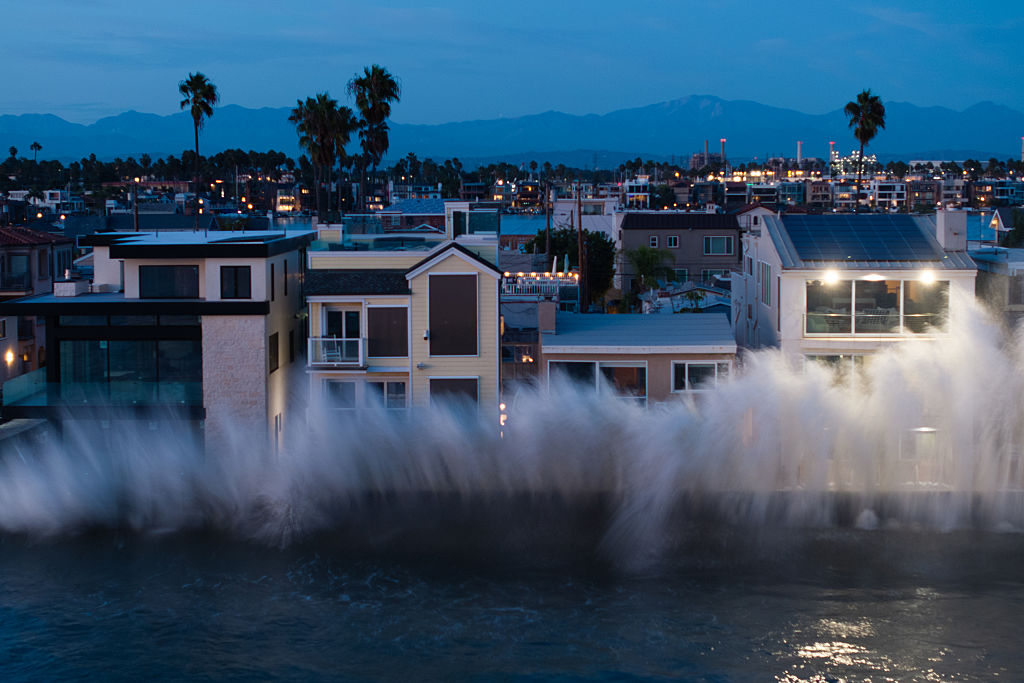
As a waning swell from Hurricane Marie combines with a 6-foot high tide, homes along the Alamitos Peninsula brace for incoming waves along California's West Coast. A large pulse of wave energy, known as a Kelvin wave, is set to travel up the coast, raising sea levels by up to 1 foot this month and heightening the risk of coastal erosion and storm damage for beachfront communities.
Named after Scottish engineer William Thomson, Lord Kelvin, these planetary waves are slow-moving masses of warm water that span thousands of miles. While they may not be visually noticeable, their presence leads to a ridge in the ocean, causing sea levels to rise slightly—just a few centimeters higher than normal. However, when combined with other factors such as stronger tides or storms, the effects can be significant, exacerbating coastal erosion and flooding.
This season, several Kelvin waves have already impacted the West Coast, including towns like Malibu, Laguna Beach, and Long Beach, which have experienced notable coastal erosion due to various factors, including El Niño and Pacific hurricanes. Governor Gavin Newsom recently declared a state of emergency to help the state prepare for potential El Niño impacts.
Kelvin waves are closely linked to El Niño events, typically occurring when trade winds that usually push warm surface water towards the western Pacific weaken or change direction, allowing warm water to migrate eastward and generate the wave. The relationship between climate change and El Niño events remains a topic of scientific debate, but higher global temperatures during El Niño years, coupled with the already record-breaking temperatures driven by human-induced climate change, suggest that 2027 is likely to be the planet's hottest year on record.
Written by urgent.news from Time's reporting — not their text. Machine-written — may contain errors; check the original before relying on it.