Crown Prince of Jordan and European leaders discuss energy crisis caused by Hormuz blockade
Crown Prince Hussein of Jordan joined a European leaders' meeting on Wednesday in Croatia to discuss the energy crisis caused by Iran. Leaders of the MED9 group – Croatia, Cyprus, France, Greece, Italy, Malta, Portugal, Slovenia and Spain – were searching for a response to moves blocking the Strait of Hormuz and the prospect of Houthi forces restricting maritime passage in the Red Sea. The…
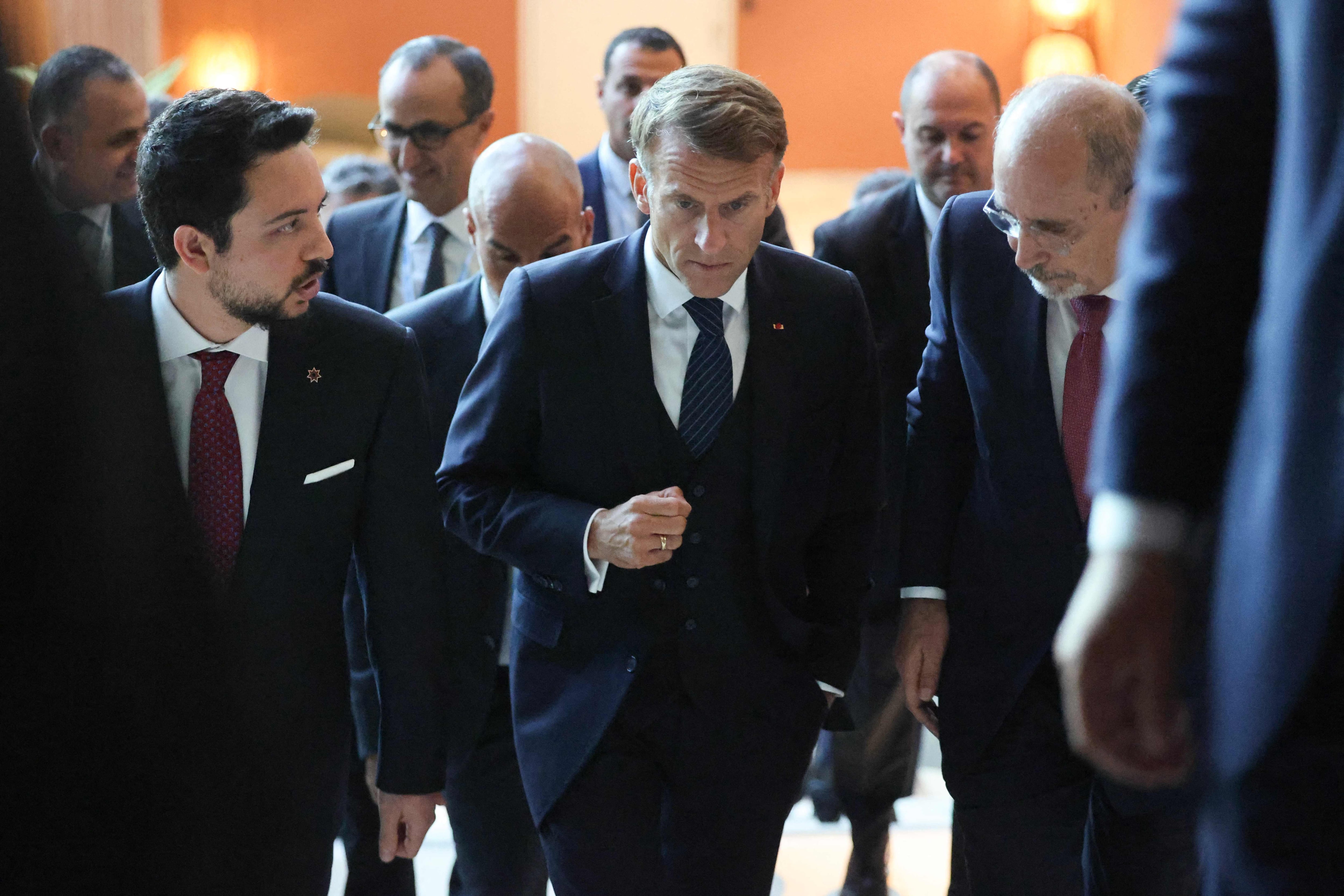
Crown Prince Hussein of Jordan took part in a meeting on Wednesday with European leaders in Croatia to address an energy crisis triggered by Iran's actions. The Mediterranean Energy Dialogue 9 (MED9) group, comprising Croatia, Cyprus, France, Greece, Italy, Malta, Portugal, Slovenia, and Spain, was addressing concerns over the Strait of Hormuz and potential restrictions in the Red Sea by Houthi forces.
French President Emmanuel Macron highlighted the summit's objectives of addressing energy prices, ensuring supply security, and preparing for the next European Council meeting. Attendees also included European Commission President Ursula von der Leyen and European Council President Antonio Costa.
The meeting's primary focus was to discuss potential resolutions to the crisis and enhance stability and security in the region, as well as maritime transit. High fuel prices have caused growing discontent among Europeans, leading some leaders, including Macron and Italian Prime Minister Giorgia Meloni, to push for additional EU spending. The G7 recently released 100 million barrels of oil and diesel to help alleviate prices.
The Yemeni Houthi rebels recently seized control of the Bab Al Mandeb strait, Dhubab area, and Mokha port city, in addition to blocking passage for Saudi vessels. This follows Iran's separate blockade of the Strait of Hormuz. European leaders are expected to continue advocating for alternative routes to Hormuz, including the development of oil pipelines via Syria and the acceleration of the Great Sea Interconnector, a 1,300km subsea power cable connecting Greece, Cyprus, and Israel, partly funded by the EU.
Southern Mediterranean states are particularly concerned about the EU's new measures to curb illegal migrant arrivals. Last week, the European Commission aimed to strengthen border controls in response to mass arrivals last summer in Ceuta, a Spanish enclave in North Africa. The plan, requiring member state approval, would bolster Frontex, the EU border protection agency, by providing it with a standing corps for immediate deployment.
Macron's adviser emphasized the need for a comprehensive plan to address migration exploitation by third countries and enhance border protection and surveillance. The EU's 27 leaders are expected to discuss this plan at a Brussels meeting next week.
Written by urgent.news from The National UAE's reporting — not their text. Machine-written — may contain errors; check the original before relying on it.
Also reported by 3 other outlets
- Crown Prince of Jordan and European leaders discuss energy crisis caused by Hormuz blockade thenationalnews.com
- European shares, euro slide as energy shock, fiscal worries bite channelnewsasia.com
- European soccer leaders meet aiming to shape strategy for ousting Infantino as FIFA president winnipegfreepress.com