Conserving a connected ocean
Marine conservation is a fundamental component of national development among many WIO countries, but international cooperation and common financing instruments are essential because the ocean, as well as the species in it, knows no man-made bounds.
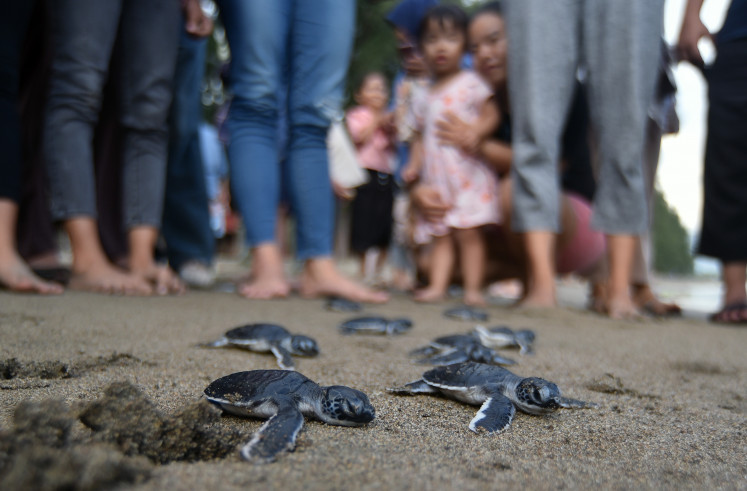
Marine conservation is a priority for many countries in the Western Indian Ocean (WIO) region. These nations recognize that the ocean and its inhabitants transcend national borders, making international cooperation vital. Sea turtles, for instance, return to the beaches of northern KwaZulu-Natal, South Africa, after beginning their journey there.
Some will travel north through the Mozambique Channel, using waters off Mozambique, Madagascar, and into the wider Indian Ocean. However, no single country can safeguard their entire migratory path. The challenge of ocean conservation lies in balancing the necessity of strong national efforts with the requirement for collective action.
Protecting migratory species and interconnected habitats necessitates collaborative efforts among countries. The financial resources supporting such cooperation must be adaptable, mirroring the journey of the turtle. For the approximately 60 million people residing within 100 kilometers of the WIO coastline, marine conservation is of immediate concern.
Healthy marine ecosystems contribute to food security, livelihoods, trade, and tourism, and serve as natural defenses against storms. These ecosystems are integral to the sustainable blue economies that countries aspire to develop. Nonetheless, the value of these ecosystems extends beyond the region. Mangroves and seagrasses sequester carbon, while reefs maintain biodiversity and provide habitats for migratory species whose journeys interconnect coastlines and the wider ocean.
Thus, the protection of these environments is a regional responsibility, but it also benefits the global community. Regional leaders are not lacking in ambition and are not awaiting external definitions of ocean conservation. In Seychelles, ambitious goals backed by strong political commitments and innovative financing have yielded positive results.
The implementation of marine spatial planning and conservation finance demonstrates how the protection of the ocean can be integrated into national development. Other countries in the WIO region are likewise pursuing similar strategies, influenced by their unique priorities and circumstances. The Nairobi Convention, a platform for regional cooperation, has committed to enhancing sustainable blue economies and fostering more effective, inclusive forms of ocean governance.
The Regional Ocean Governance Strategy has set the stage for establishing financing mechanisms to support these efforts. The Jakarta Post encourages sharing experiences, suggestions, and encountered challenges related to ocean conservation. Your feedback is appreciated.
Written by urgent.news from The Jakarta Post's reporting — not their text. Machine-written — may contain errors; check the original before relying on it.
This story
This is one outlet's version. Read the fullest account.
- Conserving a connected ocean thejakartapost.com