Can the Gulf aviation superhub model survive the war?
For decades, the Gulf superhubs of Dubai, Doha and Abu Dhabi performed an improbable trick. They redirected millions of people travelling between the West and Asia to connect through their airports. Last year, the three airports handled about 182 million passengers, three times the traffic at Hong Kong airport. Dubai alone handled 95.2 million, the highest ever recorded by an airport. The Gulf’s…
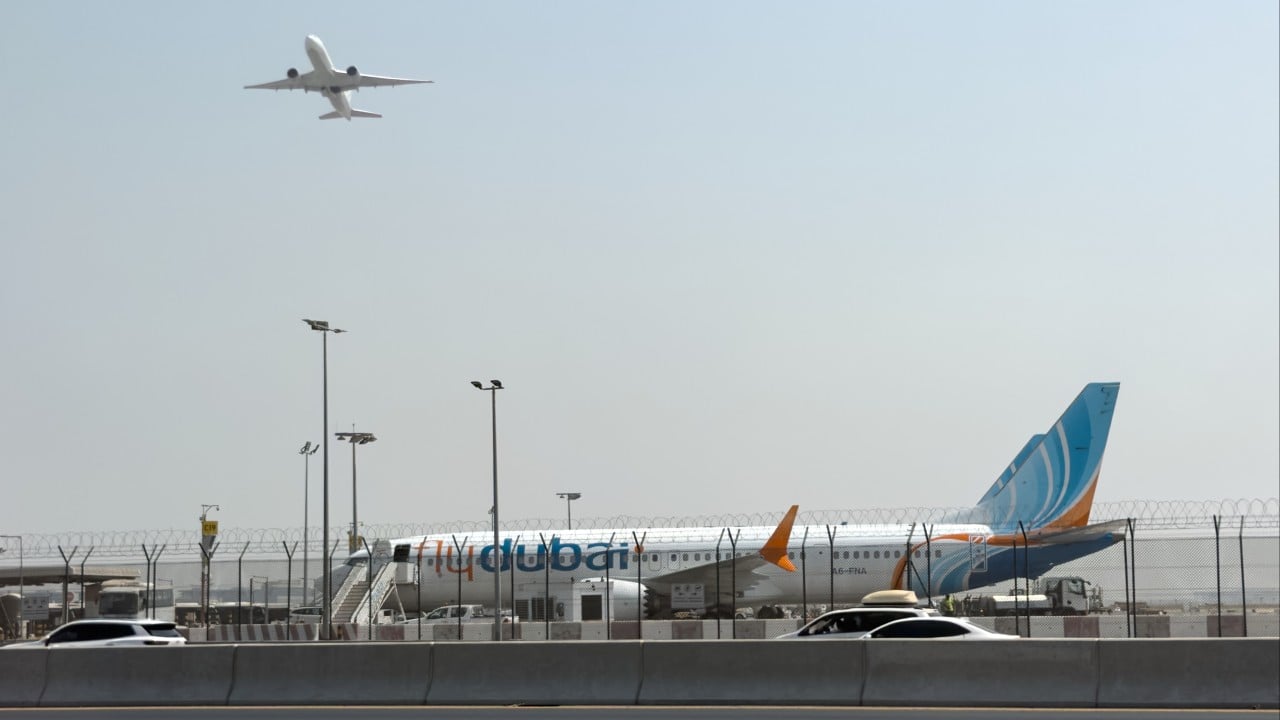
The Gulf's aviation superhubs of Dubai, Doha, and Abu Dhabi have long held an improbable position in global commercial aviation. By funneling millions of travelers between the West and Asia, these airports have become a benchmark of efficiency and scale, handling over 182 million passengers annually, a figure three times that of Hong Kong's airport.
Dubai alone recorded a staggering 95.2 million passengers, the highest ever logged by an airport. This hub-and-spoke model, which funnels passengers through a central airport to multiple destinations, has created economies of scale and reshaped global commercial aviation flows, establishing a new standard for travel between the West and East.
However, the war against Iran in February presented a significant threat to these hubs. Iranian retaliation targeted all three airports, with Abu Dhabi's Zayed International Airport reporting one death and seven injuries; Dubai International suffered damage to a concourse; and Doha was also targeted. The airspace emptied, and flights were cancelled or diverted, leading to a tripling of charter prices for private-jet journeys to the region.
By the first half of 2026, passenger traffic at Dubai International had declined by 31.3 per cent year-on-year. Moreover, a flydubai flight from Dubai to Tel Aviv was diverted to Saudi Arabia after a co-pilot allegedly attacked the captain and attempted to crash the aircraft, raising concerns about the vulnerability of the Gulf hubs to geopolitical disruptions.
The success of these hubs was built on a foundation of imported tangible and intangible assets, including aircraft, capital, technology, expertise, and labor. Governments endowed with vast hydrocarbon wealth combined this with a fortunate location to create a closed system that ensured industrial efficiency. Migrant workers, comprising over 80 per cent of the United Arab Emirates' resident population, provided the labor force.
However, the physical environment, including the reliance on desalination plants for fresh water, air conditioning in extreme heat, and imports for up to 90 per cent of food, made these cities uniquely vulnerable.
The infrastructure, while extraordinary, was built on a scale far exceeding local passenger markets. Emirates, Qatar Airways, and Etihad operate more than 700 aircraft, with modern widebody jets costing well over US$100 million apiece. This infrastructure supports numerous connections, but proximity to Iran and some of the world's most contested airspace has become both a strength and a weakness.
While additional connections make the network more useful, interrupting the airport can propagate disruption throughout the network with equal efficiency.
The Middle East has endured wars in the past, but this specific conflict has made the Gulf hubs part of the battlefield. The disruption raises an uncomfortable question: is one of modern aviation's great successes built around a vulnerability that was present all along? While the Gulf aviation miracle cannot be undone, the war has exposed a permanent condition: geopolitical exposure.
Asian and Western operators, particularly Chinese airlines, have advantages such as the ability to cross Russian airspace, offering shorter routing times and costs. This shift could see Chinese airlines recapturing passengers and reducing the Gulf hubs' traffic. Nevertheless, the Gulf hubs' networks, fleets, and infrastructure have taken decades to accumulate, and their governments possess formidable resources to support them.
The real question is whether geopolitical exposure is transforming from an occasional disruption into a permanent condition. The Gulf aviation marvel was built on a constellation of imported assets, and the current test is whether geography, once their greatest asset, has become their greatest liability. It remains to be seen if some of the traffic drawn from Western and Asian operators will now find its way back to the Gulf hubs.
Written by urgent.news from South China Morning Post's reporting — not their text. Machine-written — may contain errors; check the original before relying on it.