Arbeitszeit: Teuer und ineffizient? So viel hat Ihr letztes Meeting gekostet
Corporate Deutschland sitzt und redet. Doch viele Meetings liefern wenig Output. Der Handelsblatt-Rechner hilft Ihnen, Kosten von Meetings besser zu schätzen – und diese effizienter zu führen.
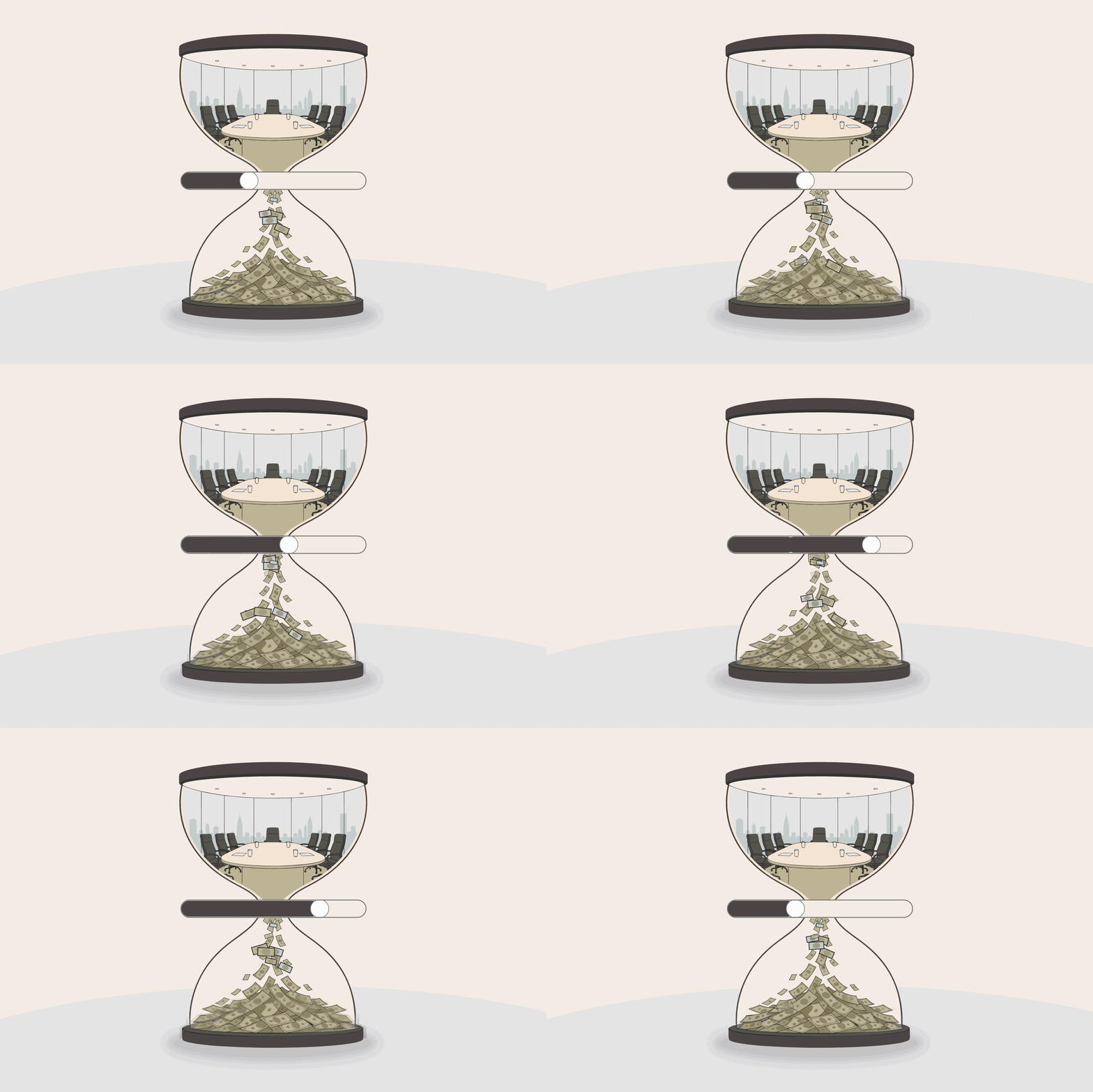
In Germany, companies squander approximately 80 billion euros annually on inefficient meetings, according to the Meeting software company Doodle's "State of Meetings Report 2019" and calculations by the Handelsblatt. This figure can be estimated using a new calculator provided by the Handelsblatt, which takes into account an approximation of meeting inefficiency.
The key factor in determining meeting inefficiency is the number of participants, according to the Handelsblatt, based on a Microsoft study. This study, using online meetings as its basis, is considered one of the largest in its field. The perceived inclusiveness and efficiency of a meeting are strongly correlated, leading the Handelsblatt to equate individual perceived inclusiveness with meeting efficiency.
Consequently, the size of the participant group has emerged as the primary factor affecting inclusiveness and meeting efficiency. A meeting with only two or three participants is deemed highly inclusive by over 90% of respondents, but this perception drops to 67% with six or more participants. Only one-third of participants feel included and perceive a meeting as efficient when it involves more than 15 people.
Levin Tankelevitch, one of the study's authors, emphasizes that fewer attendees do not guarantee a better meeting, but for each participant, it should be clear why they are attending. Smaller meetings offer clearer reasons for participation, leading to higher individual satisfaction and perceived efficiency. Moreover, smaller meetings provide a higher chance of participation and increased perceived efficiency.
Some companies have established rules for meeting sizes. Amazon's Jeff Bezos insists that no more than eight people should attend a meeting, equivalent to the number of people that can be fed with two pizzas. Similarly, Bayer follows this approach. Nisha Mahendrarajan, from Bayer's core team for meeting culture, considers another principle even more important: "If you cannot contribute to or benefit from a meeting, you are allowed to leave it early."
Many employees expressed surprise when Mahendrarajan and her colleagues calculated the potential savings for the company if all employees spent an hour less in meetings each week, estimating a savings of 124 million euros. This highlights the importance of efficient meetings. Other factors influencing meeting efficiency, as identified by studies, include the presence of an agenda and punctuality in starting and ending meetings.
Companies like Microsoft have aligned their meeting guidelines with these insights and are disseminating similar guidelines within their organization. Bayer is also in the process of creating a similar set of guidelines. The meeting calculator, however, cannot definitively calculate the truth about office exchanges, but rather aims to provide a scientifically-backed perspective on whether a meeting truly needed to occur or if an email would have sufficed.
Written by urgent.news from Handelsblatt's reporting — not their text. Machine-written — may contain errors; check the original before relying on it.