‘A few are afraid of the chicks’: Preparing Thailand’s rescued leopard cats for life in the wild
KHON KAEN, Thailand – A wildlife officer holds a leopard cat cub in one hand, its entire body small enough for her fingers to wrap around its torso. With the other hand, she feeds it formula milk from a syringe. This is the latest rescue at the Department of National Parks and Wildlife’s rescue center […]
In Khon Kaen, Thailand, a wildlife officer tenderly cradles a tiny leopard cat cub in one hand, while the other hand diligently feeds the kitten formula milk from a syringe. At the Department of National Parks and Wildlife's rescue center, dozens of rescued leopard cat cubs are being prepared for life in the wild. Behind the officer, a group of 15 larger leopard cats, once young cubs themselves, pace restlessly inside their cages.
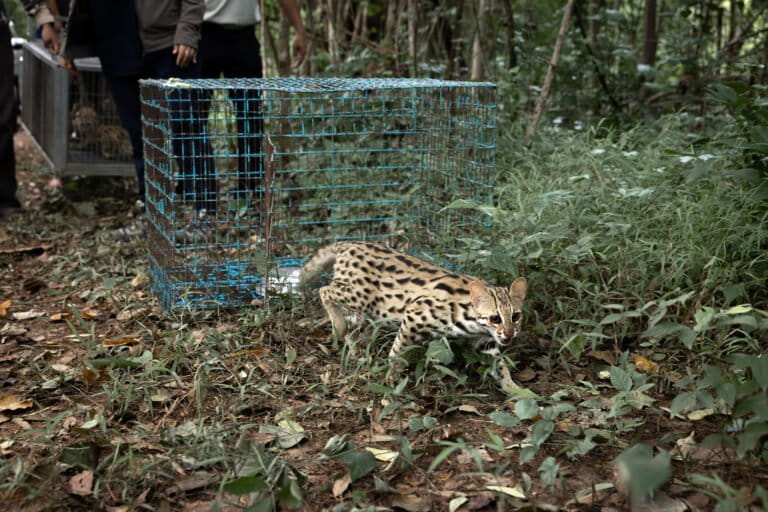
These felines bear a striking resemblance to domestic cats, albeit slightly slimmer and adorned with distinct fur markings. They exhibit a fierce demeanor, baring their teeth and growling at any human presence.
Nine of the cats, aged between eight and nine months, are scheduled to be released into the forest that afternoon. The remaining six, younger cubs, will undergo a specialized behavioral rehabilitation process in dedicated pens. Over the course of two months, these felines will refine their climbing and hunting skills, equipping them for life in their natural habitat.
Leopard cats, small wild felines prevalent across Asia, are categorized as "least concern" by the IUCN. However, conservationists express concerns over the potential impact of hunting and habitat loss on their populations. Known for their adaptability to shifting landscapes, leopard cats often establish their territories in proximity to human settlements, particularly in sugarcane fields.
In northeastern Thailand, female leopard cats are commonly observed nurturing their offspring within the protective cover of sugarcane fields. The tall stalks provide shelter from the sun, but the close proximity to human activity poses a dual threat to their survival.
Written by urgent.news from Mongabay's reporting — not their text. Machine-written — may contain errors; check the original before relying on it.