Witnessing the Failed Execution of Christa Pike: ‘We Could All Hear Her Breathing’
Catherine Sweeney was one of the reporters in the witness room during the attempted execution of Christa Pike in Tennessee. The journalists knew that a recent execution hadn’t gone according to plan and that Pike’s lawyers had predicted failure because of a health condition. They’d even asked for her to be hanged instead.
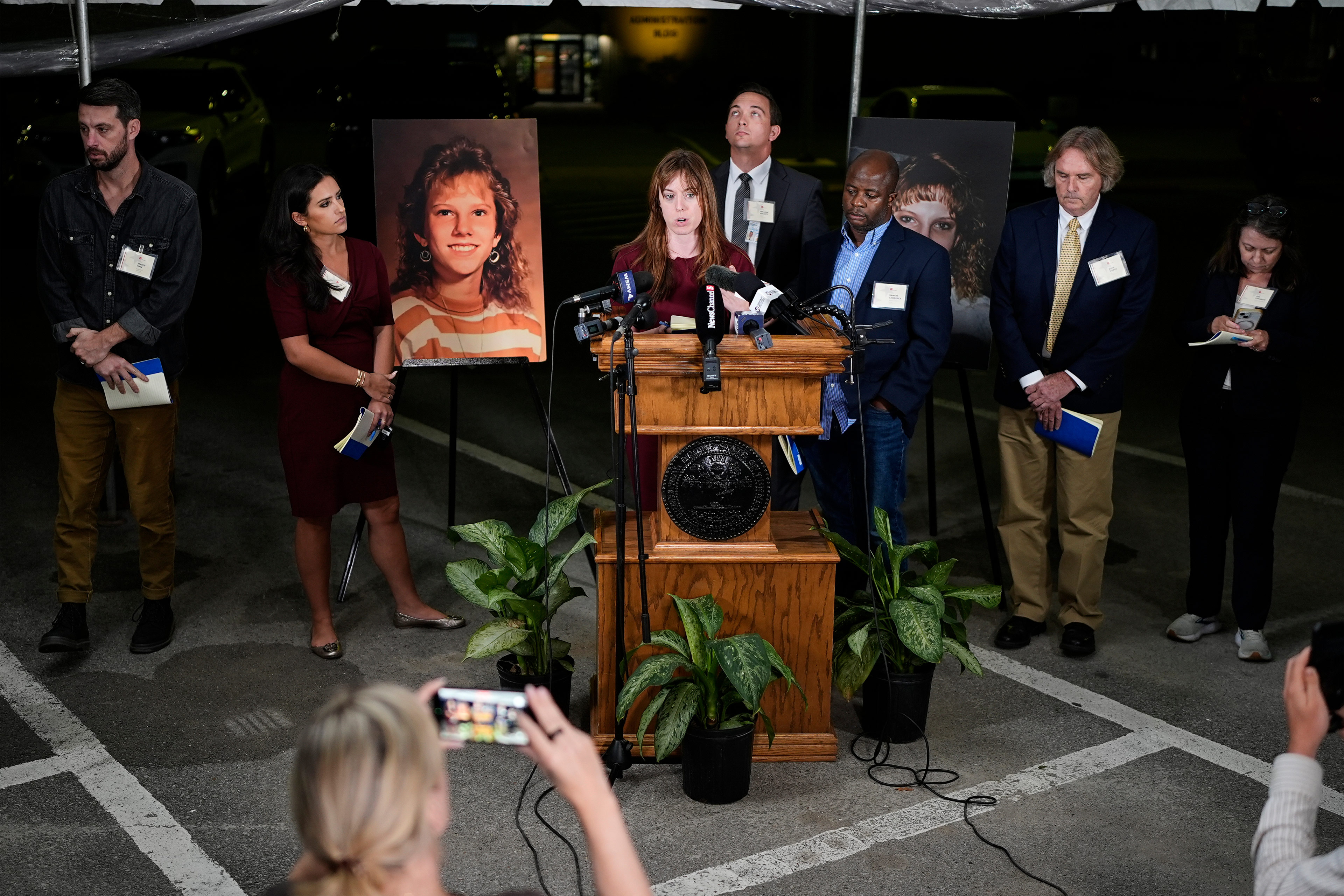
On September 30, I joined seven other media members who were present during Tennessee's failed execution of Christa Pike, marking the first woman to face the death penalty in the state in nearly two centuries. From our past investigations, we suspected the lethal injection procedure might not proceed as planned. Pike's legal team petitioned the Tennessee Supreme Court for a hanging alternative, citing her platelet disorder and small veins as potential causes for pain and ineffectiveness.
Tennessee had already experienced a botched execution attempt in May involving Tony Carruthers, who was convicted for his role in the kidnapping and murders of three individuals in 1994. Governor Bill Lee declared after that incident that Tennessee would refrain from attempting another execution for at least a year.
Upon Pike's departure from the execution chamber in an ambulance, Lee announced a suspension of lethal injections for the remainder of the year. The morning of her execution, I and the other media witnesses arrived at Riverbend Maximum Security Institution in Nashville around 8:30 a.m. and waited to enter the prison, having been granted access solely with our driver's licenses.
Our original plan was to remain inside until Pike proceeded to the death chamber at 10 a.m. However, our plans were disrupted when our phones suddenly rang. A federal circuit court had issued a stay on the execution. This was my fifth encounter as a media witness to an execution, and I had never witnessed such an intervention before.
We were uncertain about the implications. We spent the majority of our time in the boardroom where parole hearings take place. We frequently encountered the families of the victims during these meetings. Christa Pike, aged 18 at the time of her crime, murdered Colleen Slemmer in 1995. Slemmer's family had traveled from Florida to Tennessee to attend the execution, with funds raised via crowdfunding.
It is unclear where they remained during the legal proceedings. Around 6 p.m., the prison's communications director, Dorinda Carter, informed us that "it's a go." Tennessee had requested the U.S. Supreme Court to lift the stay, and their request was granted. Carter read the ruling aloud to us. For reasons we remain unclear, it took an additional hour or so for the security team to escort us into the witness bay, a white cinder block room with black leather chairs arranged in two rows and a large window overlooking the death chamber.
A black curtain separated us from the window inside the death chamber. Prison staff opened the curtain once the IV lines were inserted into the condemned individual. This procedure is mandated by the "Lethal Injection Execution Protocol," which is the internal guidebook for the Department of Correction. There were no additional regulations governing executions in the state.
My employer, the Nashville public radio station WPLN, is one of several media plaintiffs involved in a lawsuit challenging the concealment of the IV insertion. When executions go awry, it is often due to complications during the placement of IV lines or the subsequent step if IVs fail, involving the administration of central lines through the chest, neck, or groin area.
A lower court ruled in favor of WPLN and other media plaintiffs in January, but Tennessee appealed the decision, and the case remains under review by higher courts. The Death Chamber Doctors are officially prohibited from participating in executions, and many other healthcare professionals also consider it unethical. Apart from prison staff and the execution team, the only individuals permitted in the room with the prisoner during the IV insertion are the prisoner's spiritual advisor and legal counsel.
Consequently, descriptions of the procedure are primarily based on statements from attorneys. Under normal circumstances, witnesses typically sit in the bay for 10 to 15 minutes while the curtain remains closed, allowing sufficient time for the IV team to insert the line and begin administering saline before the 5 grams of sedative pentobarbital is administered.
However, in Pike's execution, we remained in the bay for 45 minutes with the curtain closed and the microphone turned off. This delay occurred until the Carruthers' failed execution, when the Department of Correction kept the lights off in the witness bay during the wait. This time, the prison maintained the lights on. The timepiece that we use to provide minute-by-minute updates is located within the death chamber, so we could not observe it with the curtain closed.
John North, a reporter from WBIR in Knoxville, was the sole witness wearing a watch. The rest of us repeatedly inquired about the time from him. After half an hour, it became evident that the IV team encountered difficulties. We began to question whether Pike's execution might unfold similarly to Carruthers'. At 7:27 p.m., the curtain was drawn away, revealing Pike lying on the gurney, facing the window where the victim's family and prosecutors were seated. We also saw Pike's spiritual advisor, Mikey Noechel, who wore a wine-colored robe.
Written by urgent.news from KFF Health News's reporting — not their text. Machine-written — may contain errors; check the original before relying on it.