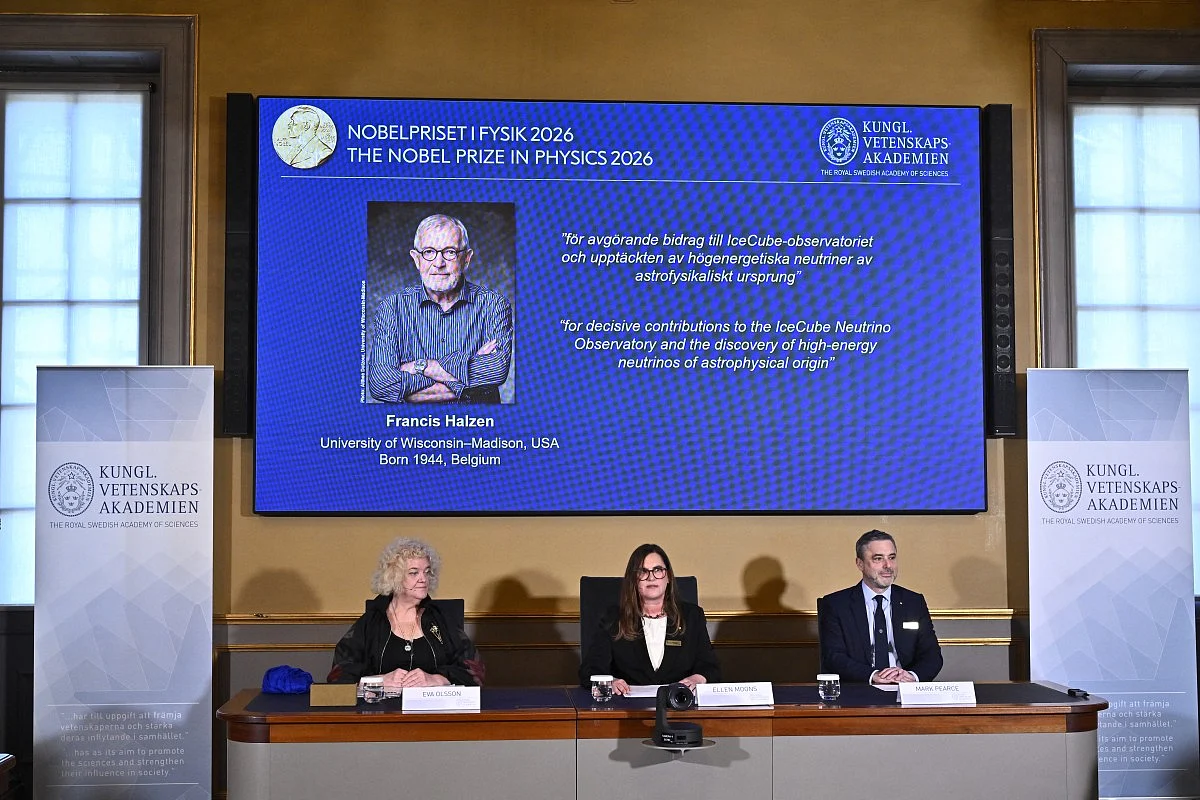
Who Is Francis Halzen? Meet The ‘Neutrino Man’ Who Won The 2026 Nobel Physics Prize
Belgian-born particle physicist Francis Halzen spent decades pursuing some of the universe’s most elusive particles, eventually helping transform Antarctic ice into a massive observatory capable of detecting them. The 82-year-old scientist, who is affiliated with the University of Wisconsin-Madison in the US, has devoted much of his career to studying neutrinos, tiny particles that rarely…
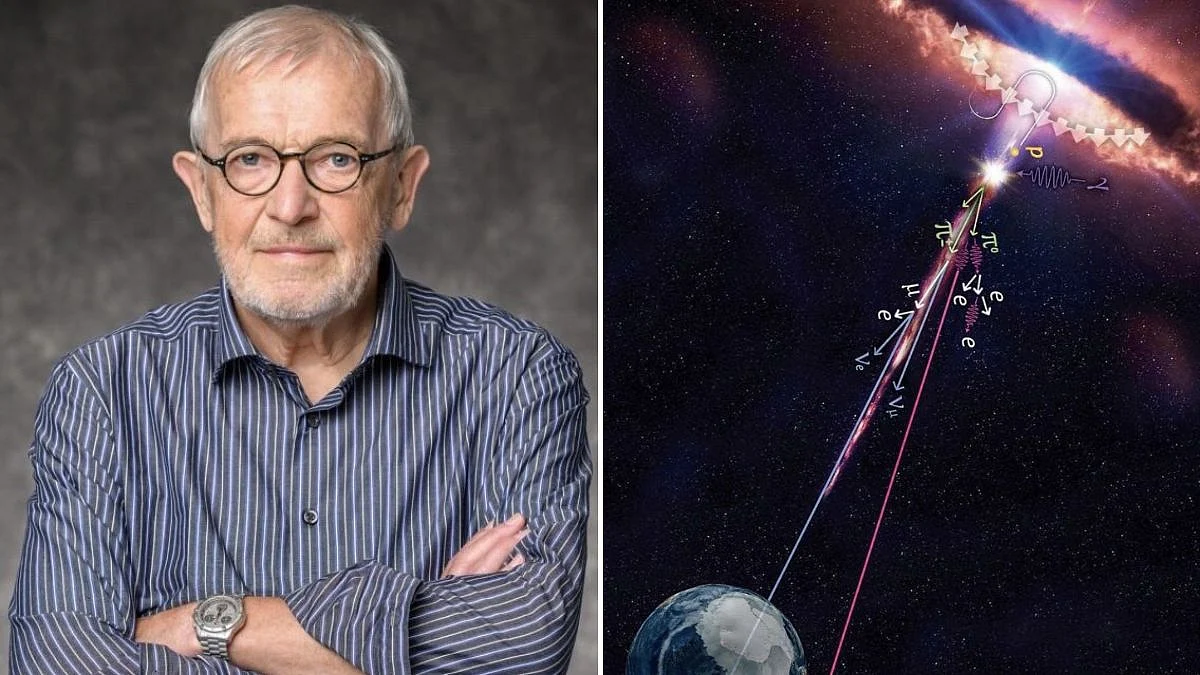
Francis Halzen, a Belgian-born particle physicist from the University of Wisconsin-Madison, has been recognized with the 2026 Nobel Prize in Physics. The 82-year-old scientist, often referred to as "Neutrino Man," has spent decades studying elusive neutrinos—the "ghost particles" that rarely interact with matter and can pass through Earth and human bodies virtually undetected.
Halzen's groundbreaking work on high-energy neutrinos and the IceCube Neutrino Observatory earned him the prestigious award. This research facility, located at the South Pole in Antarctica, is a massive observatory built using ice that detects neutrino interactions deep within the ice.
The International Science Council's Nobel Committee praised Halzen for his "tenacity and scientific vision" in leading an international team of researchers and engineers who developed the IceCube Neutrino Observatory. Mark Pearce, chair of the Nobel Committee for Physics, commended Halzen for transforming Antarctic ice into a unique observatory capable of detecting these rare cosmic particles.
Neutrinos, often called "ghost particles," are extremely small cosmic particles with negligible mass. They travel through space at nearly the speed of light, with trillions passing through human bodies each second. Due to their minimal interaction with matter, scientists cannot directly observe them. Instead, they search for evidence of neutrino collisions with other particles, which produce flashes of light or charged particles.
Halzen's pioneering efforts have opened new avenues for understanding distant cosmic events and potentially revealing unknown cosmic phenomena. The Nobel Prize recognition came as a surprise to Halzen, who was in Italy when the Nobel Committee contacted him by phone. He expressed surprise at the unexpected honor and reflected on his decades-long pursuit of detecting these nearly undetectable particles.
Written by urgent.news from Free Press Journal's reporting — not their text. Machine-written — may contain errors; check the original before relying on it.