What’s next for Vuori after a $5.5 billion valuation? A three-way stretch
On a sunny Friday afternoon in June, I walk down London’s affluent King’s Road to a two-block stretch that features four athleisure stores. At Alo, racks of sleek matching sets seem designed for women who post their Pilates workouts on Instagram. At Nike, posters feature life-size photos of its sponsored athletes at the World Cup and Wimbledon. At Lululemon, under a heavily sloganed gray wall…
In a sunny June Friday afternoon, a reporter strolled down London's prestigious King's Road, where four athleisure stores lined a two-block stretch. At Alo, racks displayed sleek matching sets meant for Instagram Pilates enthusiasts. Nike showcased life-size posters of sponsored athletes at the World Cup and Wimbledon. Lululemon featured a gray wall with motivational slogans and a sales rack filled with uncoordinated athletic wear, including a peculiar gold lamé midi skirt.
Despite their differences, all stores shared a uniform aesthetic of black, white, and gray, with silver metal racks and unflattering overhead lighting. An unusual coincidence was the EDM song "10:35" by DJ Tiësto and Tate McRae playing simultaneously in all three stores.
Next to Nike, two doors from Alo and opposite Lululemon, a Vuori boutique opened the previous year. Vuori's store features warm walnut wood walls and photos of people working out on the beach, set to a Weezer playlist. Vuori's ultra-soft clothes, devoid of visible logos, come in sophisticated colors that belie their sport-design origins. The company, with over 135 stores globally and more on the way, generated nearly a billion dollars in revenue in 2025.
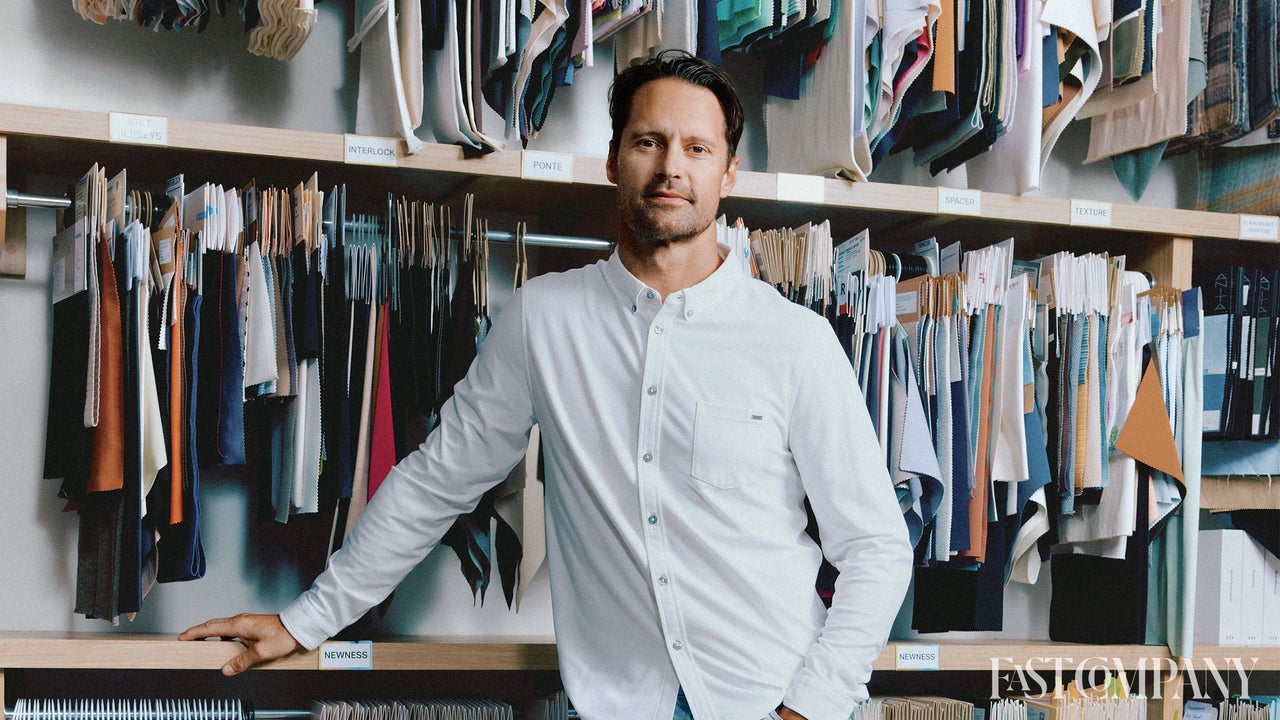
Leaders of Vuori, Joe Kudla and Heather Archibald, emphasize the importance of fabrics in their brand's success. Vuori's DreamKnit fabric is both velvety and moisture-wicking, while BlissBlend, used in their yoga collection, offers a second-skin feel. Kudla initiated the company in 2015 out of his garage in Encinitas, California, driven by the desire to create an "effortless performance" experience that avoids appearing pretentious. Vuori's distinct advantage lies in its plush fabrics, resulting in a relaxed yet tailored fit.
Vuori aims to attract three new customer segments: elite athletes, younger shoppers, and international consumers. The company is prioritizing international growth, particularly in China, where it currently accounts for 16% of Lululemon's sales. Vuori has launched eight stores in China and plans to open 20 more by 2027. The company is adapting its sizing to better cater to the Asian market and hopes to increase sales as more shoppers can experience the fabric in person.
With its focus on materials innovation and a large male customer base, Vuori minimizes risks in its expansion strategy.
Written by urgent.news from Fast Company's reporting — not their text. Machine-written — may contain errors; check the original before relying on it.