What’s Freezing the U.S. Housing Market?
A hot, AI-driven economy certainly plays a role.
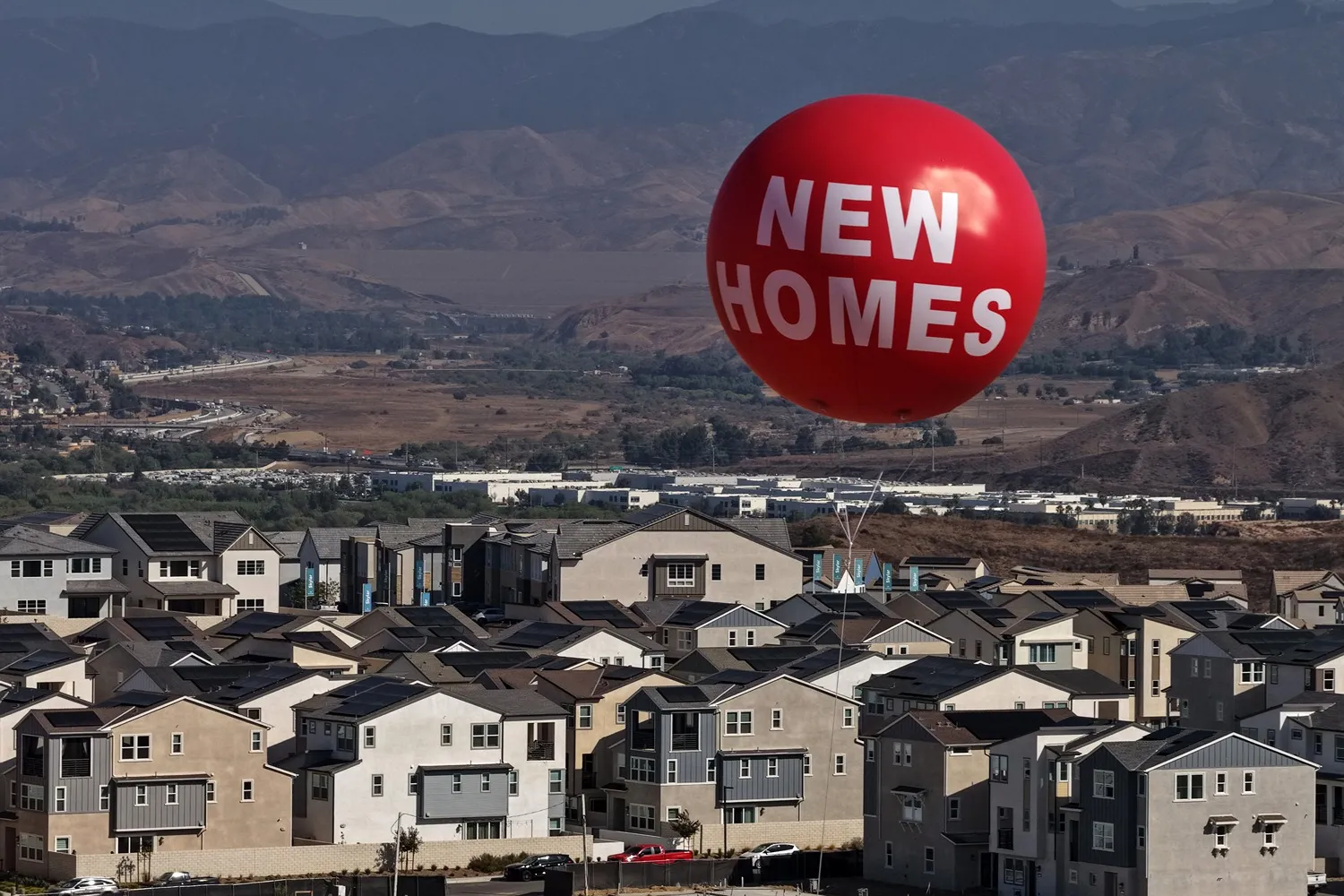
The U.S. housing market has recently experienced a slowdown, with annual home sales falling to 3.98 million, a level not seen since June 2025. This trend is attributed, in part, to high interest rates, with the average 30-year fixed mortgage rate now exceeding 7 percent. The situation is more complex than a pure housing story, as the interest rate is influenced by competition for capital from the rapidly expanding artificial intelligence sector.
In a conversation with Adam Tooze, an economist, several key points emerged regarding the dynamics at play in the U.S. housing market. The term "frozen" or "freezing up" is often used by analysts to describe the current state of the market. The significant increase in mortgage rates, from as low as 3 percent in 2022 to over 7 percent, represents a substantial financial shock for the housing market, which is the largest single asset class globally, valued at $55 trillion, with owner-occupied homes comprising $48.7 trillion.
The shift in financing costs across such a vast market is significant and has far-reaching implications. It affects households and their consumption patterns, making it a direct impact on people's lives. This situation also amplifies the cost-of-living crisis in America, contributing to a K-shaped economic narrative highlighting disparities in how different segments of society are affected.
American mortgages, with their long-term fixed rates and the flexibility to refinance, create a unique financing environment. When interest rates fall, well-organized borrowers refinance their mortgages, often taking advantage of lower rates. Currently, about half of mortgage holders are locked into rates below 4 percent, which is a favorable situation given the U.S. inflation rate of 3 percent. However, for those who are not locked in, the prospect of refinancing at higher rates (currently over 7 percent) is discouraging.
For example, if someone had taken out a mortgage 12 months prior, the difference in interest costs over the life of a 30-year mortgage could be tens to hundreds of thousands of dollars. This creates a powerful incentive to remain in the current mortgage, further contributing to the market's freeze.
Furthermore, while some might attribute the rise in interest rates to factors like the ongoing conflict in Iran, leading to inflation, the current oil price remains steady. This indicates that the interest rate increase is part of a broader economic growth story in the U.S., prompting central banks to raise rates to maintain economic stability.
Therefore, the U.S. housing market is in a state of "freezing up," characterized by a contraction in the market despite high prices, as there is a significant mismatch between demand and supply.
Written by urgent.news from Foreign Policy's reporting — not their text. Machine-written — may contain errors; check the original before relying on it.