What Would Mr. Darcy Earn Today? And Other Jane Austen-Related Money Matters
Many readers are perplexed by Austen’s habit of indicating men’s fortunes in terms of annual income, while women’s fortunes are expressed as a lump sum. Mr. Darcy has an estate of £10,000 per annum, for example, while Emma Woodhouse has
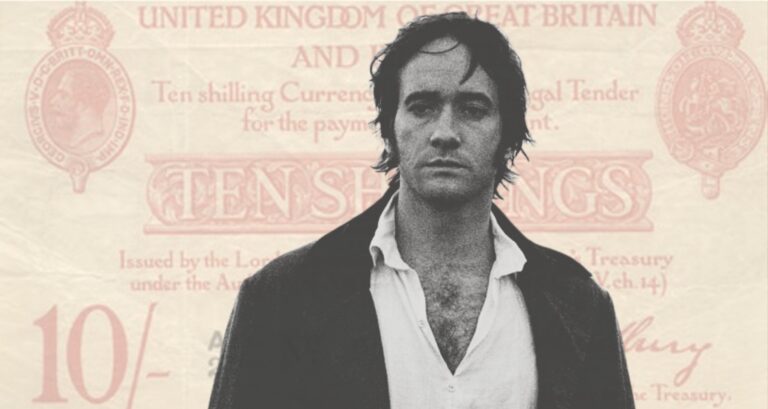
Many readers are puzzled by Austen's practice of expressing men's fortunes in terms of annual income, while women's are given as a lump sum. For example, Mr. Darcy is depicted as having an estate of £10,000 per year, while Emma Woodhouse possesses £30,000. In the landed gentry, men's wealth was typically invested in an estate, and their capital was not easily accessible.
The income of a man was derived from the crops and rents generated by his land, just as in earlier feudal society. Women with dowries, on the other hand, had limited control over their money, and the capital was often invested in government bonds. During Austen's time, naval bonds were a popular investment option, offering an average interest rate of 4%-6% per year during the Napoleonic Wars, based on naval success.
These "Navy fives" were so named due to their expected rate of return. Austen's contemporaries living outside Great Britain had difficulty understanding British currency before it was decimalized. The units of currency included guineas, pounds, crowns, shillings, and pence. One pound sterling (£) was equal to 4 silver crowns, 20 shillings (s.), or 240 pence (d.).
Pence were further divided into farthings, with one penny (1d.) consisting of 2 halfpennies or 4 farthings. There were 960 farthings in a pound. A crown was worth 5 shillings, or a quarter of a pound. Austen frequently employs these terms in her novels, and without knowledge of their relative worth, the nuances are lost. It's crucial to remember that the economy of Austen's time differs significantly from ours, making it impossible to directly convert their annual income to modern purchasing power.
Banknotes could be issued for any amount and were similar to but less uniform than today's paper money. Regency banknotes were essentially promissory notes underwritten by a specific bank, which would become worthless if the bank failed. Austen herself experienced this when her brother Henry's bank failed in 1816, resulting in significant losses for his family.
The most pressing question for modern readers is Darcy's worth in today's currencies. Although we cannot assess the value of his estate, the annual income of £10,000 would be equivalent to 75-225 times its face value in today's US dollars, using a conversion rate of 150 for simplicity. This would mean Darcy's liquid annual income was approximately $1,500,000.
However, it's essential to note that the economic systems of Austen's era differed greatly from ours, with different purchasing needs due to the agrarian nature of society. In Regency England, labor and produce were relatively inexpensive, while transportation and the maintenance of horses were quite costly. Hiring a skilled workman for a full year would cost £60, including the merchant's cut.
A housemaid's annual salary was around £25, plus room and board, while a male household servant earned £30, plus room and board. Astonishingly, a servant's wages amounted to only $3,750 to $4,500 per year. For instance, George Austen purchased a mahogany writing slope that he presented to Jane for 12 shillings in 1794, equivalent to $90.
Amounts can become particularly confusing when reading Austen's teenage writings, which humorously inflate numbers. In some cases, Colonel Martin's inheritance is described as one hundred thousand pounds per child, leaving the majority of his fortune to his eldest brother, totaling eight million pounds. As Catherine Morland grows throughout Austen's novels, she learns to transition from fiction to real life and understand the value of money.
When Catherine departs for Bath, her father does not give her an unlimited order from his banker or even a £100 bank bill, but only ten guineas. This marks a significant step in her growth as a heroine, learning the value of money.
Written by urgent.news from Literary Hub's reporting — not their text. Machine-written — may contain errors; check the original before relying on it.