What Is Driving Rates Higher and Bonds Lower?
The biggest question confronting investors today isn’t about AI, market concentration, or technology. Instead, it’s about the bond market. Like nearly everything in investing, it’s rarely about any one thing; instead, a mix of factors drives interest rates. Some matter more than others, but together, they can create a perfect storm of elements… Read More The post What Is Driving Rates Higher and…
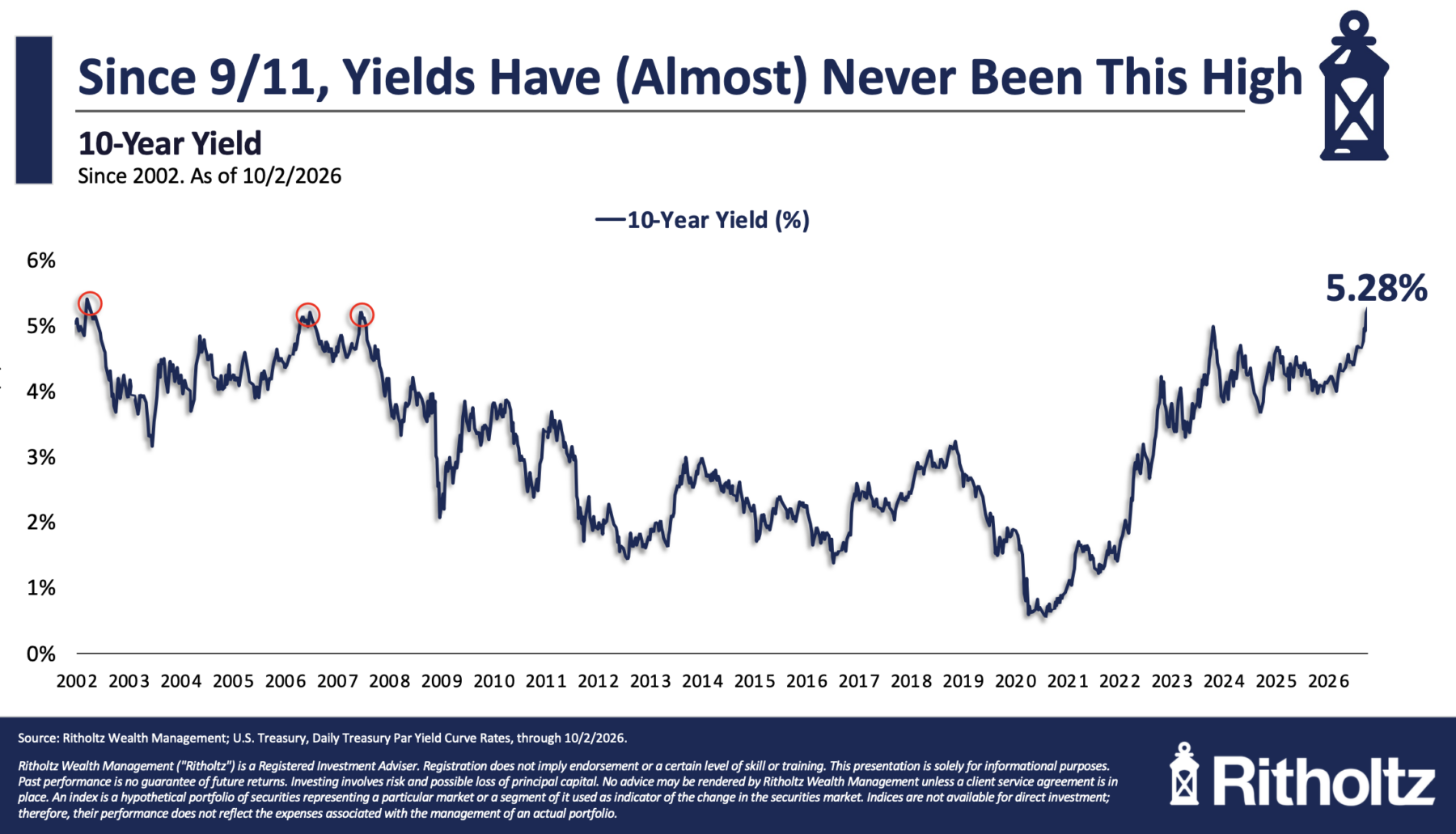
Investors today are primarily concerned with the bond market, as it is influenced by a multitude of factors. These factors include the rising price of oil, which is now over $100 per barrel, along with the unresolved Iran conflict. This oil price surge is having a significant impact on transportation costs, home heating/cooling, travel, commuting, and fertilizer costs, thereby driving up food prices. The energy crisis is the most significant factor influencing CPI inflation.
Another driver is the surge in growth due to investments in the Artificial Intelligence sector, particularly in data centers. September's PMIs revealed output growth at its fastest pace in over five years, with the Atlanta Fed's GDPNow estimating 3.7% growth. A hot economy does not necessarily require cheap money, as the market is adjusting its expectations accordingly.
Long-term rate normalization is also a concern. Historically, the 10-year yield has averaged between 6-7%, but today it is closer to 5%. This shift indicates that yields are returning to their pre-Great Financial Crisis levels. From 1960 to 2007, the 10-year average was 6-7% nominal, with nominal GDP tracking GDP growth. In contrast, today, nominal GDP is running at 5-6%.
The massive fiscal stimulus provided during the COVID crisis, estimated at $5 trillion in one year, is another factor affecting bond prices. The CARES Act 1, 2, and 3, totaling $5 trillion, were all passed in response to the pandemic. This shift from monetary to fiscal stimulus has permanently altered the deficit baseline, increasing interest costs and adding trillions to the national debt. The market's assumption that inflation was structurally dead has been shattered.
Trade and tariff policies have also affected bond prices. Tariffs directly impact goods inflation, and alienating foreign creditors while needing them to buy U.S. Treasuries is a self-inflicted wound. Additionally, the hawkish Federal Reserve's hiking cycle has contributed to higher bond prices. In September, Fed funds were raised to 3.75-4.00%, with 16 out of 19 members projecting further hikes.
This projection has caused futures prices to indicate a 70% chance of another hike in October and better than even odds for December.
Global yields are rising, with Japan's 10-year JGB at 3.08%, up 143 basis points year-over-year. The Bank of Japan is expected to hike rates again in October, while Japan's 30-year yield has now surpassed 4%. Higher domestic yields reduce the incentive for Japanese institutions to purchase U.S. Treasuries, as they now hold around 30% of U.S. Treasury stock.
Corporate supply chains are also competing with the Treasury for investor dollars. The data center and AI capex are being financed in the bond market, with estimates suggesting $250 billion this year and up to $400 billion next year. This competition has driven up IG spreads by approximately 35 basis points since August.
Sticky inflation is another factor to consider, as August's CPI rose by 0.4% month-over-month and 3.4% year-over-year. This inflation comes from various sources, including gasoline, airfares, and input costs. The PMIs indicate that input costs are rising at the steepest rate in four years, which implies higher prices in the pipeline.
Lastly, the weak natural demand for long-dated bonds is a concern. The 10-year auction in August yielded the highest level since 2007, and the 2-year cleared at 4.79%. The Federal Reserve doubled its long-end buybacks to $4 billion per operation to provide liquidity support. This intervention is considered foolish, given the federal deficit of roughly 6% of GDP at full employment and interest costs consuming about 30% of federal revenue.
Written by urgent.news from The Big Picture's reporting — not their text. Machine-written — may contain errors; check the original before relying on it.