'We don't need US bases': Japanese protest after Marine held for murder
TOKYO: Around 100 Japanese protesters enraged by a woman’s alleged murder at the hands of a US Marine rallied outside the US embassy in Tokyo on Tuesday to protest “American soldiers’ violence.”
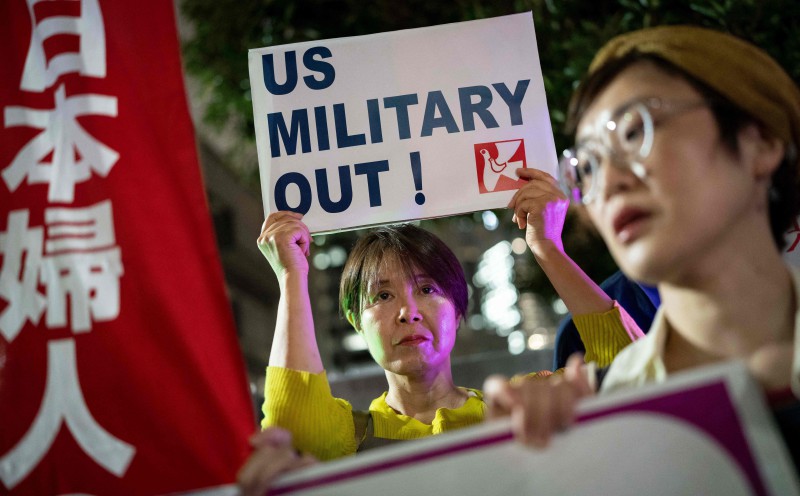
On Tuesday, around 100 Japanese protesters gathered outside the US embassy in Tokyo to voice their outrage over a woman's alleged murder by a US Marine. The incident has ignited public fury, with Prime Minister Sanae Takaichi branding the killing a "heinous crime."
Protester Sorane Sakihama, a 24-year-old Okinawa native, expressed her anger during the rally, stating that locals in Okinawa are disproportionately exposed to the risk of harm from US soldiers due to the high concentration of bases there compared to other parts of Japan. She lamented the thought that their children must grow up in such circumstances, describing it as utterly unjust.
The protesters held signs reading "no more American soldiers' violence" and "Okinawa is not your amusement park!" while chanting "We don't need US bases in Okinawa." The source material highlights that under a 1960 agreement, Japan lacks primary jurisdiction over crimes committed by US military personnel while on duty. This legal framework complicates investigations and prosecutions of such incidents.
Naoko Fujihata, a 67-year-old protester, has been particularly frustrated by Tokyo's apparent reluctance to strongly condemn crimes committed by US military personnel. She called for the foreign troops to leave Okinawa and expressed her intention to closely monitor the new governor, Genta Koja, who has accepted plans to keep the US Marine Corps Futenma air base on the island but to relocate it to a less populated area.
Koja plans to discuss reducing the burden of US bases in Okinawa with Prime Minister Takaichi when they meet on Wednesday. This recent incident, along with previous cases involving US military personnel, has strained relations between Japan and the US, with the latter facing strong criticism from the Japanese public.
Written by urgent.news from New Straits Times's reporting — not their text. Machine-written — may contain errors; check the original before relying on it.