Urban Rail in Southeast Asia Is Booming
Due to rapid economic growth and Chinese knowhow, public transit in the region's cities is entering something of a golden age.
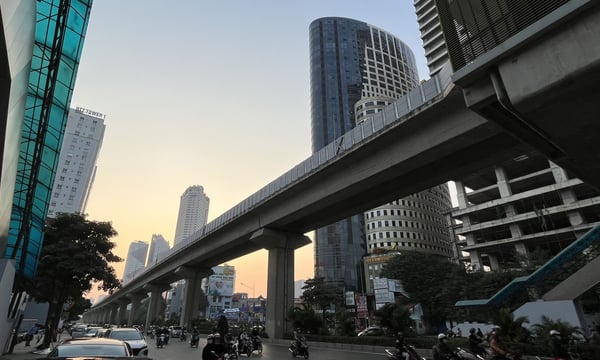
A surge in urban rail systems has been witnessed across Southeast Asia over the past few years. Major new lines have come online in Malaysia, Thailand, Indonesia, Vietnam, and the Philippines, with more projects in the pipeline. From 2015 to 2026, more than 400 kilometers of new track and extensions were added to systems in Bangkok, Kuala Lumpur, Jakarta, Manila, Hanoi, and Ho Chi Minh City. Another 200 kilometers are either in planning stages or underway.
Chinese-backed high-speed rail lines are already operational in Indonesia and Laos, with additional projects under construction in Thailand and Malaysia. Singapore boasts a highly comprehensive public transit system, while Kuala Lumpur had an airport link, commuter system, and three rapid rail lines in 2015.
Investments in urban rail have soared, totaling tens of billions of dollars for new and expanded lines across the region. Between 2016 and 2023, Bangkok opened three new subway lines at a cost of about $5 billion, and the Orange line, priced at over $4 billion, is set to become operational between 2028 and 2030.
Malaysia recently inaugurated its Shah Alam Line, a $5 billion project including five new stations. The Putrajaya line, which opened in 2023, cost around $7 billion and added 50 kilometers of track. Kuala Lumpur and surrounding areas now have six rapid rail lines, with 330 million riders in 2025. Malaysia is also building urban rail in cities outside the capital.
Manila has provided light rail service since 1984, with an MRT fully opened in 2000 and a second LRT in 2003. Manila is set to add a new MRT line and a $7 billion subway project. Indonesia and Vietnam are the newest entrants to the region's urban rail movement, with Jakarta and Ho Chi Minh City's metro systems each carrying over 81 million passengers in 2025.
Vietnam's metro lines have progressed slowly due to land acquisition challenges, but further development should accelerate in the coming years. Economic growth, Chinese financing, and technology have fueled this surge in urban transit. The trend looks set to continue growing in the years ahead.
Written by urgent.news from The Diplomat's reporting — not their text. Machine-written — may contain errors; check the original before relying on it.