Top Glove's margins recover on tighter supply
KUALA LUMPUR: The demand-supply balance that occurred from the third quarter (Q3) onwards enabled Top Glove Corp Bhd to recover its margins for the financial year ended Aug 31, 2026 (FY26).
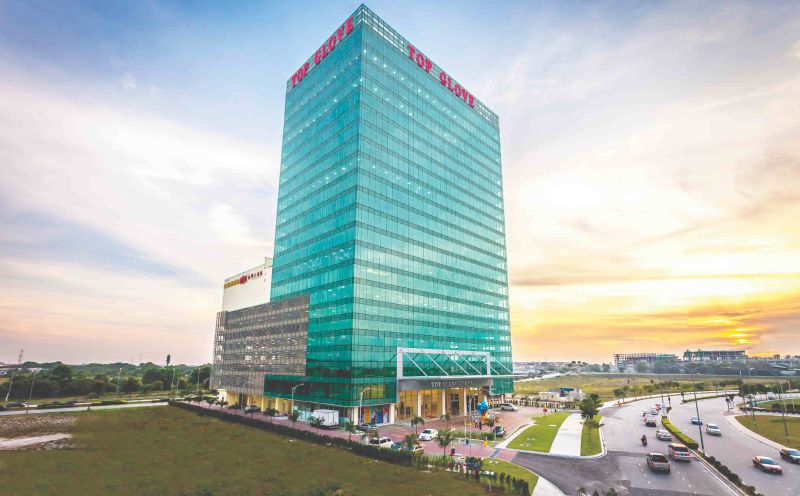
KUALA LUMPUR: The recovery of Top Glove Corp Bhd's margins for the financial year ending August 31, 2026, was driven by a balance between demand and supply, particularly from the third quarter onwards. The joint managing director, Lim Jin Feng, explained that an increase in average selling prices (ASPs) resulted from higher raw material costs, mainly nitrile and latex, and that these cost increases were passed on to customers due to stabilising market demand.
The corporate director, Lim Cheong Guan, highlighted that the industry's demand-supply balance improved due to reduced capacity compared to the peak during the Covid-19 pandemic, when most capacity was from Chinese players. Limitations on Malaysian manufacturers' spare capacity and workforce constraints were also noted.
Top Glove's earnings more than doubled in FY26, with net profit soaring to RM307.96 million from RM105.33 million in FY25. This growth was backed by a surge in global demand, with revenues increasing by 21.1%. The Middle East crisis further tightened raw material and glove supply, aiding cost pass-through and contributing to enhanced margins.
Top Glove's quality and cost optimisation initiatives significantly bolstered its competitive edge, enabling competitive pricing, driving strong sales volume growth, and raising capacity utilisation.
The company's net cash position improved to RM141 million in FY26, while its debt increased to RM267 million from FY25. The company announced a tax-exempt final dividend of 1.5 sen per share for FY26, marking a 213% increase in dividend per share compared to FY25, totaling RM120 million in dividends for the year. Despite ongoing challenges like cost increases, raw material supply issues, competition, and manpower shortages, Top Glove remains confident in mitigating these headwinds through continuous quality improvement, cost optimisation, and AI integration, ensuring long-term growth.
Written by urgent.news from New Straits Times's reporting — not their text. Machine-written — may contain errors; check the original before relying on it.