The 13 next big things in applied AI for 2026
2026 may have been the year when AI stopped getting brownie points simply for being amazing. What’s impressive now is AI that performs useful tasks. All the better if it does it quietly, cleverly, and in areas that help humans focus on the work that we still do best. These honorees check off all those boxes, in areas ranging from workplace productivity to medical safety. Alembic For proving how…

Here are the 13 next big things in applied AI for 2026, based on the provided source:
Alembic has developed a "causal engine" that uses proprietary AI to help enterprises understand the real effects of their actions. By analyzing thousands of variables simultaneously, Alembic's platform can map outcomes to specific actions or the lack thereof. It has gained notable enterprise customers like Mars and Delta Airlines, and was recently valued at $645 million after a $145 million Series B funding round led by Accenture and Prysm Capital.
Canva has introduced AI 2.0, its AI-powered design tool that allows users to turn ideas into reality without needing extensive design software knowledge. The tool, powered by Canva Design Model, can generate up to 400 designs per second and enable users to refine them easily, a feat that's challenging with general-purpose AIs like ChatGPT.
Credo AI has enhanced its AI governance platform with the Govern AI Assistant (GAIA). GAIA helps organizations manage AI models and tools more effectively by generating use case descriptions, recommending metadata, and drafting questionnaire responses. It is pre-loaded with governance libraries, enterprise deployment experience, and global regulatory frameworks like the EU AI Act and NIST AI RMF. Users can simply upload a product brief or project plan, and GAIA will take care of the rest.
DeepL has launched real-time voice-to-voice translation as part of its DeepL Voice product. Users can now speak in their native language, and another user will immediately hear the meaning spoken aloud in their language, enabling live conversation across languages without captions or interpreters. The company has also acquired Mixhalo, a specialist in ultra-low latency audio, to further improve real-time translation capabilities for large groups.
Genspark has transitioned from an AI search engine to an AI agent platform. Its AI Workspace offers tools such as an AI office suite, image generator, and specialized AI agents. The platform's orchestration engine calls on approximately 70 AI models depending on the task. Genspark's AI assistant, Genspark Claw, can complete long-running, multi-step workflows asynchronously, accessing various tools like Microsoft Office 365.
With over 5,000 enterprise users, Genspark has achieved $250 million in annualized revenue as of spring 2026.
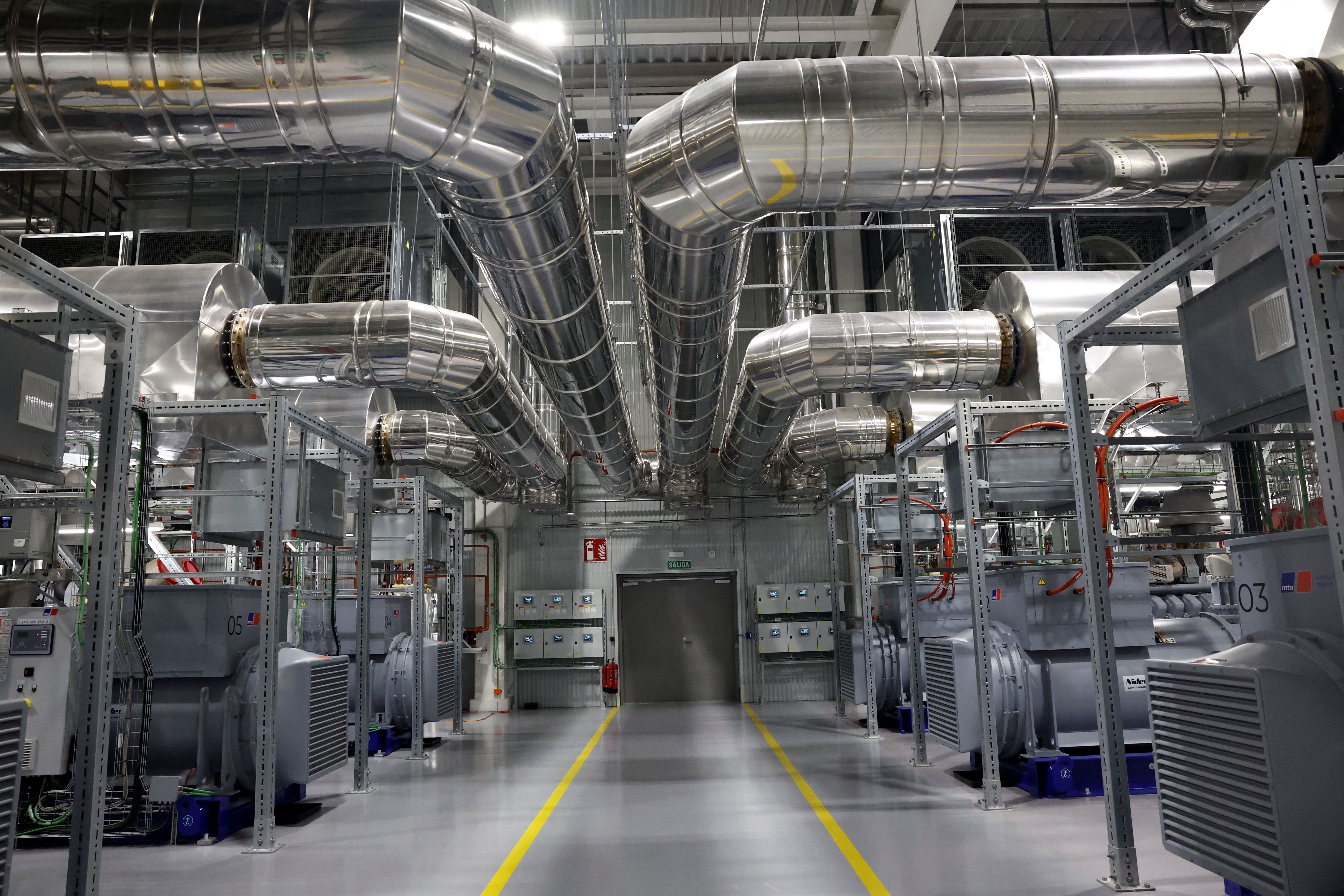
Hanwha has created an Energy Management System that acts as a smart manager for data centers, monitoring telemetry, alarms, and fault detection systems. Using large language models and machine learning, the system studies potential issues and suggests responses. Prime Group, a major private real estate investor, adopted the technology for nationwide deployment of edge data centers in April 2026.
Odyssey has developed world models that learn from visual observation of real-world activity and generate video in response to user actions. These models are useful in simulations, gaming, and robotics. Odyssey-2 Max, the latest model, has the highest physics score among publicly evaluated world models on the VBench 2 benchmark (58.52, up from 49.67 in the prior generation). The company's backers include AI luminaries Jeff Dean, Elad Gil, and Garry Tan, and it has received funding from NVIDIA's venture arm.
Replit has focused on enabling users to 'vibe-code' their way through software development projects. The company's newest assistant, Agent 4, allows non-coders to direct the AI in plain language to design, build, and maintain software. This approach simplifies the coding process and makes it more accessible to a broader audience.
Written by urgent.news from Fast Company's reporting — not their text. Machine-written — may contain errors; check the original before relying on it.