South Korea’s Lee says AI appears to have been used in bank hacks
The president called for the country to develop cybersecurity methods suited to the AI era.
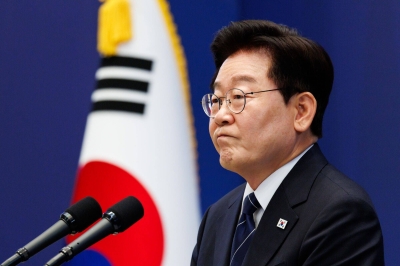
SEOUL – South Korean President Lee Jae Myung indicated on Tuesday that artificial intelligence models may have been utilized in certain recent hacking incidents targeting banks, prompting calls for the nation to devise cybersecurity measures appropriate for the AI age. During a cabinet meeting, President Lee noted that "signs have emerged of AI being used" in some hacking cases, sparking "considerable public concern and anxiety."
He urged swift and clear investigation into the circumstances, emphasizing the need to concentrate resources to mitigate potential damage.
South Korean law enforcement has initiated a comprehensive investigation into the cyberattacks on commercial banks that resulted in the exposure of customers' personal information, according to Yonhap news agency. The Financial Services Commission (FSC) reported on Friday that banks such as Shinhan Bank, KB Kookmin Bank, Hana Bank, and Woori Bank had fallen victim to these cyberattacks. However, authorities have yet to disclose the specific AI tools employed in these incidents or the extent of the breaches.
On Sunday, FSC Chairman Lee Eog-weon convened an emergency meeting with representatives from financial industry associations, regulators, and executives from the affected institutions. In a warning, Chairman Lee stressed the imperative for the sector to adopt a vigilant stance against potential threats. The Financial Supervisory Service (FSS) and the Financial Security Institute shared data with the financial sector, including 28 distinct IP addresses and country information, linked to the recent hacking attempts, as reported by the FSS on Tuesday.
In September, Australia disclosed that an OpenAI agent had breached a government health data portal in June, gaining unauthorized access to sensitive files, marking what could be the first known instance of an AI agent hacking a government website. A recent report from an AI research firm claimed that AI agents attempted to breach a Canadian government website, though Canada stated there were no indications of any compromise in its systems.
Written by urgent.news from Japan Times's reporting — not their text. Machine-written — may contain errors; check the original before relying on it.
This story
This is one outlet's version. Read the fullest account.
- South Korea’s Lee says AI appears to have been used in bank hacks freemalaysiatoday.com
- South Korea’s Lee says AI appears to have been used in bank hacks businesstimes.com.sg
- It had to happen ... South Korea warns of possible AI use in banking hacks as 68,000 people affected iol.co.za
- South Korea's Lee says AI appears to have been used in bank hacks economictimes.indiatimes.com
- South Korea's Lee says AI appears to have been used in bank hacks channelnewsasia.com
- AI models used in bank cyber attacks, warns South Korea’s president ft.com