Russian anti-plague lab technician dies after reportedly breaking test tube of plague bacteria
A 28-year-old laboratory technician at a Russian anti-plague institute died in Siberia on Oct. 2, days after she reportedly broke a test tube of plague bacteria, leaving about 200 people under medical observation.
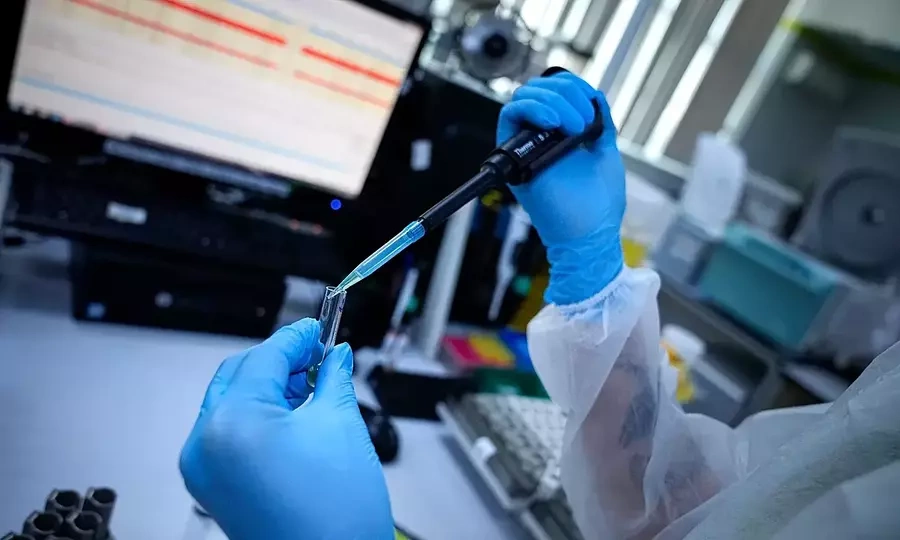
Darya Shipilova, a lab technician at the Irkutsk Anti-Plague Research Institute, tragically passed away after reportedly breaking a test tube containing live Yersinia pestis, the bacterium responsible for plague. The incident occurred on September 25th, and Shipilova's condition deteriorated rapidly, leading to her admission on September 29th with severe pneumonia.
She was placed on a ventilator, and as of now, approximately 200 individuals are under strict medical observation across various hospitals in Irkutsk. Despite Russian authorities not confirming plague as the cause of death, public health officials have stated that Shipilova was diagnosed with pneumonia of an unknown cause. The epidemiological situation in both Irkutsk and the nearby town of Shelekhov remains stable, according to Rospotrebnadzor, Russia's public health watchdog.
The institute has not found any microorganisms related to its work in the patient's samples, nor have they recorded any pathogen-related incidents. Following Shipilova's death, the governor of Irkutsk, Igor Kobzev, urged calm and stated that contacts under observation showed no signs of illness and tested negative. Authorities have called off planned public events and are investigating potential health safety violations that led to the death.
The U.S. State Department is aware of the possible case of pneumonic plague and is working with the CDC to monitor the situation. Pneumonic plague, the most virulent form of the disease, can spread through respiratory particles and is always fatal if left untreated. However, early detection and treatment within 24 hours of symptoms can significantly improve recovery rates. Plague, historically known as the Black Death, is now treatable with antibiotics.
Written by urgent.news from VnExpress International's reporting — not their text. Machine-written — may contain errors; check the original before relying on it.