Robots are going to need a better story
In 1897, Georges Méliès made Gugusse et l’Automate , one of the earliest films to feature a robot. The machine grows, fights its maker, and is eventually destroyed. It set the tone. For much of the next 120 years, our impressions of robots came from the silver screen. From the terrifying liquid-metal T-1000 in Terminator 2 to the murderous NS-5s in I, Robot , we have repeatedly imagined that the…
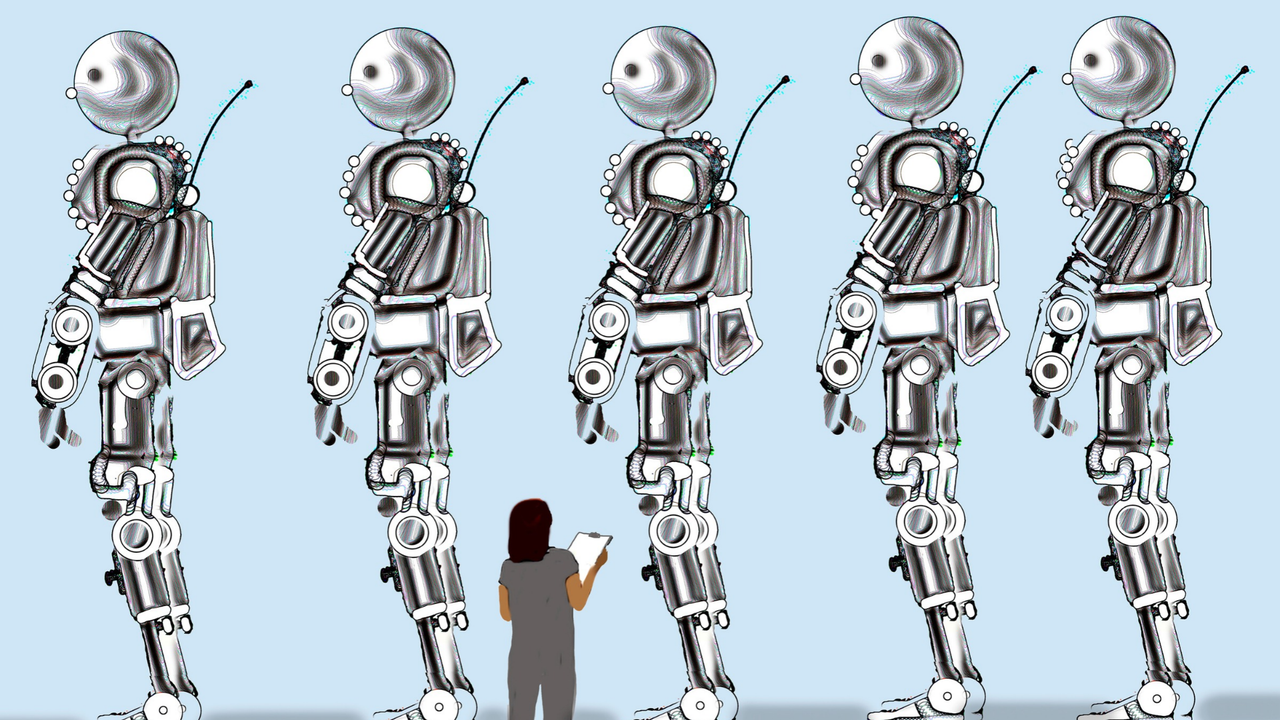
In 1897, Georges Méliès created Gugusse et l’Automate, one of the earliest films to showcase a robot. Over the next 120 years, our perception of robots was largely shaped by cinema. From the destructive T-1000 in Terminator 2 to the nefarious NS-5s in I, Robot, we've consistently envisioned machines turning against us. However, for every malevolent robot, there exists a more benevolent character like WALL-E or C-3PO.
This fear of machines stems from our negativity bias, causing us to focus disproportionately on threats, loss, and uncontrollable events. While popular culture didn't invent this fear, it has compounded it over the past century. Fortunately, the era of robots is upon us. Global investment in robotics and physical AI has skyrocketed, from around $4 billion in 2019 to $26 billion in 2025.
China is rapidly advancing humanoid robots, with Morgan Stanley predicting 446,000 shipments by 2030. The shift has been gradual, with robots first appearing in factories during the 1960s and becoming integral to production by the 1980s. Home robots, like vacuum cleaners, have been commonplace for years. Yet, when confronted with a towering welding arm or a pair of cleaning brushes, the line between reality and fiction blurs.
As robots become increasingly visible, our definition of a robot must expand. Boston Dynamics, for instance, has captivated audiences with their bipedal robots performing incredible feats. However, their latest unveiling, the production version of Atlas, shifts focus towards industrial applications: part handling, autonomous battery changes, and self-operation in industrial environments.
This shift is mirrored outside of work as well. NEO, a humanoid home robot, is now available for preorders at $20,000 or $499 a month. Its soft exterior, lightweight design, and domestic appearance starkly contrast with the metallic machines of science fiction. While the industry naturally wants to showcase the capabilities of these machines, we must address our fears and build trust with these robots.
The challenge lies in bridging the gap between the industrial and domestic spaces. In public spaces, robots are already enhancing experiences, such as cleaning in transportation hubs or serving dishes in hospitality settings. This presents an opportunity for new brands to demonstrate the value of robots in environments we occupy but don't own.
The elderly population, struggling with care shortages, could greatly benefit from robot-assisted care, making it a viable alternative to human care. Ultimately, the story of robots is no longer about replacement or revolution, but rather the evolving relationship we will have with this technology. Robotics companies need to balance innovation with practical use, addressing concerns head-on and crafting compelling narratives that showcase the benefits of these machines.
As we continue to build machines that behave like us, the challenge will be to tell their stories in a way that fosters trust and acceptance.
Written by urgent.news from Fast Company's reporting — not their text. Machine-written — may contain errors; check the original before relying on it.