Professor Dzidonu calls for a fundamental shift in how individuals, educational institutions and society think about learning in the age of AI
Professor Clement K. Dzidonu says graduation must mark a new phase of lifelong learning as AI and rapid technological change reshape professional capability and the world of work
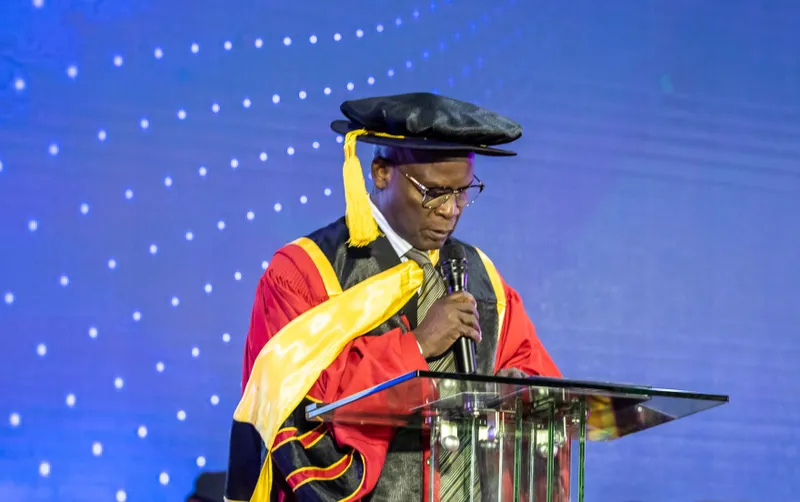
President of the Accra Institute of Technology (AIT), Professor Clement K. Dzidonu, has proposed a radical change in the way people perceive learning in the era of Artificial Intelligence (AI). He argues that graduation should not mark the end of the learning journey, but rather the beginning of a continuous process of self-directed learning and capability development.
This new model, called the Sovereign Lifelong Learner, or the "Sovereign Triple-L," emphasizes that individuals must take ownership of their ongoing education and personal responsibility for keeping their skills and knowledge up-to-date.
Professor Dzidonu emphasizes that the traditional model of education, where individuals graduate with a set of acquired knowledge and enter a profession, is rapidly becoming unsustainable. Advancements in AI and rapidly evolving professional practices are transforming the nature of work and the capabilities required for professionals to remain relevant.
As a result, education and professional development must increasingly be viewed as a lifelong journey rather than something that ends with the award of a certificate or degree.
To address this, Professor Dzidonu advocates for the Sovereign Triple-L framework, which consists of four key components: Skills, Expertise, Experience, and Know-how (SEEK). The SEEK-Gap refers to the growing distance between the capabilities individuals currently possess and the skills required to remain capable, relevant, and effective in the age of AI. This gap necessitates a continuous effort to identify knowledge gaps, unlearn outdated practices, and acquire new skills and capabilities.
Professor Dzidonu cautions that while AI and advanced technologies may render existing knowledge and skills obsolete, these tools should be seen as opportunities for growth rather than threats. Rather than surrendering human judgment, individuals should learn with AI, question its outputs, and use it responsibly to extend their capabilities.
The future belongs to those who remain capable of learning what tomorrow requires, and this requires individuals to actively seek opportunities, explore possibilities, and create meaningful differences in the rapidly changing landscape of knowledge and work.
Written by urgent.news from 3News's reporting — not their text. Machine-written — may contain errors; check the original before relying on it.