Pretty in pink, but Malarikkal’s lilies worry ecologists
A two-year study for the Kerala State Biodiversity Board finds the water lily, which appeared in Malarikkal after the 2018 floods, has shown unprecedented and uncontrolled growth; ecologists flag its impact on local aquatic plants, water flow and sunlight penetration, besides concerns over methane emissions from decaying plant biomass; the seasonal bloom has transformed Malarikkal into a tourism…
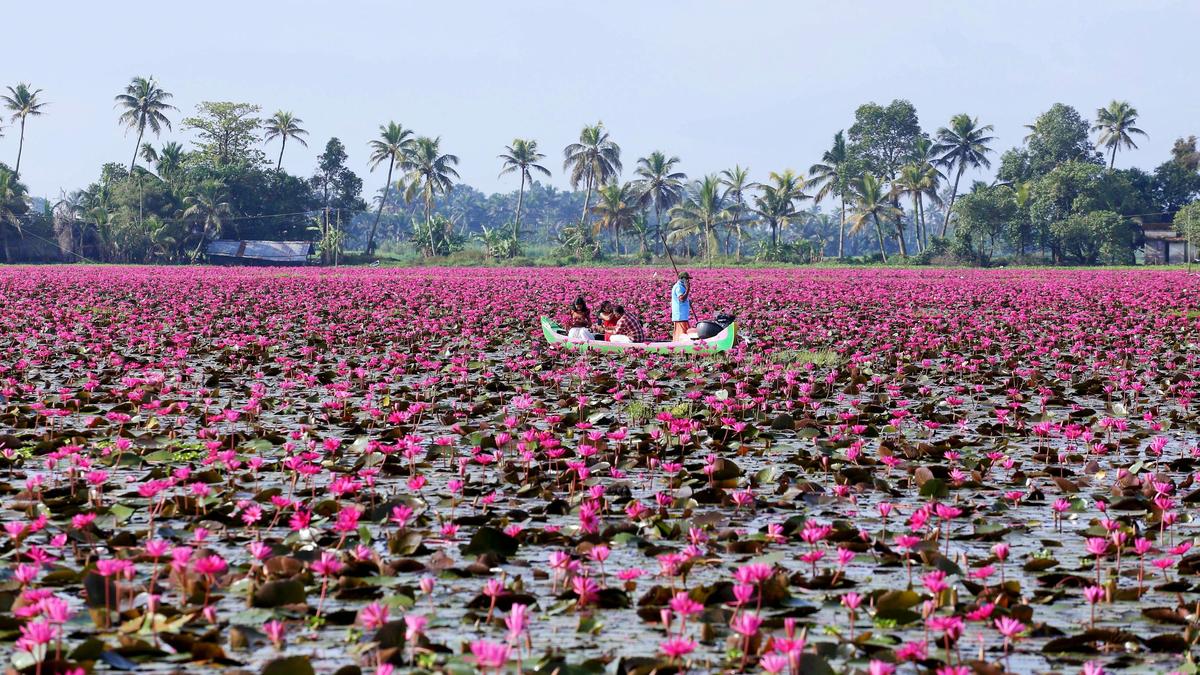
The profuse blooming of pink water lilies in Malarikkal has delighted hundreds of visitors and local tour operators, but ecologists are deeply concerned about its impact on the local ecology. A two-year-long study by the Kerala State Biodiversity Board revealed that the previously unknown aquatic plant has shown unprecedented and uncontrolled growth.
Rameshkumar K.B., a senior principal scientist, explained that the lily appeared in the area following the 2018 floods and has proliferated rapidly. The study's Chairperson, N. Anil Kumar, emphasized the alarming nature of the plant's uncontrolled growth and the need to prevent its spread to other water bodies. The ecological impact includes an increase in rodent populations, the disappearance of local aquatic plant varieties, and the release of greenhouse gases like methane.
This flowering season, which begins in July, has significantly boosted the tourism economy in the region, with millions of water lilies attracting pollinators and causing sedimentation and pollution in water bodies. The large leaves also block sunlight, affecting algae and micro- and macro-organism habitats. Despite these concerns, the bloom has brought about a ₹5 crore revenue for farmers and locals, who are now considering replicating the phenomenon by planting water lily roots.
Written by urgent.news from The Hindu - Sci-Tech's reporting — not their text. Machine-written — may contain errors; check the original before relying on it.