Particle physics, astrophysics and 'invisibility cloak' tipped for physics Nobel
Research in particle physics, astrophysics or the invention of an “invisibility cloak” are some of the achievements that could be honoured when the Nobel physics prize is awarded Tuesday. The award, to be announced at 11:45 am in Stockholm, is the second Nobel of the season, after the Medicine Prize was awarded on Monday to US psychiatrist and neurologist Karl Deisseroth and German scientists…
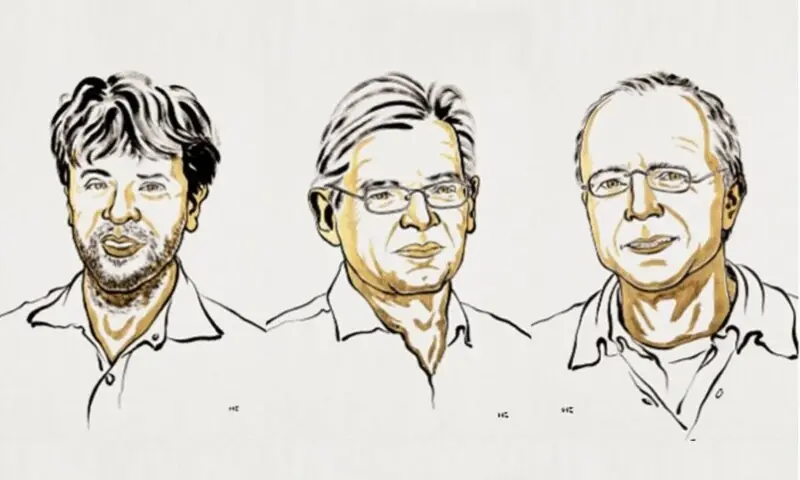
The Nobel Physics Prize is set to be awarded on Tuesday, with potential honorees spanning particle physics, astrophysics, and even the invention of an "invisibility cloak." Following the Medicine Prize awarded on Monday to US psychiatrist and neurologist Karl Deisseroth and German scientists Peter Hegemann and Georg Nagel, commentators have long predicted that metamaterials and Britain's John B. Pendry, known for his "invisibility cloak" project, are prime candidates for the physics award.
Camilla Widebeck, a science producer for Sveriges Radio, explained that Pendry would likely be recognized alongside American David Smith. French-American physicist Federico Capasso, who contributed to the development of the quantum cascade laser, is also a potential winner. Widebeck noted that this year's prize might build upon the 2010 award, which recognized research into graphene—a single layer of carbon atoms arranged in a honeycomb pattern.
Other notable figures speculated for the prize include Spain's Pablo Jarillo-Herrero, Canada's Allan MacDonald, Israel's Rafi Bistritzer, Romanian-American researcher Eva Andrei, Switzerland-born Nicola Spaldin, and China's Qikun Xue. In condensed-matter physics, Clarivate highlighted Japanese researcher Chihaya Adachi, Americans Stephen R. Forrest and Mark E. Thompson, and Swiss-British researcher Nicola Spaldin.
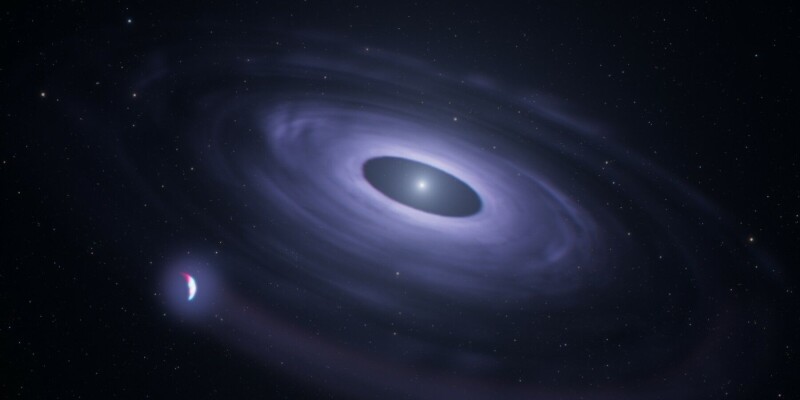
Meanwhile, for work on theoretical magnetoelectric multiferroics, Spain's Pablo Jarillo-Herrero, Canada's Allan MacDonald, and Israel's Rafi Bistritzer could be honored. CERN's ATHENA and ALPHA collaborations, which successfully trapped and studied cold antihydrogen atoms, might also be awarded. In astrophysics, Briton Martin Rees, a former Astronomer Royal, and research into the James Webb Space Telescope are among the possibilities.
Last year's physics prize went to John Clarke, Michel Devoret, and John Martinis for integrating quantum mechanics into digital technology, with the chemistry prize set to follow on Wednesday.
Written by urgent.news from Dawn Business's reporting — not their text. Machine-written — may contain errors; check the original before relying on it.