Odisha to create additional storage for rice to accommodate paddy glut
The Odisha government proposes to develop 10 lakh metric tonnes of additional storage capacity under the Odisha State Private Entrepreneur Scheme (OSPEG) framework
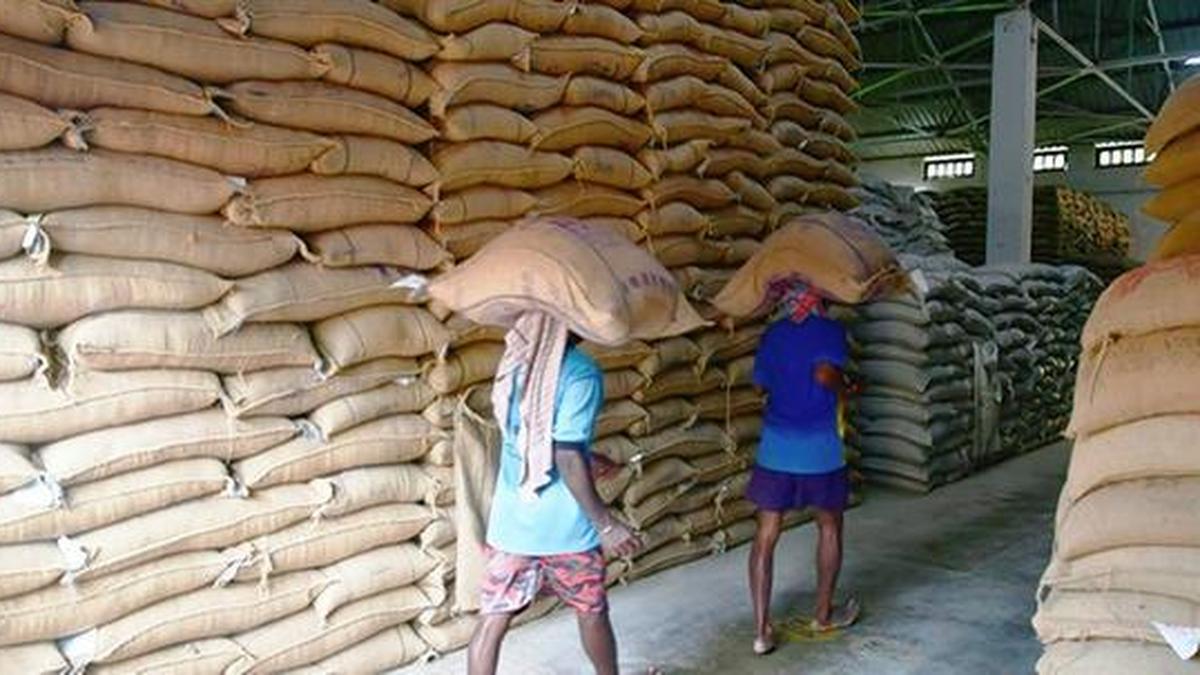
Odisha, a state known for its massive rice harvests, is planning to create additional storage capacity for rice to handle the surplus. The state government has decided to develop an extra 10 lakh metric tonnes of storage space through a public-private partnership (PPP) mode, under the Odisha State Private Entrepreneur Scheme (OSPEG) framework. The government has announced that 4 lakh metric tonnes of storage will be created in the first phase, followed by 6 lakh metric tonnes in the second phase.
Paddy procurement in Odisha has seen a significant increase in recent years, rising from 70.88 lakh metric tonnes (LMT) in 2023-24 to 97.94 LMT in 2025-26. The Food Corporation of India (FCI) lifted 8.12 lakh metric tonnes of rice from custom millers in 2025-26, while 28.84 lakh metric tonnes of rice were collected in 2024-25. However, the Odisha State Civil Supplies Corporation Limited (OSCSC) currently uses around 160 godowns with a combined capacity of 6.73 lakh metric tonnes to store rice, which is not sufficient to accommodate the surplus.
The government has recognized the need to augment the existing storage capacity in a systematic and planned manner to ensure the safe storage of food grains and timely distribution under the Public Distribution System (PDS) and other welfare programs. According to the guidelines, storage capacity should be planned as a percentage of total procurement in surplus districts, and based on the number of months of stock required to meet PDS and other welfare scheme demands in consuming districts.
The government has also specified that godowns under this scheme should enable scientific storage of rice and no godown should be less than 2500 MT capacity. The state government intends to facilitate the creation of additional scientific storage capacity through the participation of private entrepreneurs, who will develop, operate, and maintain the facilities in accordance with prescribed specifications.
Written by urgent.news from The Hindu's reporting — not their text. Machine-written — may contain errors; check the original before relying on it.