Lost 'heart' of the Colorado River shines like a silver serpent in Utah
A 2016 astronaut photo mosaic highlights a "sunglint" phenomenon that transformed Lake Powell into a winding metallic "river." The artificial reservoir, which is the second-largest in the country, is home to many visible and long-lost geological wonders.
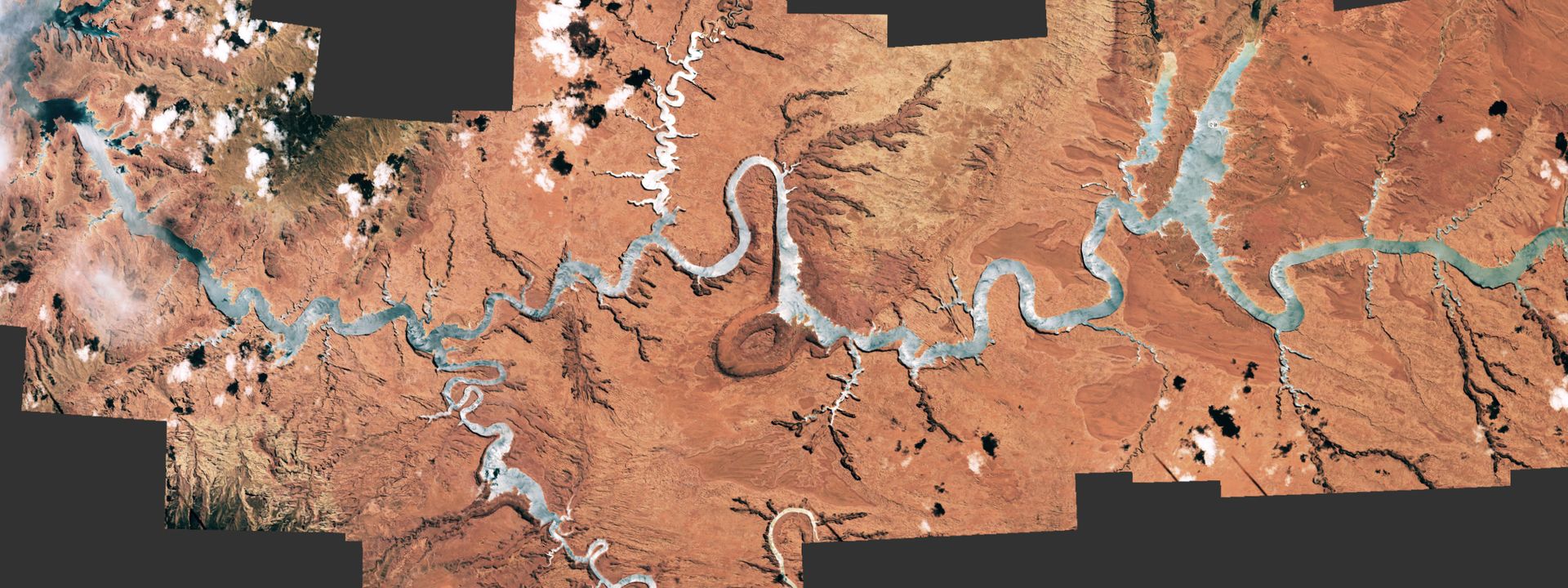
A striking astronaut photograph reveals a section of Lake Powell in Utah transformed into a shimmering silver river by a unique optical phenomenon. The artificial reservoir, formed after the construction of the Glen Canyon Dam in the 1960s, stretches across southern Utah and northern Arizona, with its water levels reaching up to 1.2 billion cubic feet when full.
The reservoir originates about 70 miles southwest of Moab and extends roughly 60 miles northeast of the Grand Canyon. When the dam was completed in 1966, it took the reservoir approximately 17 years to fill completely. This photo, stitched together from multiple images taken by a NASA astronaut, showcases the sunglint effect, which occurs when sunlight reflects off a reflective surface directly into the line of sight of an observer in orbit, creating a metallic, mirror-like gleam.
The image highlights the reservoir's winding path, with the artificial silver river cutting through the surrounding landscape.
Written by urgent.news from Live Science's reporting — not their text. Machine-written — may contain errors; check the original before relying on it.